



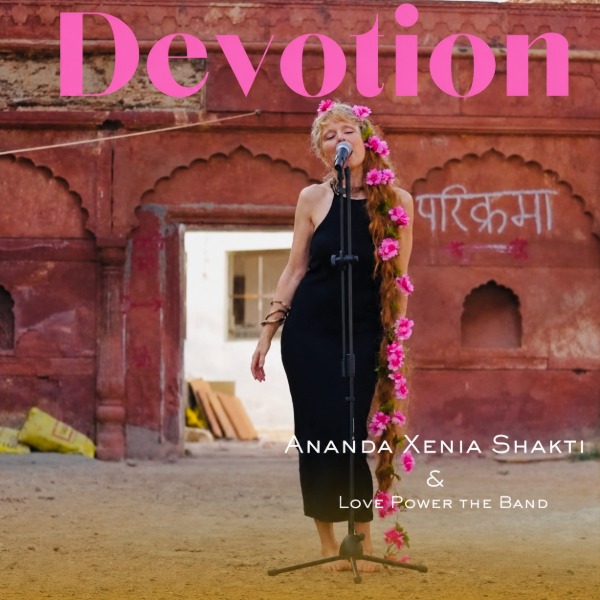
The contemporary spiritual music landscape is crowded with recordings that promise transcendence but settle for a pleasant atmosphere. Devotion, the latest single from Ananda Xenia Shakti and Love Power the Band, distinguishes itself not because it reinvents devotional music, but because it approaches it without apparent calculation. It isn’t trying to sell enlightenment. It’s documenting an encounter with it.
The song’s origin is almost too symbolic to invent. During a silent meditation retreat in Andhra Pradesh, India, Ananda found herself awake in the middle of the night, physically ill and unable to meditate in the traditional sense. Instead, she began softly chanting the names of Radha and Krishna until a melody gradually emerged around the Hare Krishna Maha Mantra. Whether one accepts the experience as divine inspiration or simply as creativity surfacing under unusual circumstances is beside the point. What matters is that the recording preserves the sincerity of that moment.
Musically, Devotion operates in familiar territory: ambient textures, world music influences, meditative rhythms, and understated production. None of those elements are especially novel on their own. Their effectiveness lies in restraint. The arrangement resists the temptation to build toward a dramatic payoff, choosing instead to maintain an atmosphere of quiet openness. That decision reflects confidence rather than caution.
Ananda’s voice is similarly understated. She doesn’t treat the material as an opportunity for vocal exhibitionism, and the performance benefits from that choice. Her singing carries a conversational intimacy, emphasizing tone and intention over technical display. The emotional effect comes from consistency rather than climax.
The production understands that silence can be as expressive as sound. Instruments appear gradually, creating space instead of density. Listeners accustomed to contemporary pop’s relentless layering may initially find the pacing unusually patient, but that patience is central to the song’s purpose. Devotion asks for attention rather than demanding it.
What gives the recording additional dimension is Ananda’s artistic history. Before dedicating herself to meditation, yoga, and devotional practice, she helped pioneer punk with The B-Girls, sharing stages with The Clash and participating in a musical movement built on urgency and disruption. The contrast is striking, but not contradictory. Punk questioned convention. Devotion questions distraction. Both reject superficiality, even if they speak in different musical languages.
The lyrics avoid grand theological claims, instead pointing toward a more universal observation: moments of discomfort often precede unexpected transformation. That theme gives the song accessibility beyond its explicitly devotional references. Listeners needn’t share Ananda’s spiritual framework to recognize the emotional truth beneath it.
If Devotion has a limitation, it’s that its deliberate subtlety won’t satisfy listeners seeking immediate hooks or dramatic emotional peaks. It unfolds gradually, rewarding repeated listening more than instant reaction. But that’s also its greatest strength. Rather than competing for attention, it offers refuge from the competition itself.
In an era where music is increasingly designed to interrupt scrolling, Devotion accomplishes something rarer. It encourages listeners to stop scrolling altogether—and, for a few minutes, simply be present.
–Bobby Chrisman