



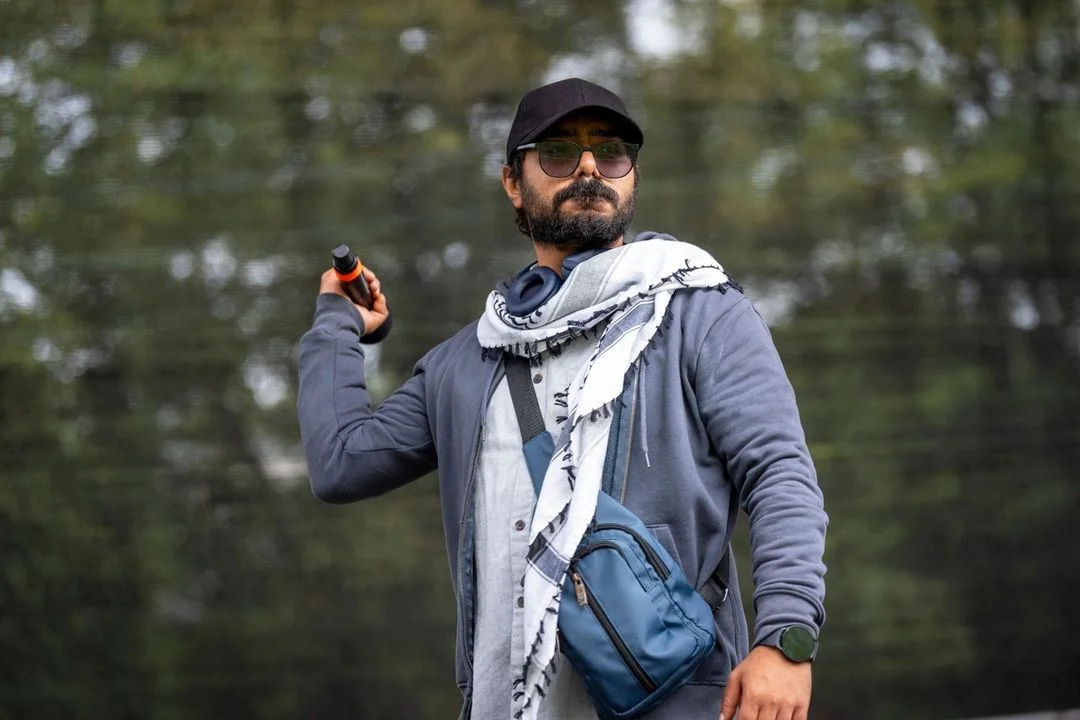
Elsusi has quickly become one of the most visible Middle Eastern artists on the Nordic scene since arriving in Norway, performing everywhere from the Oslo Mela Festival main stage to two collaborations with the Stavanger Symphony Orchestra, the Nobel Peace Center, and WEXFO in Lillehammer, alongside press coverage from Dagbladet, Dagsavisen, NRK P3 and Norsk PEN. With Eish B Karama: Meen Ana now out and an 18-track follow-up, Live with Dignity, already in the works, we wanted to talk to Elsusi directly about survival, identity, and what it means to keep making art after living through genocide.
- You survived six months under the genocide in Gaza in 2023 before building an artistic career under siege and eventually finding refuge in Norway. How did you keep making music during that time, and what did the act of creating mean to you in that context?
I wasn’t making music at all during that period. I was simply holding onto the dream that, if I survived, one day I would be able to let out everything I was carrying in my heart. My main concern was finding any possible way to keep my children and my family alive, because neither I nor they had chosen this madness.
There were people outside Gaza who asked me to make music while I was displaced and constantly trying to escape what was happening, but that made no sense to me at the time. We were living in a continuous state of survival, constantly moving, constantly trying to stay alive. From the very beginning, this genocide felt like a level of madness beyond anything I had experienced before. The destruction of Gaza was systematic, and survival became the only priority.
So I wasn’t creating music then. I was surviving, and I was storing everything inside me, hoping that if I made it out alive, I would eventually have the chance to turn all of it into music.
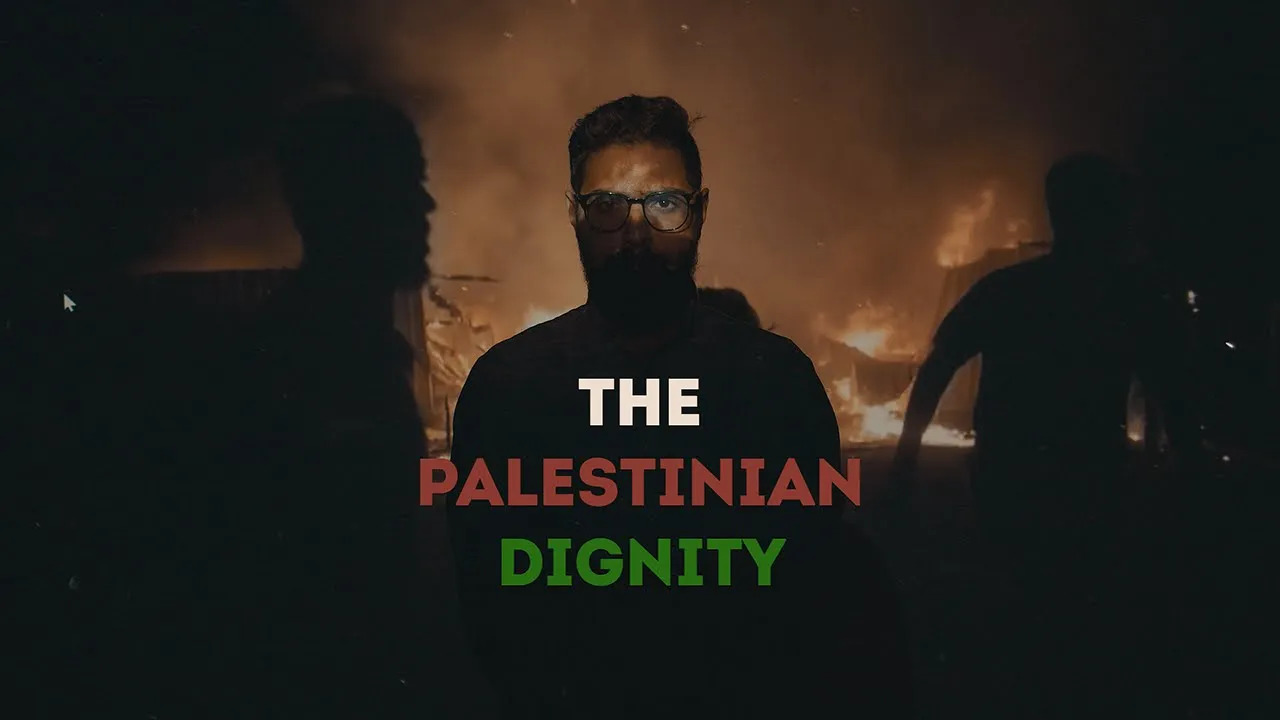
- “Meen Ana” opens the album and confronts how grief and survival reshape identity, especially after losing friends who became martyrs. What was it like writing and recording that song, and how did you know it had to open the record?
The second part of the album was already mostly finished, and originally it was supposed to contain only six songs. But I still felt that the story was incomplete, that something important was missing.
During the same period, three songs came together: “Meen Ana,” “Mesh Mohem,” and the completion of “Bmor El Youm.” They were created very quickly – writing, composition, production, and even the music video for “Meen Ana” all happened within a very short period of time. Adding those three songs was the moment when I finally felt that the album was complete and that the story had reached where it needed to go.
“Meen Ana” came from realizing that I didn’t really know who I was as a human being without presenting myself through strength, powerful words, or a strong personality. I started noticing something in myself that is still there today: I can feel that I want to cry, but I cannot cry. I feel the sadness and the need to let it out, but the tears simply don’t come.
That is why I knew “Meen Ana” had to open the album. Before anything else, before showing strength or telling the rest of the story, I wanted to begin with the most honest question I could ask myself: Who am I now?
- The album moves between deeply vulnerable material and genuinely danceable, celebratory tracks like “Bmor El Youm.” How do you think about balancing joy and grief within the same body of work?
“Bmor El Youm” is actually a very sad song, even though I deliberately chose to put that story inside a danceable musical form. I wanted the song to stay in people’s minds, and sometimes a rhythm that makes you move can carry a story that is much heavier than people first realize.
The song is about someone who deeply loves his beloved – and she can be understood either as a real woman or as his homeland. He is imprisoned by the Israeli occupation because of his resistance to it, and he loses many years of his life in prison and in this madness – perhaps ten years, perhaps twenty.
At the end of the song, I ask her: Why are you still waiting for me after all this time, when you already know that my life is full of this madness?
For me, it is a real love song, but very different from the kind of love songs that are usually made commercially. The sadness and the dance rhythm are not opposites to me. That contrast is part of the story itself – people can continue dancing, loving, and living while carrying enormous pain inside them.
I genuinely believe this song will leave a significant mark. I just don’t think its time has come yet.
- “Ma Bdee” fuses trap and rock elements around lyrics about a culture that has withstood every attempt at erasure throughout history. What did you want that song specifically to say, and why did it need that particular sound?
The song actually started in a very different musical direction. At first, the production was leaning much more toward EDM, but at the last moment I felt that it needed something else. I wanted the music to feel angrier, but at the same time more controlled and more deliberately calm in certain moments. So I rebuilt the arrangement around that feeling.
What surprised me was that I didn’t re-record the vocals. I kept the original vocal recording, and somehow, after changing the production, the emotion in that old take suddenly felt even more connected to the song.
I needed this kind of sound because I felt that the musical lines and the arrangement needed to have a more human and real character, rather than relying mainly on synthetic sounds. The song itself is angry and sad. It is about someone who was left alone with his dream, even while people around him watched him sinking into darkness. Despite that isolation, he refused to give up. He kept holding on until the end.
So for me, the rock and trap elements were not added just to make the song heavier. They became part of the character of the song – they gave the anger, loneliness, and determination a more physical and human presence.
- The album’s title translates to “Live with Dignity: Who Am I.” What does dignity mean to you now, after everything you’ve survived, and how did that idea shape the record as a whole?
 “Live with Dignity” is an idea that goes back to my childhood. I had a very difficult childhood. There were times when even basic food was hard to find, and there was almost no form of entertainment beyond playing in the street. I also grew up with a lot of psychological humiliation because I did not have the same possibilities or resources as other children.
That feeling stayed with me as I grew older. For a long time, I had no real support system, and eventually I realized that learning, creating, and educating myself were my only ways forward – my way to build something for myself and to express who I was.
When I entered music, I began to experience something different. I found respect from certain people who supported me throughout my professional journey, protected my dream from disappearing, and believed in me as an artist.
For me, dignity is connected to all of that. It is not only about surviving. It is about having the right to build yourself, to be heard, to create, and to be treated as a human being with value.
I see this album as the real beginning of my professional journey. In a way, I can say that I truly began after completing this project. Across its twenty songs, every track carries a personal story that comes from somewhere very close to my heart.
- You’ve performed at places like the Nobel Peace Center and WEXFO, spaces explicitly built around freedom of expression and democracy. What does it mean to bring this story to those particular stages?
I feel that I have had to fight for these spaces rather than simply be given them. For me, standing on stages like the Nobel Peace Center or WEXFO is important because I want to show my people, the current generation, and the next generation that there can be many inspiring voices among us.
Despite restrictions, exclusion, and what I see as a lack of serious interest from both the international and Arab cultural scenes in our creative potential, we can still create our own opportunities. We can stand on stage, sing, and build a cultural presence of our own.
For too long, Palestinians have often been approached mainly through sympathy, helplessness, or the image of the victim. Too often, we are given the microphone only when we are being killed, starved, or suffering in huge numbers. I want to be on those stages not only because of what has happened to us, but because of what we can create, imagine, and contribute.
I know that I will not liberate Palestine with a song. But I do believe that a song can give someone inspiration and energy – enough to make them do more for themselves, for their identity, and for the people around them.
To understand this perspective more clearly, I would also recommend listening to my song “Qalou,” which draws on the words of Mahmoud Darwish.
- Your upcoming album, Live with Dignity, blends English, Norwegian, and Arabic influences. How does that expanded palette reflect where you are now, compared to where you were when you started this album?
Yes, the album was deeply shaped by the fact that, after surviving Gaza, I found myself living in Norway. If I had not come to Norway, and if the genocide had not happened, I think this album would probably have been completed entirely in Arabic, without international collaborations.
Those collaborations came naturally from my attempt to become part of the Norwegian music scene and, more broadly, the international music environment I now live in. They reflect the reality of where I am today and the people, sounds, and cultures I am surrounded by.
At the same time, my main audience is still the Arab audience – people across the Arab world and in my homeland. So the album carries both realities at once: where I come from, and the new musical and cultural space I am now living inside.
- For listeners who may know little about Gaza beyond headlines, what do you most want them to understand through your music that they might not get anywhere else?
Music, for me, is a tool for entertainment, emotional release, and human connection. I am not asking listeners who know Gaza only through headlines to fully understand our reality through my music. I am simply asking them to feel.
Sometimes feeling can reach places that explanation cannot. A song can carry fear, hope, anger, memory, and survival without turning them into a political speech or a news report.
You can also listen to “Enjo” from Eish B Karama to understand that feeling more directly:
- Thank you for speaking with us, and for the honesty and courage it takes to put a story like this into music. Eish B Karama: Meen Ana is out now, and we’ll be keeping a close eye on Live with Dignity as it comes together. Stream the album and follow Elsusi’s socials for updates.