



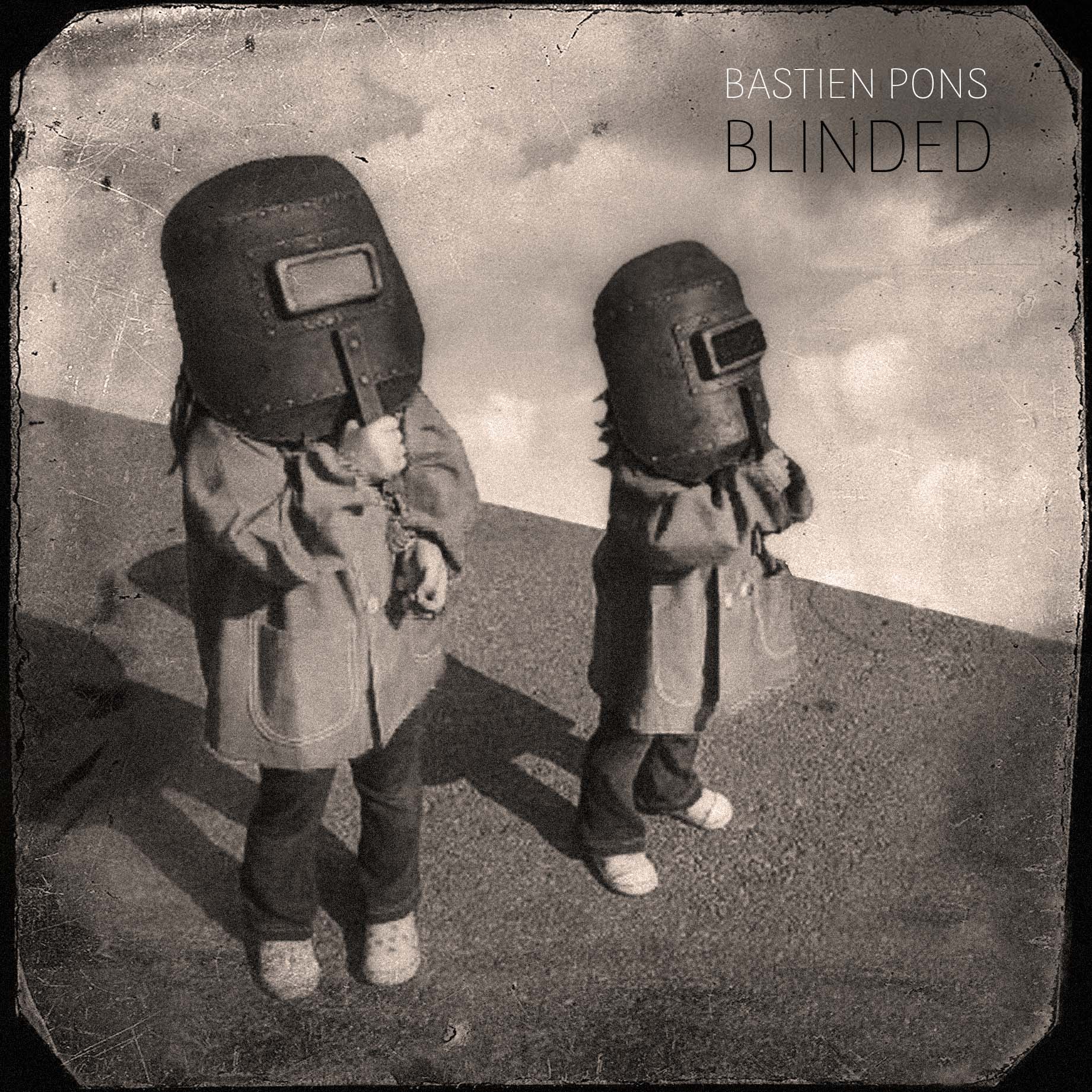
We often underestimate how much meaning a sound can carry before we even begin to interpret it. Certain sounds are inseparable from memory, geography, ritual, and cultural experience; others acquire new meanings when removed from their familiar contexts. Bastien Pons’ “Blinded” explores this space between recognition and reinterpretation, placing the Islamic call to prayer inside an experimental soundscape that is dark, tactile, and deliberately unresolved.
A French sound artist and black-and-white photographer trained in musique concrète, Pons approaches sound almost photographically: through texture, contrast, grain, and absence. On “Blinded,” drones, distortion, atmospheric layers, and sonic decay gradually form something closer to an installation than a conventional song. The track does not necessarily lead somewhere; instead, it constructs a space, potentially one for reflection and introspection.
At the centre of that space is the call to prayer, whose presence introduces an intriguing tension between the culturally recognisable and the sonically unfamiliar. Heard outside its conventional setting, the recitation can be approached simultaneously as devotional sound, cultural memory, sonic material, and an element within an experimental composition. What happens to a sound’s meaning when its context changes? And how much of that meaning belongs to the sound itself, and how much is carried by the listener?
These questions make “Blinded” particularly intriguing. Pons’ work demonstrates how sound can operate beyond musical structure, activating associations that precede conscious interpretation. A familiar cadence can evoke place, ritual, history, or memory, while its integration into an unfamiliar sonic environment potentially generates new associations altogether.
In “Blinded,” Bastien Pons seems to reveal how little distance there can be between sound and memory. A familiar recitation can carry an entire cultural landscape with it, even as its placement within an unfamiliar sonic environment begins to alter the associations surrounding it. The track therefore becomes less about defining meaning than observing how it actually moves..