



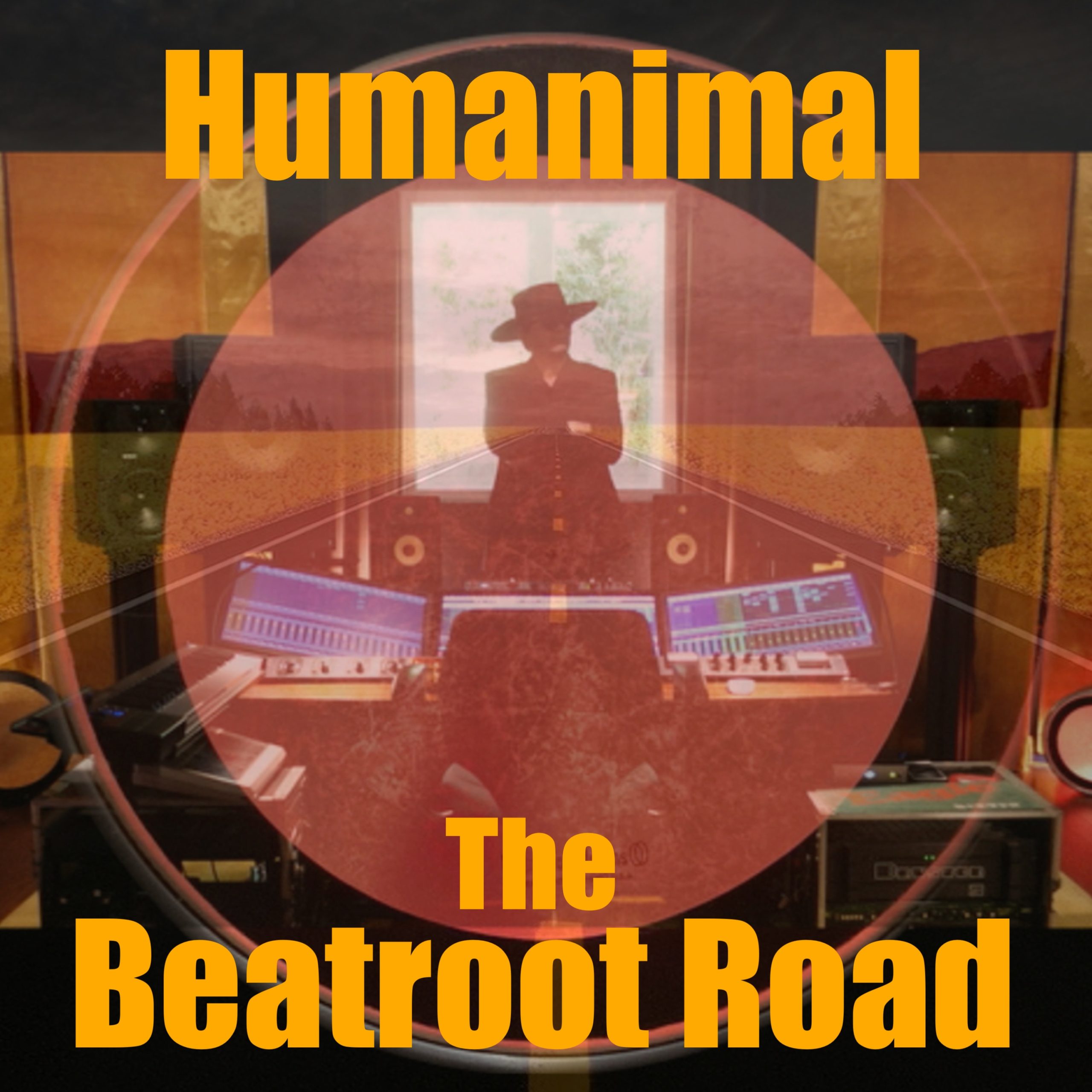
The Beatroot Road, led by North Vancouver musicians Mark Russell and Hazel Fairbairn, showcases boundary-defying artistry through international collaborations. Their latest album, Humanimal, released on October 29, 2025, features ten tracks that explore the human condition with empathy, incorporating contributions from artists in thirteen countries and blending experimental instrumentation with accessible rhythms. Influenced by acts like Massive Attack, Gorillaz, and Björk, this project highlights human creativity in a tech-driven era. Russell and Fairbairn also discuss their collaborative approach, the concept of Humanimal, and future initiatives.
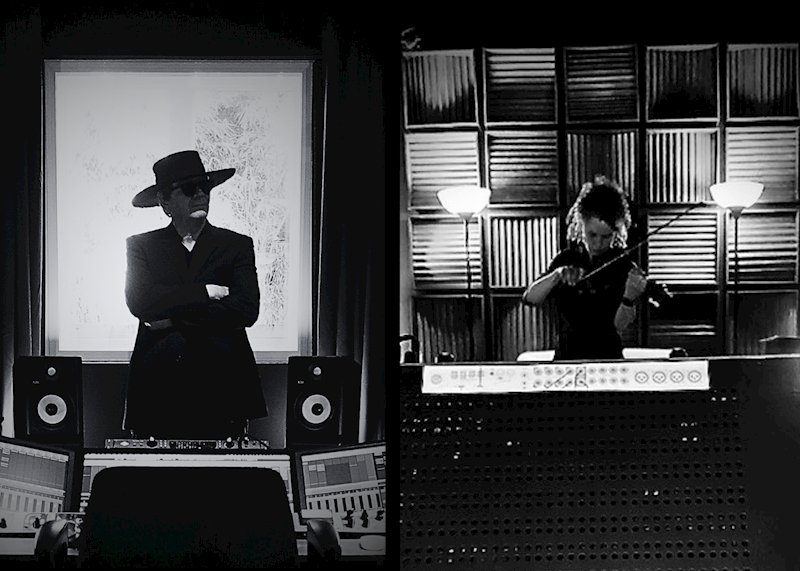
- The Beatroot Road’s formation reflects a synthesis of your respective backgrounds—Mark’s multicultural upbringing in Sudan and Scotland, and Hazel’s scholarly exploration of Irish pub music alongside global fiddle traditions. How have these foundational experiences propelled the project’s emphasis on cultural integration without adhering to traditional “world music” conventions?
– We have both played within many musical traditions over the years, and found – not surprisingly – that there is a lot that they all have in common. Music is made for the same basic human emotional reasons wherever you are from, and we’ve found it can often speak across borders with more honesty than words can. I would say most musicians these days have at least a bit of ‘world fusion’ in their make-up – it’s almost impossible to escape hearing variety now, which I think is a good thing. World music fusion used to suggest an ethnic sample mixed into an EDM beat, and I think we’ve moved way beyond that these days – internationally artists are able to integrate now.
Also, crucially, all the musics we have both been involved in have been from ‘Learn by ear’ traditions which don’t use classical music theory, and musicians from these traditions tend to ‘get’ other musics quite naturally and quickly. They don’t need to translate the sound into symbols first, and are comfortable with the language of emotion. This project would not be possible using notation – it’s another written language which is culturally exclusive and makes no sense to the majority.
Finally, now seemed like a good time to celebrate some of the things we all have in common when so many of our fellow primates are banging sticks on the ground because of our cultural differences.
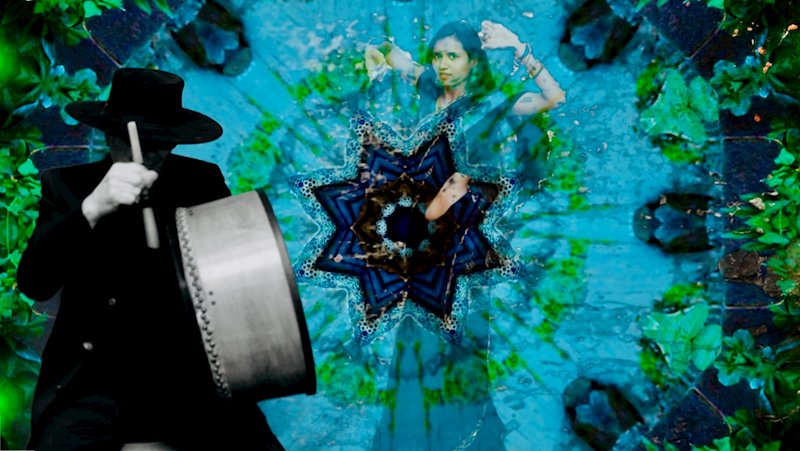
- Over the years, your collaborations have expanded to encompass session musicians from regions including Austria, Jamaica, Kenya, and Venezuela. In what manner has this evolving network of international contributors refined your methodology for fostering artistic unity across geographical and stylistic divides?
One of the few ways that the internet has been hugely beneficial for artists, is that geographical location is simply no longer an issue. In the past, you needed to be in the same room as someone to make music at all, now it’s physically easier for me to email musical ideas to and from Kenya than to get up and walk through to the next room to work with Hazel in Vancouver. This project started in lockdown, so this relatively new remote ‘artist to artist’ methodology for working was absolutely ideal, and it exploded creativity to a global level for me. We can do the work when we want – time zones are a factor here – on equipment we all own, and perhaps most importantly, very economically. It ticks a lot of boxes to allow creative work. We’ve only just started with collaborations, and I have to be careful not to get too crazy too soon, but the world is out there beckoning me.
Humanimal positions itself as a “time out” from societal polarization, offering sympathetic portrayals of human joy and pain through indirect narratives. What deliberative processes informed the album’s thematic structure, ensuring each track contributes to a non-partisan examination of shared experiences?
That bit was quite easy really because to some extent all of our work tends to be about the human condition – usually from that artist’s ‘outside looking in’ perspective. So it was mostly just selecting suitable starting points from a bag of ideas. Adding international contributions without taking a cultural, political or religious stance was much easier than expected too – nearly all the artists involved are behind the idea – and fully understood why we wanted it to be kept to just things we all have in common – particularly at the moment. There was only one artist we approached who didn’t want to take part on those terms.
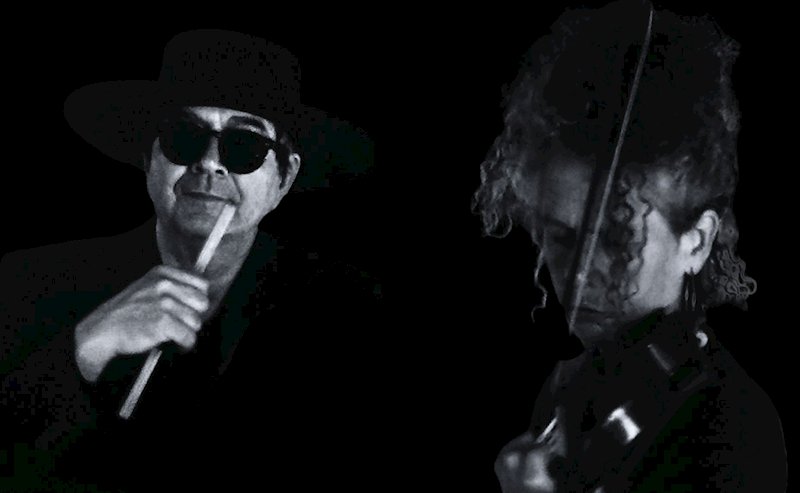
- The album’s experimental approach involves mismatching instruments and genres while anchoring compositions with a consistent rhythm section of bodhrán, rhythm fiddle, bass, and organ. How did the editing and processing at Laboratory X Studio facilitate this balance between innovation and accessibility?
Modern technology. I would love to bore the will to live out of you with an interminable technical description of my favourite audio toys and techniques, but will kerb my enthusiasm in the interests of your sanity; These days, a regular laptop with software costing $100, can mix hundreds of instruments using hundreds of technical processors like EQ, echo, reverb etc. etc. (etc.) – giving it dozens of times more available technical capability than the very largest high-end studios of the 20th century, which used to cost thousands per day to use. That needs to all sink in as it’s what you might call a game changer. I could not have sculpted the fiddle ‘guitar’ sound in Payday, or the Bodhrán sound in Dance, Sinners Dance without a lot of digital audio processing for example. It’s important to say that the work is still all performance based; this is music played by humans on instruments, and sung without autotune – the technology we use processes performances, it does not create them. That is central to our philosophy.
- Tracks such as the title song “Humanimal” critique AI’s limitations in replicating human capabilities, while others like “Payday” contemplate life’s meaning. In developing these pieces, how did you incorporate layers of lyrical depth to accommodate both casual listening and profound interpretation?
I’ve always felt that lyrics need to have depth; many of these lyrics were by Demmy James, who used simple words but always with layers of meaning. I wrote the track Humanimal with that intention, and we loved Roger Wilson’s lyrics on Payday for the same reason. Experimental music often seems to me to be written for people that are smarter than me – I don’t understand why they are doing it, and often just keep waiting for a tune to start. But I genuinely believe it doesn’t need to be like that. Simple tunes and short words can still be subtle and offer depth of meaning while remaining accessible to anybody listening – not just academics. Art is never an intellectual process at its heart.
- Given the album’s reliance on human-performed instrumentation and unprocessed vocals from thirteen countries, what logistical and technical hurdles arose during the remote collaboration and assembly phases, and how were they resolved to preserve authenticity?
It was important to me that the artists knew there was freedom to express themselves for authenticity – which is hard to convey remotely. The way I have been working for many years, is by asking artists to record a ‘free track’ with improvisations and without rhythmic or melodic restrictions after they finished recording their part to their satisfaction, when the pressure is off. These takes often contain emotional honesty way beyond the ‘correct’ recording, with some real gems that aren’t in the polished version. It’s technically easy to cut out and paste the gems in to the final work – its just time-consuming selecting – particularly if you have too much good material to work with; it’s painful binning unnecessary bits that sound great!
- Press acclaim, including from The Big Takeover Magazine, highlights Humanimal as a genre-defying endeavor rooted in human connection despite its origins in isolation. How does this release signify an advancement in your pursuit of “post-genre” music that resonates with audiences beyond polarized digital landscapes?
We hadn’t got a clue if this would be met by tumbleweed and silence or confused criticism or what, but have been delighted to see that some people are already listening and getting it. When we started we hadn’t heard of ‘post genre’ so were pleasantly surprised to see it is a real thing now. I grew up in a very creative period where every band was trying to sound original, but now music is selected by algorithms that compare and select based on similarity, so being easily defined in a genre is just the best way to make money on the internet if you aren’t too worried about quality. I guess that’s a familiar gripe in most professions, thinking about it.
But with platforms paying $0.004 per stream, only the most middle of the road music with huge numbers of streams can make any money at all in reality, and since we don’t even have an existing ‘genre’ to get us noticed by the bots in the first place, never mind mainstream appeal, we simply gave up trying to make money.
It’s been really liberating: we decided to make honest music we believe in without compromise, with the idea that if we really mean it, others may feel it too. If not, we have at least said what we wanted to say and had a wonderful time doing it. Life doesn’t often offer up much better than that in my experience, so if that’s all we’re going to get we’re still ahead!
- With Humanimal now available, what mechanisms are you implementing to promote its global reach, such as targeted outreach to diverse cultural communities or adaptations for immersive audio formats?
The artists are promoting it locally in their own countries, and we have had huge support from Steven James at IMP – and other very gratefully received oxygen from people like yourself! – helping getting it going from a total standing start; we had absolutely no following or networks of any description when we released the first track. It’s building slowly but well, and doing better than I imagined it would. We’re starting to reach out to some radio stations now too, which is a new thing for us.
Immersive audio is a different story though – Hazel has just been involved in building a superb Atmos studio, and we have just about enough speakers here to cobble together a system in our own studio, so we’ve been talking about it – a lot. Most people won’t have atmos systems though, so immersive headphones may well be the main way forward outside of movie theatres or clubs, but we think they aren’t quite there yet – there are a lot of problems to do with how brains hear music to be figured out first – its complex stuff. We are definitely keen though, and actively watching the technology develop while starting to play about with some ideas.
- Building upon the album’s call to young artists in “Dance Sinners Dance” to resist homogenization, what educational or mentorship initiatives do you envision to support emerging creators in maintaining originality?
Wow that’s a tricky one. It’s hard to see how things could change within music streaming platforms that are entirely run by such homogenizing algorithms, so I think we have to look elsewhere for support. Sites like Bandcamp are still fighting to keep music human, and for current mentoring, there are a number of internet based skills agencies that connect artists, but handle the business side themselves, and I think that’s a modern way of helping artists that works functionally.
But I can perhaps imagine a raw, low tech, teenage live movement – similar to the 1970s polar reaction of punk to disco music. There seems to be growing dissatisfaction with the enshitification of the internet – particularly amongst young people, so the conditions for change are coming. I think we have to wait for a generation of youth to become dissatisfied and angry enough with the artistic quality of music they are being fed, and then I don’t think they will need mentoring, we’ll need to just quickly step out of their way…
For many artists, I think facilitation is needed more than education. It’s delicate educating people to be creative, as it really has to come from within – art is about who you are, not something you do – and a great deal of western music education is very restrictive in its theories of right and wrong. I am not a fan personally – I passionately believe art education in particular needs to be about lighting a fire, not filling a bucket. For me, learning by ear is the way forward for creativity; if it sounds right, it is right. This works internationally, and is a central core to The Beatroot Road and our way of thinking.
- For future releases, how do you plan to extend the collaborative model of Humanimal, potentially incorporating new regions, technological integrations, or interdisciplinary elements like visual storytelling to further emphasize human-centric creativity?
I’m hungry to increase the geography and scope of our collaborations – there’s a world of fabulous artists out there – the only restriction is our very limited budget. The same goes for visuals – I make basic promotional videos myself because we simply don’t have the budget to work with a good art film maker – videos are eye-wateringly expensive to make when you start filming. The video for Morbid Love was a collaboration with film maker Atsushi Kanno and actor Yoonie Kim where they donated their time and skills as a one off, but I would absolutely love to work with another sympathetic visual artist again soon. I also have always wanted to work with an experimental dancer on a piece too, which may possibly be more achievable if I can find one. I’m always looking…