



From Niš, Serbia, Bitter Blue are the kind of band that turn personal chaos into irresistibly catchy music — and their debut EP “Levity” is the proof. Five tracks of sharp, groove-driven indie pop and rock, released through Tribal Rajber and built on years of friendship, unfiltered emotion, and a healthy love of irony. With a debut full-length album already on the horizon for this September, we caught up with the band to talk about the EP, the journey behind it, and what comes next.
- “Levity” is a word that means lightness — yet the EP was born out of one of the more turbulent periods in the band’s personal lives. How did that irony end up becoming the perfect title, and when did it click?
 That’s a very astute observation! I guess it’s a typical example of irony used as a defense mechanism more so than anything else haha. Us Serbs are notorious for putting a humorous spin on the gloomiest of circumstances so it somehow made complete sense to name the release something that’s a polar opposite of its actual content.
Also, I do remember running into the word “levity” years ago and just thinking to myself how beautiful it is in a purely phonetic sense (yes, I’m a nerd). There’s something about pretty words and sounds which excites me regardless of any specific context; art is about the beauty of creation and the process itself so sometimes that’s enough, though it was definitely a multi-layered decision in this case for sure.
- Luka, you’ve spoken about not wanting to compromise anymore — wanting this EP to be “unapologetically you, without any filters.” After years of playing in bands, what does creative freedom actually feel like when you finally have it?
Great question! I think I’m still discovering that with each new release as I prepare for it. I think the key word here is trust, meaning that I’ve learned how to trust my gut and intuitively understand what a song needs without too much second-guessing (from myself or anyone else). That doesn’t mean I always write a song in a day – some have taken me years to complete! But there’s definitely a feeling of being more relaxed about my artistic choices, knowing that I’m in full control of my vision and how I get to execute it. It’s a liberating feeling but it first had to be earned through years of trial and error, honing my craft before I could get to this point.
- The four of you had known each other for years but had never recorded together until “Levity.” What took so long — and what finally brought you all into the studio together?
Now that’s a true million dollar question right there! I guess life had to happen and pieces had to fall into place. You know how they say “best for last”? I feel like all the years of writing and playing music before Bitter Blue had led me to this point, and it all makes perfect sense in hindsight. When you’re in the thick of things, you don’t always have the best perspective and you might be convinced that whatever you’re doing at the moment is the best thing you’ve ever done.
I can now say with some confidence that Bitter Blue IS the best thing I’ve ever done but it wasn’t something that could’ve ever been rushed. At the end of the day, there wouldn’t have been any substance to it had we written it as inexperienced 20-somethings who are only looking for a good time. Don’t get me wrong, the process was enjoyable and I could have never done it with the guys by my side (shoutout to my henchmen – Milan, Stefan and Miloš!) but my larger point is that the best things happen organically and for a reason.
- Stefan produced the EP at his own Buzz Box studio, and the band handled everything internally. How did that self-contained, in-house process shape the sound and the atmosphere of the recording sessions?
It made everything more intimate, more controlled and ultimately more rewarding. The reason is that self-producing is a double-edged sword which can sometimes backfire if you don’t know what you’re doing. It’s a true test of composition and arrangement skills, and it helps to have people who understand what you’re going for by your side. I’d say we passed!
Fortunately, Stefan is one of those producers who perfectly understands the aesthetic I had in mind, in addition to being a good friend and an amazing drummer. It was a bonding experience for us in a lot of ways, and a means to strengthen the other relationships already built in the past. I guess the popular term nowadays is “healing” but that’s truly how it all felt for me.
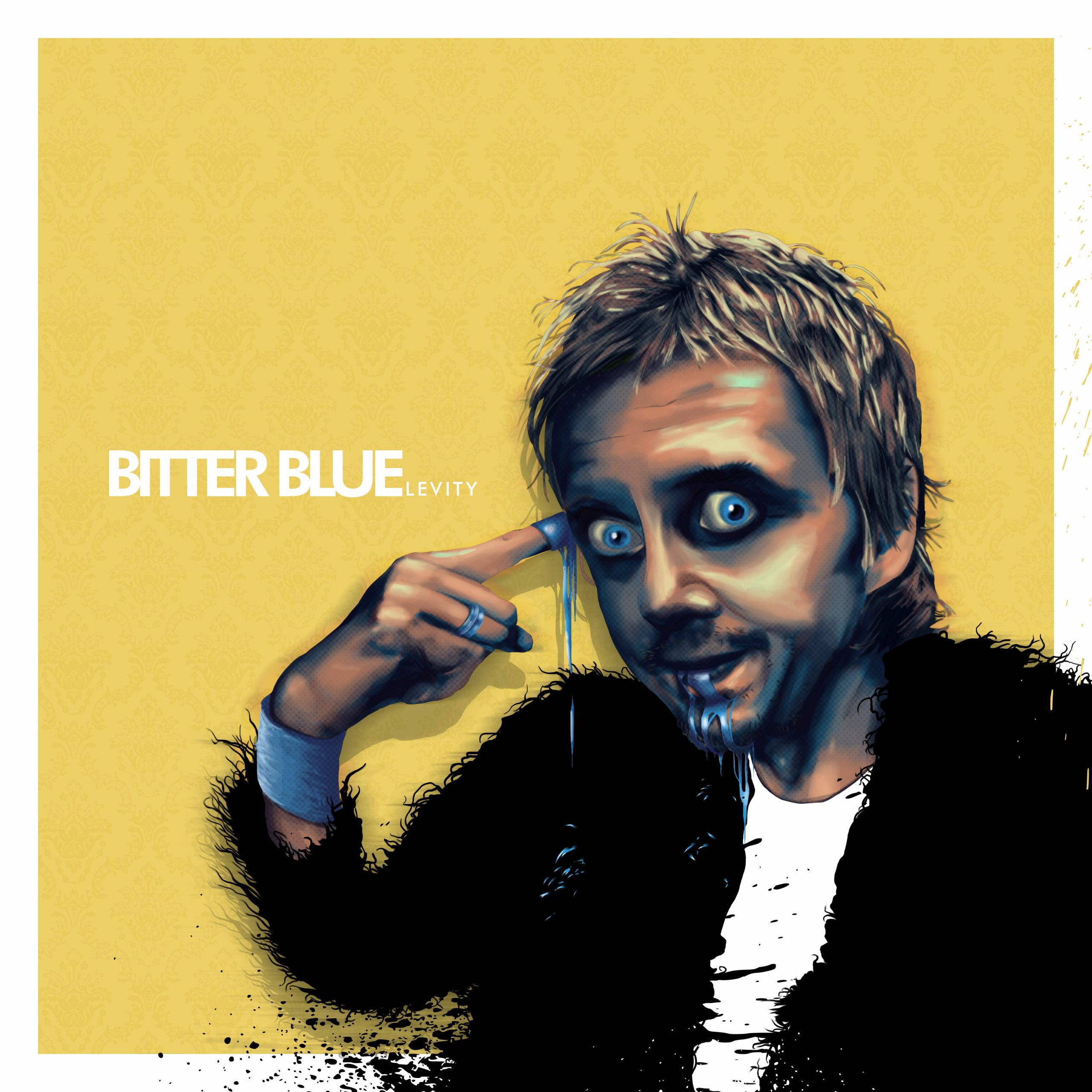
- The EP cover features Super Hans from the British sitcom Peep Show as its unlikely hero. Walk us through how that came about — and why it somehow makes complete sense in the context of this record.
If I’m honest, I can’t remember exactly how and when the genesis of SH as our avatar came to be; then again, there’s a lot of things from that period I can’t quite recall! It was all a bit of a blur (a bit like Hans himself), the idea came to me randomly – much like the EP name – but I knew at that moment it was the right call. This is part of the trust thing I was talking about earlier – sometimes you don’t need to rationalize things, it’s enough to just feel them.
Both Stefan and I are fans of the show, there’s something oddball-ish about it that’s so quintessentially British it’s beyond hilarious (this is in no way meant as an insult to my British friends, mind you – quite the opposite!). In some ways I felt like I was embodying the character and living his life at the time.
Completely disoriented and grasping at straws, the resemblance was too uncanny plus I just love everything about him so that image perfectly represented my mental and emotional state when writing those songs.
- Five tracks — Someone Better, Dirty Business, Flare, Sentinel, What Are You? — spanning love, lust, hatred, and despair. Is there a thread that ties them together, or was the emotional range of the EP entirely intentional?
It’s hard to answer that question without going into the specifics which are likely irrelevant anyway. Let’s just say it was a challenging period on all levels and that sentiment found its way of coming through in the songs. There’s definitely a thread – whatever you want to call it, it’s far from something that Chic would have sung about, to put it that way – but I find the silver lining is what makes the record for me more so than any challenges that inspired it.
Levity was our first release and it felt like just that – a release in the truest sense of the word. It’s so funny how the process of reliving traumatic events can itself feel cathartic and even ecstatic once you look at it through a creative lens. Making something out of nothing is always an enlightening experience for me no matter the circumstances, it’s something I continue to find solace in and the time and place I thrive the most. It’s where I feel the
most alive, and I believe that feeling of hope and joie-de-vivre-against-all-odds permeates the EP, even if somewhat tongue in
cheek.
- Your debut full-length album “Blueberry Eyes, Raspberry Tears” is due this September. After everything “Levity” represented personally and creatively, how does the album feel different — and what can listeners expect?
It definitely feels like the first time in my life I’ve been involved in creating actual art, not just music. And if there’s one thing I’ve learned over the last 20 years of writing and performing, it’s that there is beauty to be found in creating art even when the world is going mad and life seems too complex to grasp. Making this record felt like meditating on the top floor of a burning skyscraper – in the best possible way. Or like emerging from the bottom of the ocean and basking in the sunlight on the surface after being submerged for an extended period of time, gasping for air.
It’s a colorful album filled with a whole lot of life, a little bit of death, and everything else sprinkled in between for good measure. Above all, it’s extremely intentional; every word, note and aesthetic choice is there for a reason. Each conveys a meaning larger than the sum of the constituent parts which make up the release as a whole, and that’s probably what I’m most proud of.