



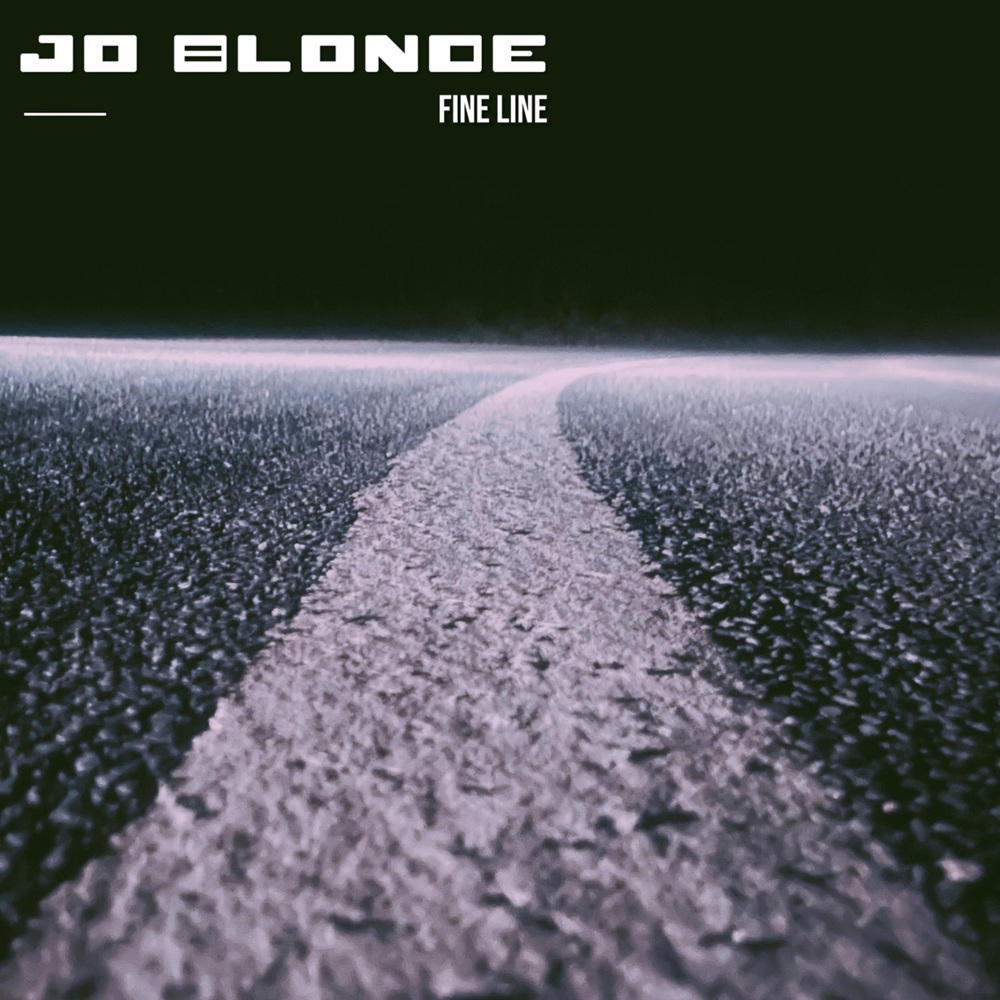
On “Fine Line,” Jo Blonde transforms emotional instability into texture. The song drifts through dark ambient spaces and fractured breakbeats like a thought you can’t silence, constantly circling questions of desire, identity, and illusion. Every moment feels suspended between intimacy and detachment, as if the track itself is afraid of getting too close to its own emotions.
Drawing from the atmospheric pull of Massive Attack while carrying shades of the hushed vulnerability associated with Billie Eilish, “Fine Line” builds a sound that feels simultaneously nostalgic and emotionally immediate. The production leans into a shadowy 90s trip-hop aesthetic, but beneath the haze sits a sharp emotional core rooted in self-awareness and psychological tension.
The writing is where the song leaves its deepest impact. “Now I’m trynna become that polished edge / But it’s taken all my fingerprints” stands out as the emotional centerpiece of the track, capturing the slow erosion of identity that can happen when love turns performative. Even the recurring line “Were you and I ever on the fine line?” feels less like romantic yearning and more like someone trying to untangle emotional confusion after the damage has already settled in.
Jo Blonde never overextends emotionally; the vocals remain controlled, ghostly, and intimate, allowing the tension to quietly simmer underneath the surface. That subtlety becomes the song’s greatest strength. Rather than dramatizing heartbreak, the track captures the quieter psychological exhaustion of constantly questioning what was real and what was projection.
At only 20 years old, Jo Blonde already demonstrates a remarkably cohesive artistic identity. Her ability to fuse dark-pop intimacy with trip-hop atmospherics and subtle jazz-inflected textures gives “Fine Line” a distinct emotional character that feels immersive rather than simply melancholic. The song doesn’t romanticize forbidden love; it dissects the emotional instability and self-fragmentation that often hide underneath it.
Through “Fine Line”, Jo Blonde leaves behind no clean resolution, only emotional residue. That lingering uncertainty becomes the track’s defining quality. “Fine Line” doesn’t merely soundtrack heartbreak; it captures the unsettling feeling of losing pieces of yourself while trying to hold onto someone else, turning emotional collapse into something strangely hypnotic..