

Home Blog Page 11

TRADITION MEETS MODERN EXPRESSION!

0

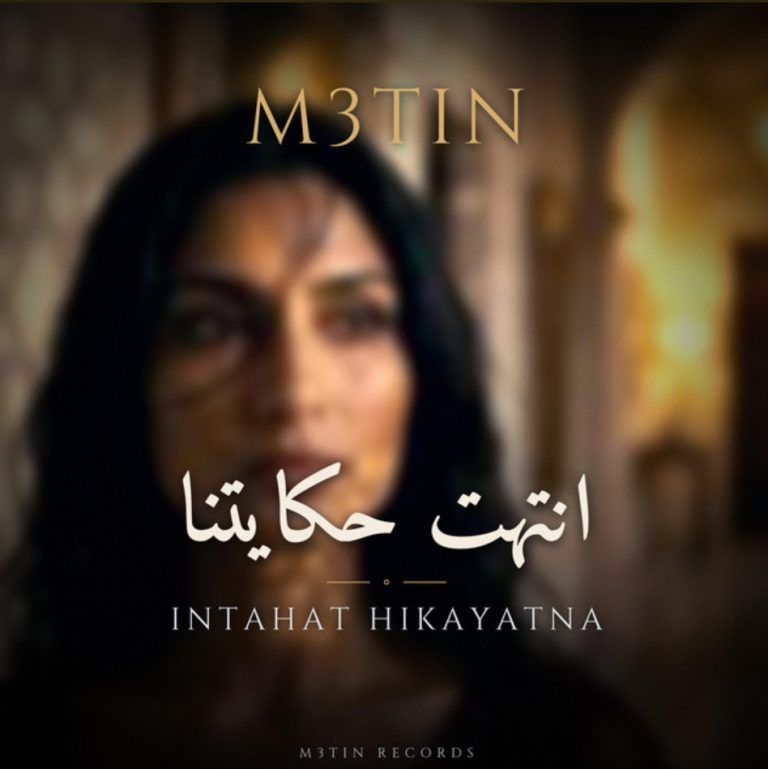
Modern Arabic music continues to evolve by balancing regional traditions with contemporary production, and M3TIN‘s “Intahat Hikayatna” is a compelling example of that evolution. Rooted in Levantine expression yet shaped by a broader cross-cultural vision, the song transforms a familiar story of heartbreak into something that feels both culturally grounded and strikingly contemporary.

The release is built around both Middle Eastern textures as well as modern production. It explores the emotional aftermath of a relationship rather than the moment it falls apart. From the opening line, “Intahat hikayatna, ma barja’ lak abadan” (Our story has ended, I’ll never come back to you), the lyrics establish a sense of finality; not through confrontation, but through quiet acceptance.

The songwriting finds its strength in its simplicity. Images of the wind carrying everything away, “Al-reeh akhadit kull shay minni” (The wind took everything from me), and confessions like “Badhak addam al-nas bas juwwati jarh ‘am yinzif” (I smile in front of people, but inside I’m still bleeding) capture the emotional contradictions that often follow a difficult goodbye. Sung in conversational Levantine Arabic, the lyrics feel intimate and authentic, reflecting the language people actually use when speaking about love, loss, and moving on.

Beyond its emotional core, “Intahat Hikayatna” is part of a broader artistic vision. Rather than simply translating one song into multiple languages, M3TIN reimagines the same narrative for different cultures, allowing each version to develop its own identity while preserving the story’s emotional essence. The Arabic adaptation feels intentionally crafted for Levantine audiences, demonstrating how the same experience of heartbreak can be expressed through different cultural voices.

The production mirrors that philosophy, weaving traditional Middle Eastern influences into a contemporary sonic landscape. The label is also transparent about incorporating AI vocal and instrumental tools into its creative process while keeping the songwriting, lyrics, and artistic direction entirely original. 

With “Intahat Hikayatna,” M3TIN offers a thoughtful exploration of how tradition and innovation can coexist, using the emotional familiarity of Levantine storytelling to create a piece that feels both rooted in place, and at the same time, capable of resonating far beyond it!
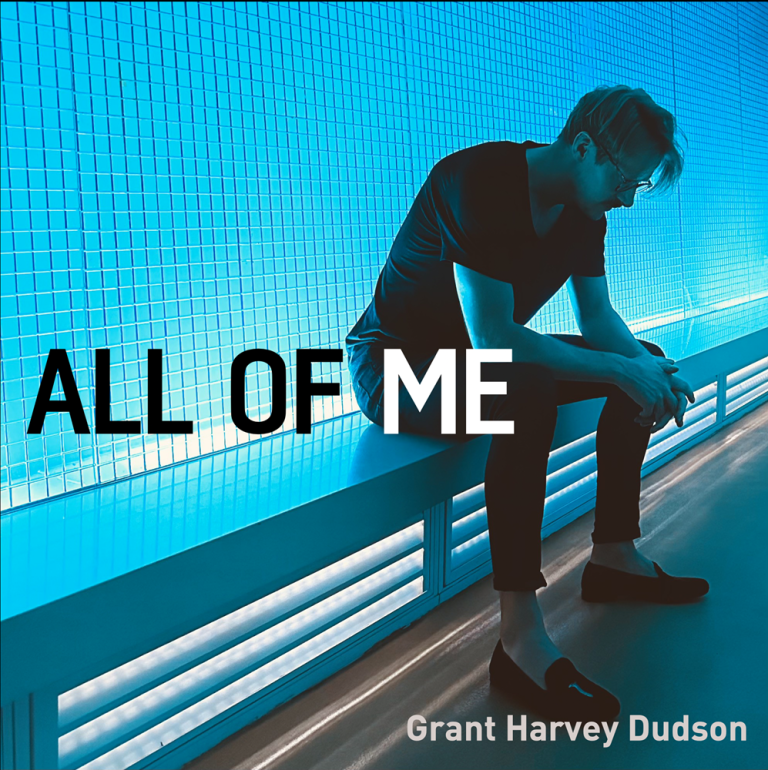

FINDING FREEDOM IN GIVING YOUR ALL!

0

Like the last golden rays of sunlight stretching across a summer evening, Grant Harvey Dudson‘s “All of Me” radiates warmth, openness, and quiet optimism. Beneath its polished commercial pop exterior lies an invitation to surrender wholeheartedly: to love more deeply, live more fully, and discover beauty in simply giving all of yourself!

The track immediately feels effortlessly inviting. Ethereal vocal textures drift over shimmering synths and textured percussion, while the mantra-like repetition of “all of me” gently pulls you into its world. As the arrangement gradually opens up, what begins as something intimate grows into a vibrant, cinematic pop anthem. Produced by Swedish producer Jonatan Backelie, every layer feels intentional, preserving the emotion at the song’s core without ever overwhelming it.

What’s distinctive about the release, though, is the message. Rather than presenting love as something flawless, All of Me reflects on the quiet courage it takes to keep choosing one another: to show up, to stay present, and to give without reservation. The recurring refrain of “all of me” slowly transforms from a catchy hook into something more reflective, highlighting the fact that one of life’s richest experiences begins when we stop holding parts of ourselves back.

Grant Harvey Dudson’s vocal performance complements that sentiment beautifully. His silky tone, delicate falsetto, layered harmonies, and understated runs never ask for attention; they simply let the emotion breathe. Knowing the vocals were first recorded in his home studio only deepens that sense of intimacy, making the performance feel genuine from beginning to end.

With “All of Me,” Grant Harvey Dudson delivers a thoughtful reminder that the moments we treasure most often come when we choose connection over hesitation, and potentially, the greatest freedom comes from unapologetically giving our all!

POWER POP WITH PURPOSE!

0

There’s a deceptive simplicity at the heart of “Sing-Along Songs.” At first, Arn-Identified Flying Objects and Alien Friends seems to offer exactly what the title promises: a bright, hook-filled indie-pop tune with jangly guitars, driving rhythms, and a chorus that’s almost impossible not to join in on. But spend a little more time with it, and it begins to reveal itself as something far more reflective, quietly exploring what it means to make music in a world that often asks for comfort over honesty.

Originally released in 2024 and now reimagined for The King and the Sparrow, this new version feels closer to that vision. The production is cleaner and more confident, with sharper edges that give the song an extra burst of energy without losing its warmth. David Myhr’s backing vocals, especially in the later choruses, add another layer of playfulness, making an already infectious track even harder to shake.

There’s also a real sense of balance here. Bright guitar jangles, buoyant percussion, and subtle organ textures keep everything moving with an effortless lightness, while touches of power pop, punk, indie rock, and folk blend together naturally. The arrangement carries an easy charm that makes the song feel instantly familiar without slipping into nostalgia.

That contrast becomes even more apparent once the lyrics begin. “Sunlight’s burning in your face, red light in a foggy place / You’re like a prophet from outer space…” isn’t quite the opening you’d expect from such an upbeat song. The imagery is surreal, slightly cryptic, and quietly thought-provoking, suggesting that beneath all the brightness sits a songwriter with something more complex on his mind.

Then comes the wonderfully infectious refrain: “Sing-along songs, sing-along songs, sing-along, ringa-ding-dong…” It’s playful, catchy, and almost disarmingly simple. But that’s exactly what makes it so effective. The chorus feels like it’s gently smiling at the very idea of pop music while embracing it at the same time. It celebrates the joy of an irresistible hook, yet subtly asks why we’re so eager to sing along in the first place.

That self-awareness surfaces again in the line, “Cousins and colleagues and friends, and even my boss, wanna hear me sing…” It’s funny on the surface, but there’s something quietly relatable about it too. It captures those everyday expectations placed on artists; not with bitterness, but with warmth and a knowing sense of humour. The song never mocks its audience or itself. Instead, it seems content to sit comfortably in that space between sincerity and irony.

With “Sing-Along Songs,” Arn-Identified Flying Objects and Alien Friends leans into a familiar pop instinct: pulling you in with something bright, immediate, and easy to hum along to; before quietly shifting the ground beneath it. What starts as pure feel-good momentum gradually opens up into something more uncertain, as if the song is gently testing how much thought can live inside a melody built for instant enjoyment. It’s that slow unfolding, rather than any single lyrical twist, that gives the track its staying power, leaving you with a sense that there’s more going on here than the chorus first lets on..

Trip (Acoustic) by CARDAMONE

0

Before she was writing songs, CARDAMONE was dancing behind Justin Bieber, Avicii, and Flo Rida on some of pop’s biggest stages. That background doesn’t show up anywhere in “Trip (Acoustic),” and that’s kind of the point. Released July 31st out of Melbourne, the track strips her recent single down to just nylon-string guitar and a single vocal take, dropping all the polish that a career built around big performances might suggest. Trip was already a song about the blurry line between how we see ourselves and how we present to everyone else, about obsession, temptation, and the versions of us we choose to reveal. Here, with nowhere to hide, that theme gets to sit in the open.

The warm tonality of this version brings out a completely different dimension of the song, like viewing the story from an entirely different angle. It still carries the same catchy rhythm as the original, but it’s obviously less danceable and much more of a vulnerable confession, the kind of thing you’d only admit to yourself late at night. The nylon strings give the arrangement a softness that a full production would have masked, and CARDAMONE‘s vocals have room to waver and second-guess themselves in a way that actually serves the subject matter. It plays out like a trip with lots of twists and turns, the melody circling back on itself the same way the lyrics do, never quite landing on a single version of the truth.

Acoustic versions can feel like an afterthought, a bonus track tacked onto a release cycle. This one doesn’t. Pulling the production away didn’t just make the song quieter; it changed what the song is actually about, shifting it from something you’d move to into something you’d sit with. For an independent artist without a label pushing the rollout, that’s a meaningful reworking rather than a lazy one.

Album: Thank You for Your Feedback (I) by Cognitive Constellation Corps

0

Brooke Tamsin Clevenger has been building music out of synthesised and computer-based systems since the mid-1990s, so when Cognitive Constellation Corps started incorporating AI-generated elements, it read less like a pivot and more like the next tool in a thirty-year practice. Thank You for Your Feedback (I) came out back in April 2025 from Clevenger’s home studio in Belfast, and it’s built around a phrase most of us hear so often it’s stopped meaning anything: the automated “thank you for your feedback” that closes out surveys and support tickets. The album takes that dead institutional language and tries to put a pulse back in it. Sitting somewhere between indie-pop, dream-pop, and mellow electronic music, it’s one of the more accessible entry points into a catalogue that runs into the hundreds of tracks, most of it circling ideas about consciousness, memory, and what happens to identity once everything we do gets filtered through some system or another.

The title track sets the tone with a relaxed pace and a soft, almost sweet vocal that works against the coldness of its own subject matter. That contrast is the whole idea. The phrase can land as sincere, sarcastic, resigned, or a polite way of being told to go away, and the song leaves that ambiguity intact rather than resolving it. “Echo Chamber (i)” pushes the concept further, turning the record’s interest in feedback loops toward repetition itself, how a message changes shape the more times it gets bounced back at you. “Signal Received (i)” and “The Curve of Clarity (i)” keep that thread going, and there’s a real cohesion to how these tracks talk to each other across the record rather than functioning as standalone singles.

The AI involvement here is worth addressing plainly since Clevenger doesn’t hide it. AI-assisted tools contributed some of the voices and textures on the album, which were then reshaped through traditional production and editing. It’s a reasonable way for an independent artist with a huge back catalogue to generate new source material without a full band or studio budget, and to Clevenger’s credit, the arrangement, structure, and emotional pacing all still feel like the product of a person making deliberate choices rather than a system generating on autopilot. The vocals land warmer than most AI-adjacent production usually manages, though there are moments where the smoothness works against the record’s own argument about human meaning surviving inside technological systems.

Clevenger has described the title phrase as something that can carry gratitude, irony, and rebuke all at once depending on what the listener brings to it, and that ambiguity is really the record’s engine. With over half a million plays on SoundCloud already behind the wider project, Thank You for Your Feedback (I) works as a genuinely welcoming way into a much larger and stranger body of work, and it earns that welcome without dumbing anything down to get there.

Female Fronted Alt Rock Band ‘Burning Bouquet’ Returns With New Single ‘What You Signed Up For’

0
Since exploding onto the historic Sheffield music scene in September 2023, alternative rock outfit Burning Bouquet has been on a rapid, relentless ascent. The four-piece band—comprising vocalist Rachael Dutton, guitarist/bassist Jamie Dutton, drummer Archie Beresford, and guitarist Bhavik Mistry—has quickly established themselves as one of the most exciting new names in the local indie and rock circuit.
Burning Bouquet seamlessly bridges genres to craft a sound that is both nostalgic and fiercely contemporary. Striking a delicate balance between atmospheric weight and pop sensibility, their music draws inspiration from a diverse lineage of heavyweights, including Paramore, Deftones, Holding Absence, Evanescence, and The Cranberries.
The band’s early career was defined by raw, captivating bedroom demos like “M16”, “Take It All Off”, and “Let It Fade”, which laid the foundation for their distinct identity. They soon transitioned into a formidable studio force with the release of their standout track “What You Signed Up For” and their highly anticipated debut EP, The Rain, featuring the fan-favourite single “The Cycle”.
Beyond the studio, Burning Bouquet is best experienced live. Having already commanded the stages of prominent independent venues like Sidney & Matilda and The Greenhouse, the band has built a reputation for cathartic, sweat-soaked, and emotionally resonant live sets. With an ever-growing discography and a rapidly expanding fanbase, Burning Bouquet is proving that they are exactly what the modern alternative rock scene signed up for.

ROOTED IN NATURE AND GRATITUDE!

0

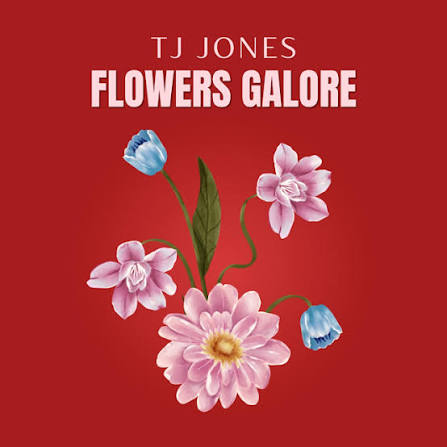
Like sunlight spilling across a field after the rain, TJ Jones‘ “Flowers Galore” unfolds with quiet warmth and gentle optimism. The Lo-fi Pop single celebrates nature’s ability to heal, reminding listeners that even the smallest bloom can become a symbol of gratitude, renewal, and hope.

“Flowers galore, flowers I adore,” the track immediately establishes flowers as more than a recurring image. They become a lens through which Jones reflects on life’s quiet abundance. References to florists, farmers’ markets, gardens, and hillsides paint familiar scenes that encourage listeners to rediscover beauty in places often overlooked. Rather than relying on elaborate storytelling, she embraces simplicity, allowing these everyday moments to resonate naturally.

Warm instrumentation and nostalgic Lo-fi textures create an inviting soundscape where every melody feels unhurried. Spacious arrangements leave room for reflection, complementing the song’s gentle message instead of competing with it. The result is an atmosphere that feels comforting from beginning to end.

The sense of optimism in this track is undeniable. It suggests that hope can be found by paying closer attention to the world around us. In doing so, the track gently encourages mindfulness without sacrificing its musical charm.

With “Flowers Galore,” TJ Jones crafts a heartfelt tribute to nature’s enduring ability to restore perspective and inspire gratitude through life’s simplest moments. Blending reflective lyricism with warm, understated production, TJ Jones’ “Flowers Galore” offers its listeners a peaceful reminder that beauty often blooms where we choose to notice it!

WHOLE, COMPLETE, AND ALWAYS ENOUGH!

0

What if empowerment wasn’t about becoming stronger, but remembering that you already are? That’s the question Keesha Blair explores throughout “Peaceful Power,” a soulful blend of contemporary R&B and neo-soul that reframes healing as an act of remembrance rather than reinvention. Blair embraces restraint, allowing sincerity to become the song’s greatest strength.

Warm instrumentation and understated production create a calming atmosphere where every musical element serves the message instead of competing with it. The arrangement unfolds with quiet confidence, giving the lyrics room to resonate while inviting listeners into a space of reflection.

Blair’s songwriting immediately establishes the song’s philosophy with the affirmation, “I love my light, I love my dark,” rejecting the idea that healing requires denying the parts of ourselves we’d rather hide. Instead, she celebrates wholeness, later transforming pain into purpose through the poignant line, “What once were scars, now sacred art.” The recurring refrain, “We were always perfect, whole, complete,” becomes the emotional anchor of the track, reminding listeners that worth isn’t something to earn but something to remember. Equally impactful is “What is mine is mine, no need to compete,” a gentle rejection of comparison in favor of inner security.

Blair also expands the conversation beyond personal healing. References to ancestral wisdom, inner child healing, and emotional restoration add depth without ever feeling inaccessible. Lines like “Hold my inner child like a sacred kid” capture the quiet courage of extending compassion to ourselves, while her warm, intimate vocal delivery makes each affirmation feel heartfelt rather than instructional.

The accompanying music video reinforces these themes through thoughtful symbolism. The inclusion of a lioness alongside Keesha Blair is a particularly clever visual choice, instantly reinforcing the song’s message of grounded confidence, resilience, and feminine empowerment.

Skilfully,  Keesha Blair delivers more than an uplifting R&B release through “Peaceful Power,”. She offers a thoughtful and well-needed reminder that true strength isn’t found in becoming someone else, but in embracing every part of who we already are!

Wake Up by MrGeorge

0

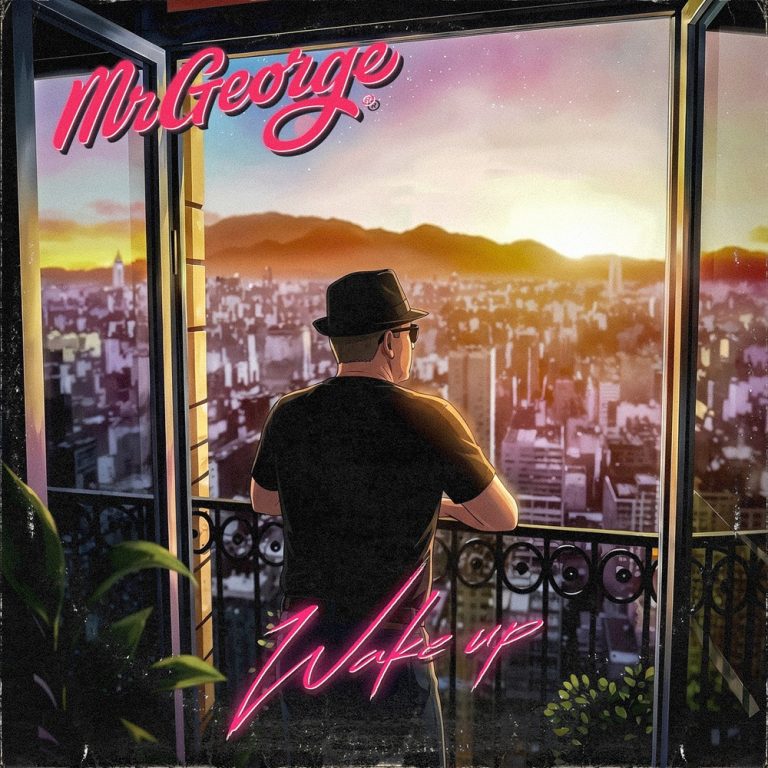
MrGeorge, the solo project of German artist Jörg Schurig, has spent decades working his way toward this sound. Before settling into his retro synthwave identity, he cut his teeth in early projects like Digital and Fame, worked the technical and hosting side of discotheques RockBox and Melodia 8512, and moved through the stage-focused LOTOS project and the ensemble Die Landstreicher before finally landing on MrGeorge as an independent artist. “Wake Up,” released July 17th, is written by Mike Streefkerk with composition from Andreas Goldmann, and it’s built on the pulsating analog synths and crisp modern production that have become Schurig’s signature.

The song is about that moment of realizing you’ve been coasting, and choosing to stop. That’s a well-worn theme in synth-pop, but it lands here, and it’s hard not to take something personal from it. This song is very inspiring and moved me very deeply. Every waking moment where you have the energy, you should be looking around and admiring the beauty all around us and not take it for granted. We should strive to do more instead of regretting our inaction and dreaming of what could have been and dwell on the past. That’s the feeling “Wake Up” is chasing, and the driving 80s-indebted production, all pulsing synth lines and a hook built to stick, gives that message somewhere to live rather than just sitting on the surface as a lyric sheet.

Musically, the track doesn’t reinvent synthwave so much as commit to it fully, retro in its palette but current in its polish, which is exactly the balance Schurig says he’s after. His voice carries the melody with a directness that suits the song’s plainspoken message, and there’s nothing ironic or winking about the retro aesthetic here. It reads as an attitude rather than a costume.

“Wake Up” is a small, focused statement, but it’s an effective one. It doesn’t try to be more than a synth-pop song about choosing presence over regret, and within that scope, it does its job well.

Blue Hour by DJ Cards

0

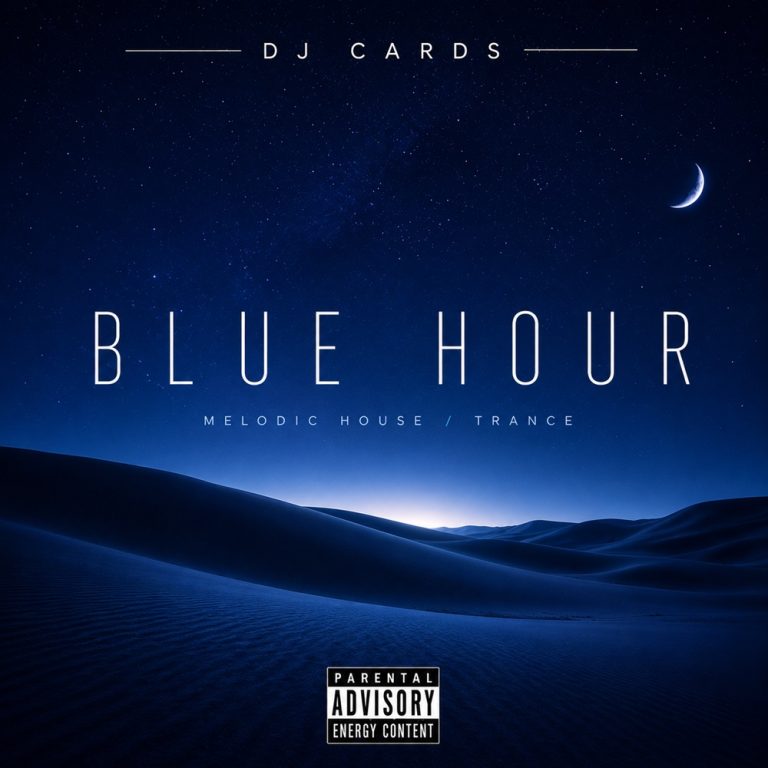
Michael Cardamone’s third outing as DJ Cards keeps building out the same trance-and-melodic-house world I’ve covered across “Forward” and “After Midnight,” but “Blue Hour,” out August 21st, is the most patient of the three. Where “Forward” chased a peak-time euphoric build and “After Midnight” sat in that transitional, in-between space of a night out, “Blue Hour” pulls back even further, built entirely around the quiet, fleeting window right after sunset, no drop, no big vocal moment, just soaring synths, warm analog texture and a groove that evolves gradually rather than aiming for any single climax.

This song is very atmospheric and relaxing, and that’s really the whole intention behind it. Cardamone has described the track as an attempt to let people breathe and reflect rather than chase an obvious high point, and the production backs that up, shimmering arpeggios and cinematic layering doing the emotional work instead of a hook or a vocal. It’s a quieter ambition than his last two singles were working toward, and it suits the specific moment the title is built around, that brief stretch where the day hasn’t quite become night yet.

Across three singles now, a pattern is starting to take shape in how Cardamone approaches this project: each track picks one specific slice of time, a moment of forward momentum, a lull inside a party, now the sky’s own transition at dusk, and builds the entire sonic identity of the song around honoring that moment rather than forcing it into a bigger, more generic dance structure. “Blue Hour” is the clearest example yet of that instinct, prioritizing atmosphere and stillness over any of the more festival-ready impulses that defined his earlier work.

For someone barely a year into making this music, that kind of restraint is a good sign. “Blue Hour” doesn’t need volume or a drop to make its point, and the fact that Cardamone’s willing to let a song simply sit in a mood rather than build toward something louder suggests his sound is maturing past its earliest, more obviously crowd-pleasing instincts.