


Home Blog Page 13

WE’VE ALL BEEN THERE!

0

Everyone has experienced that lingering thought, ambition, or feeling that refuses to fade. It quietly occupies the mind, growing stronger the longer it goes unanswered. TJ Jones taps into that familiar emotional space on “Scratch That Itch (Jazz Version),” transforming a universal experience into a smooth contemporary jazz journey shaped by reflection, groove, and quiet introspection.

The track gracefully embraces jazz’s conversational nature. Expressive melodies and nuanced phrasing unfold with ease, allowing each musical passage to feel intentional while maintaining a relaxed, sophisticated atmosphere. While rooted in contemporary jazz, the track remains approachable, making it easy for listeners of all backgrounds to connect with its melodic appeal.

The song’s greatest strength lies in its central metaphor. Rather than treating the “itch” as something literal, it becomes a symbol for the persistent ideas, desires, and aspirations that linger beneath the surface, patiently demanding attention. As the arrangement progresses, it mirrors an internal dialogue where caution and impulse continuously exchange places, inviting listeners to reflect on their own moments of hesitation and resolve.

TJ Jones approaches the composition with an emphasis on authenticity, pairing memorable melodic ideas with contemporary jazz influences that feel both timeless and accessible. The result is a track that balances thoughtful storytelling with an inviting groove, appealing to jazz enthusiasts while remaining approachable for listeners beyond the genre.

With “Scratch That Itch (Jazz Version),” TJ Jones delivers a refined contemporary jazz release that transforms an everyday human experience into an engaging musical reflection. Rich in atmosphere, expressive in its musicianship, and grounded in relatable emotion, the single is a reminder that some of life’s most compelling moments begin with the thoughts we simply can’t ignore!
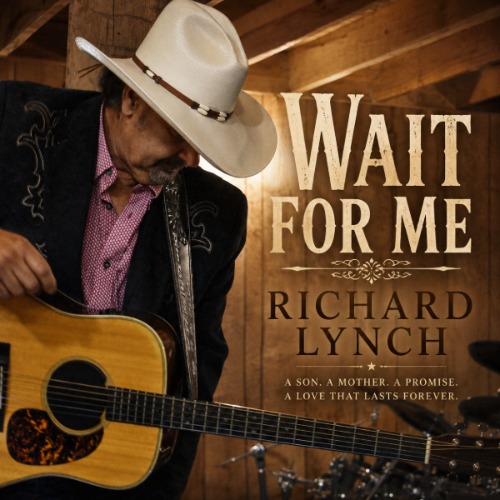

Richard Lynch’s “Wait For Me”: A Country Ballad That Hits Harder Than Any Power Chord

0

There are songs that make noise, and then there are songs that make silence matter. Richard Lynch’s “Wait For Me” belongs squarely in the second camp. It doesn’t chase trends, flex production tricks, or beg for attention. Instead, it walks into the room with the quiet confidence of someone who knows the truth is enough. By the time it’s over, you’re left staring into space, replaying your own memories.

That’s a rare accomplishment.

Lynch has always been a traditionalist. While much of modern country has drifted toward pop hooks and arena bombast, he’s remained committed to the genre’s original currency: storytelling. “Wait For Me” is perhaps the purest expression of that commitment, stripping everything down to one universal experience—a son making his way to say goodbye to the woman who first taught him what love looked like.

Heavy? Absolutely.

Manipulative? Not for a second.

The genius of this song is that it refuses to exploit grief. Instead, it celebrates a life. The lyric keeps returning to a mother’s hands—not as sentimental imagery, but as evidence. These hands soothed childhood fears, stitched clothes back together, wiped away tears, comforted pain, and quietly carried the weight of family life. Those details hit because they’re real. Every listener has known hands like these.

Musically, Lynch and his band know exactly when not to show off. The arrangement breathes. Acoustic guitar anchors the song while steel guitar drifts through the background like memories that refuse to fade. Every note serves the story instead of competing with it. In an era where production often screams for attention, “Wait For Me” understands the strength found in restraint.

Then there’s Richard’s voice.

It’s not polished into perfection, and thank goodness for that. His weathered baritone carries the texture of experience, the kind that only comes from years of living the stories you’re singing. When he reaches the repeated plea, “Momma, I’m on my way… hold on, wait for me,” it doesn’t sound rehearsed. It sounds urgent. Honest. Human.

That’s the heartbeat of great country music.

Faith also plays an important role here, but never as a sermon. God isn’t introduced as a convenient lyric; He’s already present in this family’s life. The references to peace, eternity, and reunion feel organic, offering hope without diminishing the sorrow. That’s a difficult balance to achieve, and Lynch handles it with grace.

Country music has always excelled when it remembers ordinary people doing extraordinary things. “Wait For Me” doesn’t celebrate fame or fortune. It honors motherhood. It recognizes that some of the greatest heroes never stand beneath stage lights—they stand in kitchens, on front porches, in church pews, and beside children’s beds long after everyone else has gone to sleep.

Those are the people Richard Lynch sings for.

In a musical landscape increasingly obsessed with instant gratification, “Wait For Me” feels almost rebellious. It asks listeners to slow down, remember where they came from, and appreciate the people whose sacrifices shaped their lives. That’s not nostalgia—it’s gratitude.

The best songs don’t simply entertain. They stay with you.

Richard Lynch has written one of those songs.

And long after the final chord fades, chances are you’ll find yourself wanting to call your mother—or, if you no longer can, simply whispering a quiet thank you into the silence.

–Lonnie Nabors

Next Time (I Won’t Be Falling/You’ve Got Me Falling) by C’batch

0

Stephen H. Cumberbatch, working as C’batch, has been part of New York’s dance music lineage since the early 80s, co-writing tracks like “I Need You Now” for Sinnamon, a foundational New York club record whose “Fierce Reprise” mix has been sampled in more than a hundred songs since. Through Stevette Music, the independent label he co-founded with Yvette Cumberbatch back in 1984, he’s kept that same lineage running for decades. “Next Time (I Won’t Be Falling/You’ve Got Me Falling)” out July 10th, takes his original May single and reworks it into a full dance remix, soulful vocals now wrapped in house rhythms and more polished electronic production.

The retitling says a lot about what the remix is actually doing. Where the original leaned on the guarded, “I won’t be falling” framing, the new version folds in “You’ve got me falling,” turning a song about resistance into one about being caught off guard by unexpected joy. Cumberbatch has described the remix as being about finding happiness after heartbreak, the moment someone shows up right when you’d decided you were done falling for anyone, and that shift in framing gives the same emotional material a genuinely different arc the second time around rather than just a faster tempo.

Musically, the remix sits comfortably in vocal house and nu-disco territory, warm and soulful rather than aggressive, built for a summer playlist as much as an actual dancefloor. Given Cumberbatch’s history writing and producing across house, garage and club music going back to the genre’s earlier eras, that comfort isn’t surprising; this is someone who’s been shaping this exact sound since before most contemporary house producers were born, and the remix carries that experience in how unforced the groove feels.

For an artist whose catalog reaches back to some of house music’s formative New York years, “Next Time” plays as a genuine continuation rather than a legacy artist chasing a current trend. It’s a warm, well-crafted piece of vocal house that earns its uplifting framing honestly, less a reinvention than a natural next chapter for a song, and a songwriter still finding new angles on the same idea.

Sexy Blueberry by John Miller

0

John Miller works solo out of Paris, and “Sexy Blueberry” out June 25th, is, by his own account, a genuinely raw piece of work, written during a period of real personal suffering and centered on an ex he still can’t quite let go of. The playful title is a bit of a misdirect; underneath it is a song about lingering love running up against pride, the kind of confession someone writes when they can’t quite say the words directly.

That tension between what’s felt and what’s actually said is really the emotional engine of the track. Miller’s own account of the writing process is blunt about it: this is him talking through an unresolved relationship, working through why he stayed as long as he did even when things clearly weren’t right. The lyrics lean into vivid, almost cinematic imagery: champagne, hotel rooms, a kind of beautiful chaos, framing the relationship as something intoxicating and destructive at once, which fits the deep house genre’s tendency to wrap emotionally heavy content in a smoother, more polished sonic bed.

That contrast- a warm, atmospheric house production carrying lyrics this personal and unresolved- is what gives “Sexy Blueberry” its particular charge. Deep house doesn’t always lend itself to this kind of direct emotional confession; the genre’s usual mode is atmosphere over narrative. Miller pushes against that a little, letting the song’s groove carry real specificity rather than just a general mood, which makes the track feel more like a diary entry set to a beat than a typical house single.

With a more techno-leaning EP reportedly on the way, “Sexy Blueberry” reads as a snapshot of where Miller is right now rather than a fixed direction for his sound going forward. Whatever comes next, this single works because it commits fully to being exactly what it is: unguarded, a little messy, and honest about the specific kind of pride that keeps someone from just saying what they mean.

Take It Away by Fishburn

0

Russ Harris, once a Billboard Dance Chart-charting producer and remixer, shifted his focus in 2020 toward Contemporary Christian music under the name Fishburn, and “Take It Away,” out July 3rd, is the third chapter of his upcoming concept album Bukra, following “The Flame” and “The Baker Woman.” Written and produced by Harris with vocals from Emy Smith, the song is built explicitly as a prayer, addressed to anyone carrying grief, anxiety, loneliness, or spiritual exhaustion.

What makes “Take It Away” land is how directly it sits with the weight it’s describing before offering anything resembling relief. It opens with the admission of screaming on the inside, and that kind of unguarded honesty about internal struggle isn’t always a given in worship-adjacent pop, which can lean toward reassurance before it earns it. Here, the song stays with the darkness long enough to make the eventual turn toward surrender feel like something actually wrestled with rather than assumed.

Surrender is the track’s entire architecture, and it works on two levels at once. Musically, the chorus’s repeated plea gives way to a quieter, settled resolution, a shift from pleading to acceptance built right into the song’s structure. Spiritually, that same arc mirrors what surrender means within the faith the song is rooted in: not passivity, but the act of handing over what a person can no longer carry alone. The two reinforce each other, the musical release and the spiritual one arriving in the same breath, which is what gives the song its emotional charge rather than making it feel like a lyrical statement layered over a generic pop structure.

That structure also mirrors the album’s larger arc. Bukra moves from searching for light, to discovering where that light comes from, to this song’s act of finally releasing the burden altogether, and “Take It Away” plays as the emotional hinge of that progression rather than a standalone moment. For listeners navigating their own grief or exhaustion, faith-based or not, the song’s core message- that surrender is a form of strength rather than defeat- is built to land regardless of where someone is in that process.

“Take It Away” doesn’t rush its own comfort. It earns the hope at its center by sitting honestly with the weight that comes before it, and that patience is what gives the song its resonance.

Sea of Light by Naoko Hiranuma

0

Naoko Hiranuma spent years living by the ocean before music became her full-time focus, working as a diving instructor in Japan, the Maldives, and Fiji before running a surf camp of her own. That connection to the water runs through everything she writes, and “Sea of Light,” out February 5th, folds it directly into the song’s central image: a nighttime drive from the coast into the city, memories of a brief summer romance blurring together with the reflected city lights the way the tide blurs a shoreline.

This song took my breath away. I was actually stunned from the get-go. The way it starts is so perfectly intimate and yet bigger than life; it just completely engulfs you with its emotion like a wave. It’s so powerful, and it’s largely due to Naoko’s incredible vocal delivery and also the powerful and incredibly rich soundscape that supports her.

That wave metaphor fits the song’s own structure well. “Sea of Light” builds gradually rather than all at once, tracking with the press description of a track that unfolds toward an emotional climax rather than front-loading its biggest moment, and the way Hiranuma’s vocal performance grows alongside that build gives the song a real sense of motion, mirroring the night drive at its center. The production stays cinematic without crowding her voice out, leaving enough space that the more intimate opening moments and the fuller, more emotional swell later on both land clearly.

What comes through most is how specific the song stays to its own imagery rather than reaching for something more generic. A romance that fades but leaves its memory glowing, framed literally as a sea of light against a real, remembered drive, gives the song a concrete emotional anchor instead of just gesturing at nostalgia in the abstract. Given Hiranuma’s own history spent so close to the ocean, that specificity reads as lived-in rather than borrowed.

“Sea of Light” is a strong showcase of what cinematic indie folk can do when the imagery driving it actually means something to the person singing it, and Hiranuma’s vocal performance is more than capable of carrying that weight.

Mercy Mercy by Kinshift

0

I was already sold on “funky, soulful and gospel-inspired” music, but this project is even more than that. Kinshift is the house band of KinShift Music Studio out of St. Louis, led by musician and pastor Monty Jackson, and built as a multi-ethnic, intergenerational group with a mission that goes well beyond just making records: promoting equity, unity, and compassion through music, under a genre they’ve coined “Ambipop,” meant to blend sacred and secular themes without drawing a hard line between them. “Mercy Mercy,” out June 5th, features two of the group’s lead vocalists and pushes that mission into a specific, timely message: moving from certainty toward humility, and from judgment toward actually seeing and understanding someone else.

Musically, this is exactly what you would expect. It’s an incredibly groovy song with an impeccable rhythm section and such great human chemistry among all the musicians, which is at the heart of the project both musically and thematically. That chemistry isn’t incidental to the message; a song about finding connection and mercy across division works a lot better coming from a group whose whole identity is built around musicians of different backgrounds and generations actually playing in the same pocket together. The groove itself becomes an illustration of the point the lyrics are making.

Pulling from neo-soul storytelling, classic gospel, and a Motown-pop crossover energy, “Mercy Mercy” sits comfortably next to acts like Silk Sonic and Sammy Rae & The Friends without losing the more explicitly spiritual undertone that separates Kinshift’s mission from a straightforward funk revival act. The song doesn’t preach so much as it demonstrates, letting a tight, joyful arrangement carry a message about unity that would risk sounding hollow if the band itself weren’t visibly living it out in how the track was made.

“Mercy Mercy” works both as a genuinely fun, danceable soul cut and as a clear statement of what Kinshift is actually trying to build. For a project this explicit about its values, that’s the hardest trick to pull off, and the chemistry in the room is what makes it land.

A JOYFUL REMINDER TO SLOW DOWN AND SMILE!

0

Blending retro pop-rock textures with polished contemporary production, Mick J. Clark‘s “Anuther Sunny Hulliday” arrives as a cheerful celebration of sunshine, travel, and the simple joy of stepping away from everyday routines. Mick J. Clark crafts an uplifting anthem that captures the excitement of setting off on holiday, embracing carefree moments under the sun, and cherishing the simple moments that make every getaway memorable.

Built around a funky bassline and warm acoustic guitar, the track gradually opens into a vibrant arrangement filled with crisp instrumentation and tasteful backing harmonies. The production feels light and inviting, allowing each musical layer to breathe while preserving the song’s easygoing energy. Rooted in ’80s-inspired pop-rock, the sound is familiar yet refreshed with a clean contemporary finish that makes it equally suited for a summer road trip or a relaxed afternoon in the sunshine.

One of the song’s most endearing qualities is its playful personality. The unconventional spelling of “Anuther Sunny Hulliday” reflects Clark’s natural vocal delivery, giving the title an unmistakable charm that carries throughout the track. Lyrically, it follows the emotional rhythm of a holiday itself, from the anticipation before departure to carefree days by the pool and the bittersweet journey home. Even the closing airplane sound effect offers a thoughtful finishing touch, subtly bringing the story full circle.

Beyond its infectious melodies, the single reflects Clark’s long-standing approach to songwriting. Known for creating music with heart and purpose, he has explored themes ranging from children’s confidence to environmental awareness and relationships. Here, however, the focus is simply on celebrating happiness, with the accompanying “Parrot Dance” extending that joyful spirit to younger listeners and families alike.

With “Anuther Sunny Hulliday,” Mick J. Clark delivers exactly what summer playlists often need: warmth, optimism, and melodies that leave a smile behind. Bright, sincere, and effortlessly inviting, the single is a refreshing reminder that sometimes the best songs are the ones that encourage us to pause, embrace the moment, and simply enjoy the ride!

“Back To Work (Naija Anthem)” by Kemi Ray

0

Kemi Ray releases “Back To Work (Naija Anthem)” on July 13th through Bright Halogen Sound Labs, the North London independent label run by Raymond Austin. The track is built explicitly around the UK-Nigerian diaspora experience, described as carrying two homes in one heartbeat, and Kemi Ray has said the goal is building a sonic map connecting London’s streets directly to West Africa, drawing on UK grime’s aggression as much as on the Afrobeat and Afro-house textures at the track’s core.

The Afrobeat here is incredible, and the rhythm is absolutely hypnotic. Coming out of Nigeria, after all, this sound is so familiar to those artists, and that comes through; it doesn’t feel like someone just miming that rhythm or programming a MIDI sequence copied off someone else. No, this rhythm is so internalized, and it feels very natural here. That distinction matters a lot in Afro-house specifically, since the genre’s polyrhythmic percussion is easy to imitate on the surface but much harder to actually inhabit, and the difference between the two is usually obvious within the first few bars.

That authenticity tracks with the track’s whole framing as a diaspora anthem rather than a genre exercise aimed at a dance floor alone. The production leans on the label’s stated “human-in-the-loop” approach, using modern studio tools to sharpen the percussion rather than replace it, and the result keeps the tribal rhythm section feeling live and physical even against the more polished Afro-house synth layers sitting on top of it. It’s a track clearly built for club systems, but the rhythmic backbone reads as something closer to inherited than assembled.

“Back To Work” works because it doesn’t have to choose between being a functional dance track and a genuine cultural statement. The hypnotic percussion is doing double duty, driving the floor and carrying the weight of the diaspora identity the song is explicitly built around, and that combination is exactly what makes Kemi Ray’s take on this sound stand out from a more generic Afro-house single.

Sunset Dreams by Suzanne Grzanna

0

Suzanne Grzanna, professionally known as Sax Diva, has spent decades building a career that spans jazz records, film and TV placements, and a catalog of over ninety songs on her own Diva Records label. Raised in a musical family outside Milwaukee, she started on piano at five before settling on alto saxophone by seventh grade, and that background shows in how comfortably “Sunset Dreams,” out July 3rd, moves. Written as a medium-tempo samba, the track leans into warmth and optimism, built around a full band: drummer Terry Smirl, bassist Hal Miller, and pianist Scott Currier alongside Grzanna’s own saxophone work.

As someone who was just introduced to Suzanne Grzanna and deeply enjoys jazz, I have to say this is absolutely sublime. Tasteful melodies and great rapport between the band, back and forth between the head of the song and the solo sections- this is what jazz is all about. I have to give props to the unsung heroes; the rhythm section here- Terry Smirl on drums, Hal Miller on bass, and Scott Currier on piano- are killing it, and they are what make Suzanne’s sax improvisation and playing sound so good.

That rapport is really the whole engine of the track. Smirl’s groove opens the song and sets the pace immediately, Miller keeps the low end steady and driving underneath everything else, and Currier’s piano solo gets room to actually stretch out and swing rather than just filling space. It’s the kind of chemistry that only comes from musicians who know how to listen to each other, and it gives Grzanna’s own playing somewhere solid to launch from every time she steps forward.

“Sunset Dreams” plays like a genuinely collaborative jazz performance rather than a leader-plus-backing-band arrangement, and that balance is exactly what makes it work as well as it does. For a career built on this many years of stage time and studio experience, it’s a strong reminder of what a tight, well-matched combo sounds like when everyone in the room is fully locked in together.