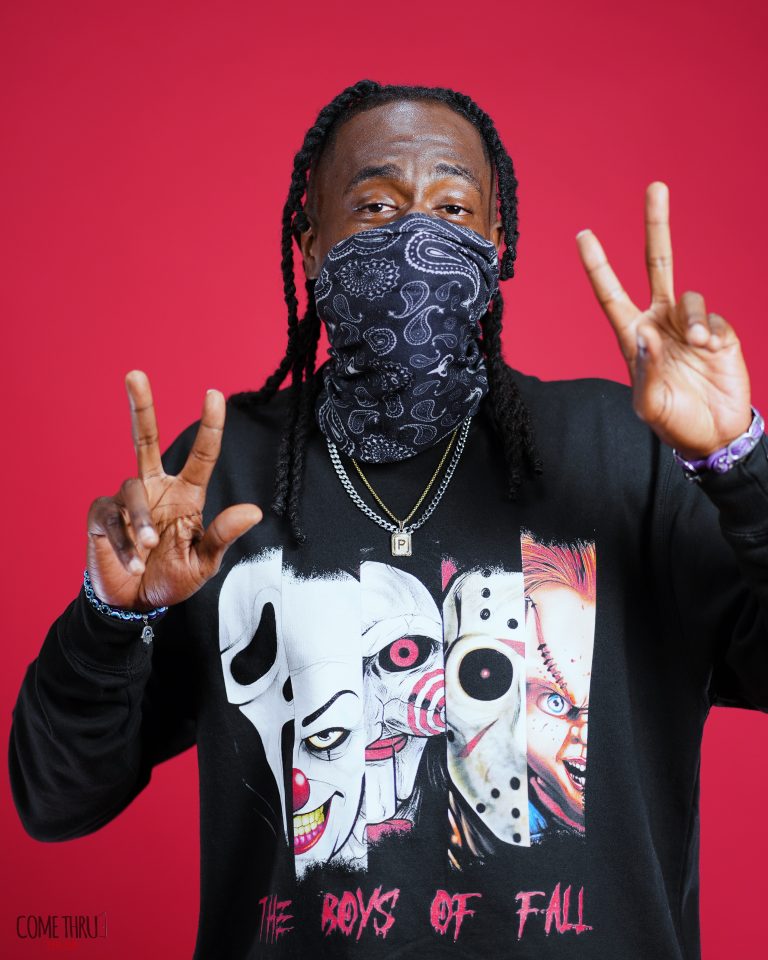
KahMenCents, also known as “The VibeMaster,” shares his love letter to classic West Coast hip-hop and positive living with the release of “Like A Villain.” Released on September 26, 2025, the track delivers head-nodding beats, uplifting lyrics, and an immediate mood shift designed to make listeners feel invincible.
The song was born when KahMenCents discovered a Wayne Brain beat on BeatStars that sparked vivid memories of hanging out with a California woman and talking about life a moment that felt cinematic, reminiscent of Ice Cube’s “Today Was A Good Day.” From that spark came a track intentionally kept simple yet powerful: accessible to everyone while carrying a clear message of elevation, faith, and community support.
“Like A Villain” embodies KahMenCents’ philosophy of maintaining faith through challenging times. Rain, he reminds listeners, signifies growth rather than setbacks. The result is pure good vibes from the first bar to the last, what the artist calls “musical cannabis”: a relaxing, uplifting experience whether you partake or not.
Emerging from Tulsa, Oklahoma, with Texas roots and a deep love for West Coast influences (especially the legendary Ice Cube), KahMenCents creates music dedicated to spreading positive energy. His artistic moniker pays homage to his grandfather, affectionately known as “The Dream Master” on CB radio, whose signature phrase “chilling like a villain” became the foundation for this release.
Recorded at The Vibe Lab DFW with producer Al-B, the track finds KahMenCents in his creative sweet spot, where engineering expertise perfectly complements his artistic vision. Currently making waves on Tulsa’s live music scene with performances at The Rabbit Hole and Frequency Lounge, he continues building momentum through faith-driven, mood-elevating hip-hop.
About KahMenCents KahMenCents, known as “The VibeMaster,” is a Tulsa-based hip-hop artist creating positive, West Coast-inspired music designed to uplift and elevate. Drawing from Texas roots and classic influences, he crafts “musical cannabis”—tracks that deliver good vibes and resilience. “Like A Villain” stands as a celebration of faith, growth, and chilling with purpose.
“Like A Villain” is available now on all major platforms.
Scottish producer, musician and drummer Brannen introduces a new chapter with the release of “Tulips,” a melodic and emotive house track built for late-night listening and immersive DJ sets.
Drawing influence from artists such as Ben Böhmer, Marsh, Lane 8, Yotto, Romain Garcia, Nox Vahn, Jody Wisternoff and Durante, “Tulips” combines deep grooves, atmospheric textures and emotional melodies with a live musician’s instinct for rhythm and progression. The result sits between melodic house, progressive house and deeper electronic music—warm synths, evolving textures, organic percussion and cinematic melodies create a sound that is both immersive and heartfelt.
With over 20 years in music, Brannen’s journey began in live bands. He performed with Another Blurry Photo from 2012 and Thirty Three Connection from 2014, serving as drummer and lead vocalist until 2019. From 2019 to May 2025, he explored electronic production under the alias zildjianpinky, refining the sound that would become Brannen. Now working under his own name, he brings together his roots as a live musician with a passion for modern electronic production.
His wider influences stretch across electronic, alternative, ambient and experimental music, including RÜFÜS DU SOL, deadmau5, BICEP, Moby, Tinlicker, Massive Attack, Ludovico Einaudi, Radiohead, Sigur Rós, M83, Faithless, Pure Reason Revolution, The Brian Jonestown Massacre, Bon Iver, Talk Talk, Depeche Mode and Roxy Music.
“Tulips” marks Brannen’s debut release under the new moniker and the beginning of a focused new era, with further music including “Keep Dancing With Me” already on the way. After more than a decade of making music, Brannen is channeling years of live performance and studio exploration into a distinctive, emotionally driven electronic sound.
About Brannen Brannen is a Scottish producer, musician and drummer creating melodic, organic and emotive electronic music. Blending deep house and progressive influences with atmospheric textures and a musician’s sense of dynamics, his work is made for listeners and DJs who value melody, atmosphere and feeling. “Tulips” is his debut release under the Brannen name.
Songwriter, music creator, and creative director Keesha Blair presents “The Inheritance,” a deeply reflective, message-first song centered on gratitude, legacy, human connection, and the ways each life contributes to something larger than itself.
The song began with Blair reflecting on her mother and grandmother and the love, wisdom, strength, and values that continue flowing through her life. From that personal beginning, the concept expanded into a broader exploration of inheritance itself, reaching far beyond material wealth to include love, wisdom, strength, peace, compassion, generosity, and the ways people choose to live.
At the heart of the song is a simple, powerful idea captured in its recurring refrain:
“The Inheritance / We all add to the pot.”
The “pot” represents a shared and continuously growing inheritance. Each generation receives from what already exists, contributes through its own choices and actions, and leaves something for others to receive.
Blair’s lyrics move from personal gratitude “Sometimes gratitude overwhelms me / I hardly know what to say” to a realization of unearned worthiness and responsibility:
“But I never had to prove / I was worthy to receive / I honor you through gratitude / And what I choose to leave.”
The song then expands into a vision of collective human legacy:
“Universal family tree / Every leaf, a legacy / No limits to our reach / Even if we never meet.”
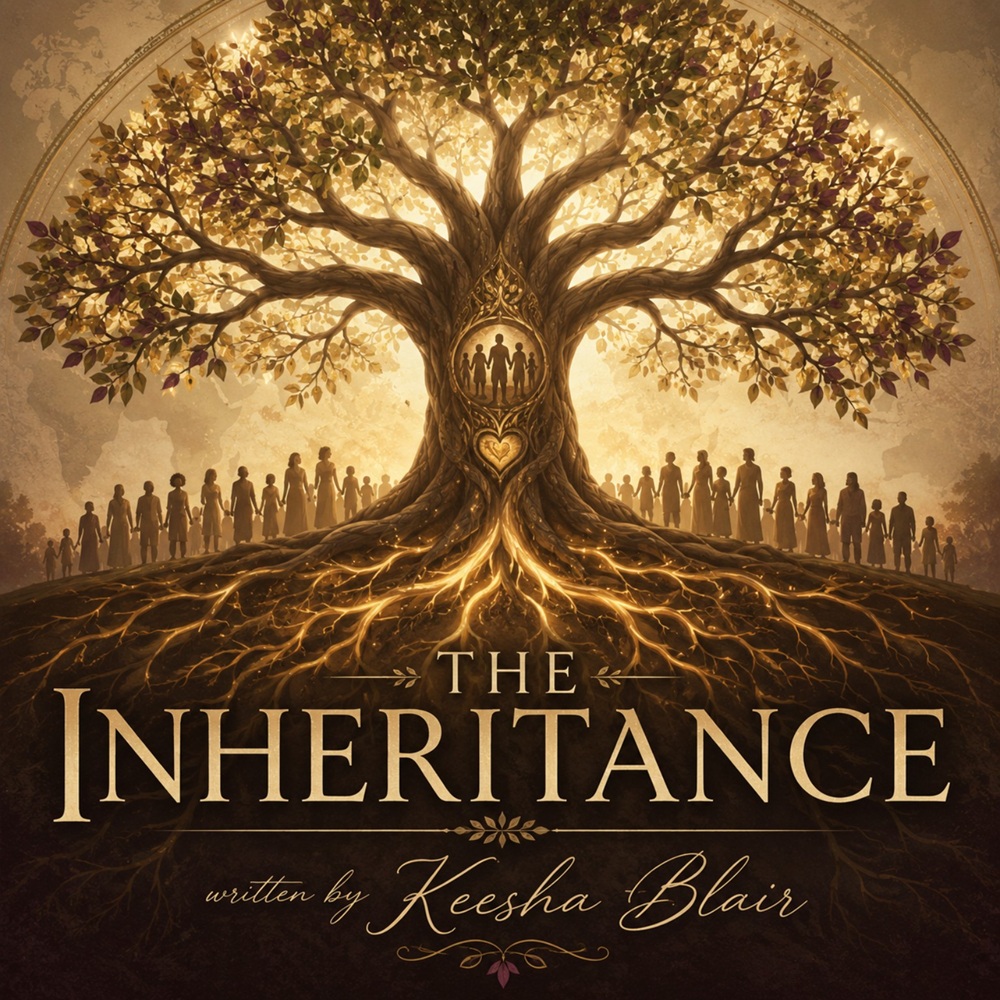
Through imagery of interconnected roots, branches, and leaves, “The Inheritance” presents humanity as one evolving family tree shaped by countless individual contributions. It closes with a quiet but lasting question:
“So for those we may never meet / What do we choose to leave?”
Blair invites listeners to see legacy as something alive and participatory. We receive. We contribute. We leave something behind. Every act of love, wisdom, compassion, generosity, creativity, and care has the potential to become part of someone else’s inheritance.
We all add to the pot.
About Keesha Blair and Divine Purpose Music Keesha Blair is a songwriter, music creator, and creative director whose work through Divine Purpose Music explores healing, self-honesty, personal empowerment, peace, self-respect, freedom, gratitude, and human connection. Her creative process is message-first, using music as a space for reflection and meaningful conversation. Blair writes and creatively directs each project while intentionally incorporating AI-generated vocals as part of the music production process.
Some places become part of your story. For Anna Kameneva, Marbella became part of her soul.
“Marbella” is a Latin-inspired dance-pop track blending hypnotic vocal hooks, tropical groove, Mediterranean energy, and uplifting international summer vibes. Combining sensual female vocals with catchy chant-style refrains driven by its memorable “pero-pero” and “para-para” hooks, the song creates a feel-good atmosphere designed for beach clubs, rooftop parties, travel content, and global summer playlists.
Written in and for Marbella, the track is a heartfelt tribute to a city that has shaped Anna’s life for the past seventeen years. Blending melodic Latin pop with Mediterranean warmth, “Marbella” captures the feeling of sunshine, freedom, romance, and unforgettable memories. Although Anna is not a native Spanish speaker, she chose to write and perform the song in Spanish as a reflection of her deep connection with the city, its culture, and the spirit of Southern Spain.
The track was produced by acclaimed Swedish producer Adam Evald together with a Latin American beatmaker, bringing together modern pop production and authentic Latin influences.
Before its official release, “Marbella” received its first public performance at a Rotary Charity Gala in Marbella. The story continued when renowned Marbella DJ Benjamin Franklin created an official house remix, introducing the track to audiences across some of the Costa del Sol’s most exclusive venues.
Following her previous single dedicated to the spirit of the United Arab Emirates, Anna Kam continues to create music inspired by the places that have changed her life. “Marbella” is more than a song; it is a love letter to a city that became home to memories, friendships, and dreams, and now lives forever in music.
About Anna Kam
Anna Kam is the artist name of award-winning filmmaker, entrepreneur, and songwriter Anna Kameneva. Currently based in the UAE, she is the co-founder of A&K Production and the award-winning documentary series Women and Roads, which explores culture, travel, and inspiring personal journeys around the world. She received the Best Documentary Award at the Marbella International Film Festival.
As a songwriter, Anna creates music that combines emotion, storytelling, and international influences, building bridges between cultures through both music and film. Her releases are authentic, heartfelt, and deeply connected to the real experiences and meaningful places that have shaped her life.
“Marbella” marks an important step in her international music journey and reflects her passion for travel, cultural connection, and music that brings people together through positive energy and shared emotions.
“Known for her empowering message and performances, Allegra takes us to the main room of the club with her soaring vocals and bass-heavy production.” — Wonderland
“British rising pop artist Allegra is one up on other aspiring acts and has been showing impressive maturity since her debut release.” — Euphoria
“Allegra is making waves on the Pop scene with a string of hits.” — OK! Magazine
After topping the Music Week Commercial Pop Chart with her anthemic dance-pop hit ‘Wildfire’ and ushering in a bold new era with her acclaimed second EP Red, London-based rising pop artist Allegra returns with her most exciting project yet. Arriving on 28th August, Unreleased EP uncovers a secret collection of previously unheard tracks, offering fans an intimate glimpse into the next stage of her artistic evolution.
Building on the confidence, sophistication and dancefloor energy of Red, Unreleased EP showcases Allegra at her most assured. Blending shiny, club-ready production with deeply personal lyricism, the five-track collection explores love, heartbreak, independence and self-discovery through irresistibly infectious pop. More immediate, bolder and emotionally candid than ever before, the EP reveals another side to an artist who continues to grow with every release, cementing her place as one of the UK’s most exciting emerging pop voices.
Leading the project is ‘Romantic’ (released 21st August), an instantly catchy anthem that reflects on the allure of new love despite the heartbreak it can bring. The lyric “There’s something about broken boys / That makes me feel magic” perfectly captures her relatable songwriting. Rather than dwelling on disappointment, Allegra embraces her hopeless romantic nature in the pursuit of love, delivering an uplifting, feel-good anthem for modern relationships.
Allegra reflected on the meaning behind the track: “Romantic is a song that I wrote about being the girl who believes in the fairy tale. A girl who doesn’t turn away from the broken things but falls in love with them and believes in them. You know it might hurt you, but just maybe if it all works out, it will all be worth it. It’s like the Santa line… You’re told the fairy tale as a child, and then as you grow up you learn the ‘truth,’ but I still choose to believe in the magic and hope.”
Next comes the magnetic ‘Feel Sorry For Ya’, which introduces punchier dance textures, blending thumping basslines and driving drums with shimmering melodies. Its playful, sarcastic edge reinforces a message of resilience and self-belief. ‘Kiss Some Other Girls’ follows with a darker, moodier atmosphere, while ‘Dancing Alone’ serves as an ode to independence, wrapped in pure dance-pop euphoria and glittering melodies that linger long after the song ends. Closing the collection on a high, ‘Sober’ bursts with house-inspired chords and chant-worthy hooks, returning to the club-focused sound that has defined her previous chart-topping hits.
Looking back on the project as a whole, Allegra shared: “This EP is made up of all the songs that I have written over the year, that still run in my head. They didn’t quite fit with the concept of my previous ‘Red EP’, but I always felt that they were too special to not be released, and now I believe it’s the perfect time, so I created a project especially for them….. the ‘Unreleased EP’ which I am equally proud of.”
Every track on Unreleased EP has undeniable hit potential. Empowering and polished from start to finish, the collection blends razor-sharp lyrics with Allegra’s most confident vocal performances to date, creating a body of work that feels both effortlessly fresh and meticulously crafted. Her ability to balance vulnerability with strength is on full display, all while retaining the mainstream appeal and anthemic energy that continue to define her sound.
Heralded as one of the UK’s standout talents, Allegra made a significant impact on the dance scene with her hit single ‘Love You Right Back’ (featuring DJ Alok), which topped the Music Week Commercial Pop Chart, and previously scored a #1 with ‘Round and Round’ (featuring Tiësto). Her debut EP Unsent Love Letters Vol 1 and the follow-up Red further showcased her evolution from teenage pop prodigy into a fully realised artist. With collaborations including Tobtok, Full Intention, Majestic and R3HAB, and nearly 6 million streams for ‘Round & Round’ alone, Allegra has amassed millions of streams and views across platforms while earning features in Wonderland, The Sun, Notion, Daily Express and appearances on BBC TV.
With Unreleased EP, Allegra pushes even further, embracing her most exciting and self-assured era yet.
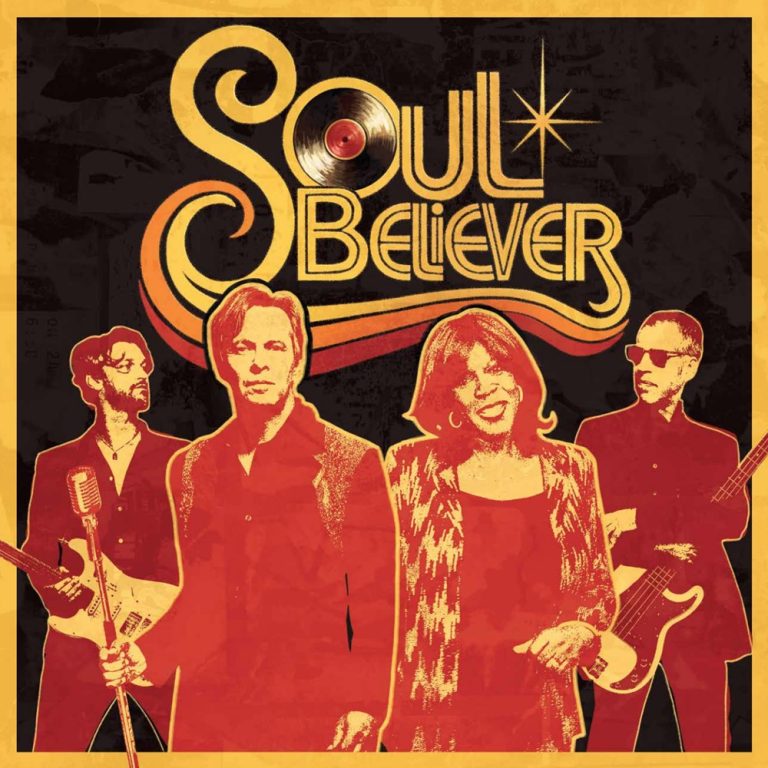
British pop legends Johnny Hates Jazz and celebrated soul vocalist Jaki Graham have joined forces for the first time on ‘Soul Believer’, a sophisticated, feel-good single that fuses polished pop sensibility with rich, timeless soul energy. The track is released on August 21st, alongside a special live performance at Circuit Club, Kingston-upon-Thames, the same day.
‘Soul Believer’ brings together two of Britain’s most enduring musical voices for a collaboration decades in the making. Feeling like a reunion of spirits as much as voices, Johnny Hates Jazz’s melodic, songwriterly instincts wrap around Graham’s soaring, soulful delivery, each artist elevating the other. The result is a record that shimmers with warmth: sweeping hooks meet the kind of vocal conviction that only decades of lived musical history can produce.
Together, the artists bring their shared musical heritage into a contemporary setting, delivering uplifting melodies, layered harmonies, and a message of resilience and optimism throughout. Where Johnny Hates Jazz supply the polish and precision that made them global chart fixtures, Graham brings a vocal richness that has made her one of the most beloved and instantly recognisable voices to emerge from British soul.
Released on Revolver Records, ‘Soul Believer’ was written by JHJ’s singer-songwriter Clark Datchler together with Hamish Stuart, founder member of the Average White Band. Its lyrics are built almost entirely from the titles of classic soul records spanning the 1960s–1980s, with more than 27 iconic song titles woven into the verses and chorus. Collectively, they trace a story about the enduring place music holds in people’s lives — a hidden layer that turns ‘Soul Believer’ into a love letter to the genre itself.
Launching alongside the single, Soul Believers is a 12-part music and culture podcast series presented by Jaki Graham and Clark Datchler. The series explores the songs, artists and stories that shaped soul music and continue to influence popular music today. Bridging generations through conversation and guests drawn from different musical eras, Soul Believers is designed to connect with long-time music lovers while introducing younger audiences to the artistry, feeling, and humanity behind some of music’s greatest recordings. Each episode closes with an intimate, stripped-back piano-and-vocal performance from Jaki and Clark, reinterpreting one of the songs referenced within the episode.
Looking ahead to 2027, Johnny Hates Jazz will celebrate the 40th anniversary of their seminal global hit ‘Shattered Dreams’ with the release of a double album of the same name. The compilation will bring together the band’s most beloved songs from the late 1980s through to the present day, alongside four brand new tracks, the first of which is ‘Soul Believer’.
The album will be accompanied by ‘Shattered Dreams – The Tour’, taking Johnny Hates Jazz through the UK and beyond with Jaki Graham as special guest. Drawing on the extensive catalogues of both artists, the show promises unforgettable songs, emotive stories, energetic performances and plenty of audience participation.
Upcoming Live Dates
August 21st – Circuit Club, Kingston-upon-Thames (with special guest Jaki Graham)
26th September – 80s Weekender, Winter Gardens, Blackpool
29th October – Old Fire Station, Carlisle
30th October – Royal Concert Hall, Glasgow (with Hue and Cry)
31st October – Concert Hall, Perth (with Hue and Cry)
2027 – Shattered Dreams – The Tour (dates to be announced shortly)
About Johnny Hates Jazz Johnny Hates Jazz is the British duo of Clark Datchler and Mike Nocito. They rose to international success in the late 1980s with a string of hit singles including ‘Shattered Dreams’, ‘I Don’t Want to Be a Hero’, ‘Turn Back the Clock’ (featuring Kim Wilde on backing vocals), ‘Heart of Gold’ and ‘Don’t Say It’s Love’. Released in 1987, ‘Shattered Dreams’ became a worldwide top 5 hit, reaching No. 2 in both the US and Japan.
Their debut album, Turn Back the Clock, topped the UK Albums Chart in 1988, sold more than four million copies worldwide and achieved triple-platinum status. ‘Shattered Dreams’ has since been played almost four million times on US radio alone.
The band split at the height of their success before reuniting in 2010. Since then they have released the albums Magnetized (2013) and Wide Awake (2020), along with a 30th Anniversary Edition of Turn Back the Clock in 2018. In 2021 they toured the UK with Level 42, and in 2024 welcomed guitarist Nic Keeble into the band’s live and creative line-up before completing a sold-out world tour.
About Jaki Graham
Midlands-based soul singer Jaki Graham established herself as one of the most popular R&B and dance artists in the UK with a string of hits in the 1980s. Among her chart entries were top ten placings for ‘Could It Be I’m Falling in Love’, ‘Round and Round’ and ‘Set Me Free’. She has also lent her vocals to releases by other artists including UB40 and Kim Wilde.
Her 1994 cover of ‘Ain’t Nobody’ became a massive club hit, topping the US Billboard Dance Club Songs chart for five weeks. Her output since the 1980s has continued largely through releases in Japan, where she maintains huge popularity, and she remains a celebrated live performer, having shared stages with Michael McDonald, Al Green and Cliff Richard.
Critically acclaimed indie-pop band Girlhood return with their radiant new single, ‘Lemon Aid’, arriving on 21st August. Serving as the first glimpse into a fresh, more reflective chapter, the track transforms emotional pressure and quiet recalibration into something gentle, hopeful, and life-affirming.
Bright on the surface yet heartfelt underneath, ‘Lemon Aid’ is an invitation to surrender to the moment to dance until the weight lifts, to lose yourself in the warmth of a summer evening, and to find fleeting freedom in the ordinary. It offers a pocket of escapism, where everyday worries dissolve into golden light, laughter, and the comforting promise that things might just be okay.
Opening with a nostalgic piano motif, acoustic guitar, and a playful sped-up vocal sample, ‘Lemon Aid’ gradually unfolds into a tender, sugar-sweet indie-pop ballad led by singer-songwriter Natalie Holmes. With its gentle rhythms, laid-back groove, and quintessentially British charm, the song feels rooted in the quiet rituals of everyday life. Inspired by the shopfronts, parks, cafés, and leafy, winding streets of Stroud — the Cotswold town where Girlhood’s forthcoming album, This Will Make Sense In The End, was created it quietly celebrates the beauty found in familiar places and small moments that often pass unnoticed.
This Will Make Sense In The End marks a defining new chapter in the evolution of Girlhood. After watching Natalie Holmes perform in support of Jesca Hoop, Girlhood founder, producer and songwriter Christian Pinchbeck was immediately drawn to her distinctive voice and invited her to collaborate. What began as an instinctive creative partnership soon became something far more transformative: the return of a dynamic that felt both immediate and inevitable. After years of working remotely with friends-of-friends and guest vocalists, Girlhood once again felt like a unit.
The album was written during a period when Natalie’s relationship with dating, love and self-understanding had begun to dramatically shift. Entering her thirties introduced a new kind of clarity, but also a more complex uncertainty: the realisation that old romantic instincts no longer applied in quite the same way, that love could be exhilarating and damaging in equal measure, and that wanting something was not always the same as needing it. Her love and passion for food became intertwined with those themes, woven into songs about attraction, control, hunger, desire, and self-preservation.
Across This Will Make Sense In The End, food becomes both a recurring metaphor and setting. Picnics, lemonade, breakfast, fruit, desserts, dilution, and hunger recur like clues hidden in plain sight. The result is an album centred around one relationship, but equally concerned with the emotional machinery surrounding it, the rituals, appetites, performances, and quiet negotiations involved in trying to love someone without losing yourself in the process.
Musically, the record began as an experiment: borrowing forgotten soul records and pushing them until they no longer behaved like samples. Rather than using them as nostalgic decoration, Girlhood reimagined them into entirely new rhythms, textures, and emotional landscapes. That process became the engine of the album. Songs drift between sample-rich, sunlit indie-pop and more fractured, unpredictable territory, moving effortlessly through sparse R&B, acoustic confessionals, and moments of cinematic emotional release.
For Girlhood, the album also tells a longer story. Natalie has been releasing music since the age of 18, while Girlhood’s debut album was originally written collaboratively before former vocalist Tiece departed on the day of its release. Since then, the project continued through a series of remote collaborations and guest vocalists. This Will Make Sense In The End feels like a reassembly, not a return to the past, but a rediscovery of what can happen when two people occupy the same room and allow ideas to unfold naturally.
The result is Girlhood’s most intimate and fully realised work to date: sample-driven indie-pop with soul running through its veins, rooted firmly in everyday life and written with the perspective of someone still piecing together what it all means. With This Will Make Sense In The End, Girlhood refine their unmistakably cinematic sound while embracing a newfound warmth, vulnerability, and emotional confidence.
Originally formed as Elephant before evolving into Girlhood, the band first received widespread acclaim for their 2014 debut album Sky Swimming, earning praise from outlets such as Clash and Pitchfork. Their wistful songwriting, vivid imagery, and understated emotional depth drew comparisons to artists such as Daughter and Camera Obscura, while several tracks found their way onto popular television series including Misfits and Lucifer, cementing the band’s reputation for creating music with a memorable and cinematic quality.
Love songs have given us a pretty convincing formula: find someone, fall in love, overcome the obstacles, and live happily ever after. But what happens when reality refuses to follow the script? M & J’s “NOT A LOVE SONG” steps outside that familiar romantic narrative, turning the idea of the love song itself into a playful commentary on everything that can go wrong between wanting someone and actually being wanted back.
“I really wanted to / Write a love song / For you,” they begin, repeating the confession before quickly undercutting it: “Wouldn’t it be cool to write a love song / Apologies, you may want to stop listening cos this ain’t one.” It is cheeky, self-aware, and immediately establishes the contradiction at the heart of the track.
M & J build the song around an intricate acoustic guitar soundscape and brooding timbre, gradually opening into textured drums and a laid-back, soulful groove. Fiddle riffs add a cinematic quality, while brief pauses and catchy hooks give the arrangement an easy, organic movement. It feels intimate and inviting, but never overly polished.
The real heart of “NOT A LOVE SONG,” however, lies in its writing. “You don’t get to / Choose who you love and who you / Lose” captures the uncomfortable reality behind unrequited love. Sometimes the feelings arrive without permission, and sometimes the person you imagined a future with simply does not imagine the same thing.
M & J keep that disappointment from becoming overly heavy through humour. “Some other chump is probably there” lands almost as a punchline, but there is genuine vulnerability underneath it. The song feels like someone laughing at their own romantic expectations while quietly admitting how much they cared.
By the time they sing, “I’ll save the words and the love song for someone right,” the track has moved from longing towards acceptance. And perhaps that is what makes it so unexpectedly sweet.
For M & J, “NOT A LOVE SONG” may not be the love song they originally wanted to write, but it becomes something more honest: a warm, soulful, and witty portrait of loving without being loved back, and learning to save the song for someone who will!
Music has a funny relationship with trends. We spend so much time trying to identify what is next that we sometimes forget that good music does not always care about timing. Krey Galin’s My Plan is an interesting example: written years before its K-pop associations became obvious, these songs managed to remain relevant without changing themselves to fit the conversation around them.
Released on 20 February 2026, My Plan arrives with years of history behind it. Originally conceived simply as a pop record, the project was written before K-pop became the global phenomenon it is today. As time passed, however, listeners began hearing K-pop sensibilities in the songs, giving the project an unexpected connection to a musical movement it was never deliberately trying to follow; and that is where My Plan becomes particularly interesting. The music existed first. The trend came later.
At the heart of the EP is “My Plan,” the track that started the journey, with key contributor Emerson helping shape its beginnings. Recorded in Georgia, the project has had an unusually long life, with the songs repeatedly catching people’s ears in the studio even as years passed; and as its creators put it, the songs never got old; they did.
That sense of time and patience becomes part of the project’s identity. Rather than rushing to release music while a particular sound was fashionable, My Plan was allowed to remain in development until it found its way into the world naturally. There is something refreshing about a project that does not seem desperate to prove its relevance.
The EP also takes its central idea across languages, moving through “Nae Gyehoek,” “Meus Planos,” “Mai Puran,” “Wo de Jihua,” and “Phlaen Khong Chan,” before returning to “My Plan” through a remix. This multilingual approach reinforces the project’s international character, fitting for an artist from Recife, Brazil, whose creative process has grown through cross-cultural collaboration and experiences beyond a single musical environment.
Still, the K-pop comparison is best understood as context rather than definition. The songs did not change; the world around them did. What was once simply pop could later be heard through a different musical vocabulary.
Krey Galin’s My Plan feels like a reminder that music does not always need to chase the moment. Sometimes it can wait, evolve, and find its relevance on its own terms. Because trends move on. But good songs actually stay!
We see the decision, the consequence, the mistake, the sentence; but rarely the years that came before it. Roger K’s “Please Don’t Put It on Me” asks us to look backwards, towards the childhood pressures, instability, and fear that can shape a person long before they have the agency to understand what is happening to them. It doesn’t excuse what comes later. It simply asks: what if someone had listened sooner?
Written entirely from a child’s perspective but delivered through an adult voice, the song feels almost like an inner-child therapy session. Its central plea is simple: “Please don’t put it on me / Don’t you know I can’t breathe / All this weight controls me / Let my spirit be free.” There is exhaustion in those words, but also a quiet sense of hope, because finally saying what was once impossible to articulate can itself become a form of release.
Roger K surrounds that vulnerability with cinematic darkness. Ominous orchestration, spacious textures and soulful vocals meet alternative R&B, low synths and a restrained trap/drill-influenced rhythm. The half-time pulse gives the production a physical heaviness, while the wider choruses create space around the song’s desire for freedom. There are echoes of Labrinth’s theatrical scale and Jacob Banks’ atmospheric weight, but the track ultimately feels grounded in Roger K’s own genre-fluid approach.
The accompanying self-directed animated visualiser extends the narrative through imagery inspired by Banksy’s public work, moving through childhood, authority, conflict and displacement. It reinforces the song’s larger question: what happens when children are made to carry consequences created by adults?
Roger K wrote, arranged, performed, produced, mixed and mastered the entire record, giving “Please Don’t Put It on Me” a cohesive, personal quality.
“Please Don’t Put It on Me” is less interested in easy answers than in making an unheard voice audible. Roger K gives that voice room to breathe, and leaves us wondering who might have listened if it had spoken sooner..