



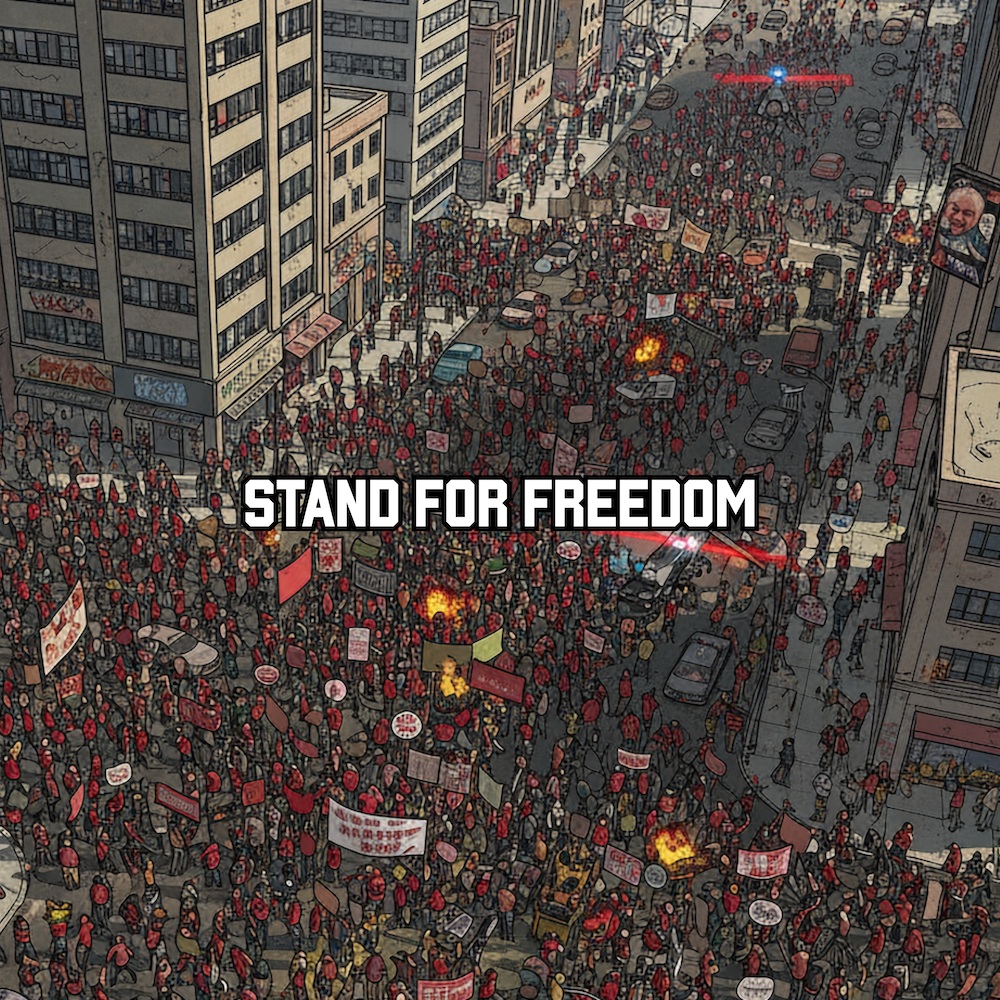
A CALL THAT RISES THROUGH THE WIRE
Tony Frissore’s Stand for Freedom arrives like a signal sent across generations: part groove, part reflection, and wholly rooted in a moment of truth. The track leans into a warm, jazz-tinted piano motif that opens the space gently, almost like an invitation to listen more carefully than usual. It’s an unhurried beginning, textured with a soft pulse and hints of electronic haze, but beneath its ease lies an unmistakable sense of direction.
Before long, the composition widens, and Ralph J. Bunche’s voice emerges: clear, unembellished, and startling in its immediacy. Taken from his 1949 Nobel Peace Prize address, the excerpt Frissore chooses is not the familiar diplomacy-centered passage often referenced. Instead, he places a spotlight on Bunche’s sharper, more uncomfortable challenge: to confront injustice at home, to examine the gap between ideals and reality, and to recognize that progress requires courage, not complacency.
Frissore doesn’t dramatize this moment; he frames it. The production steps back just enough to let Bunche’s words stand in their own power, while still surrounding them with an atmospheric weave of bass, keys, and spacious electronic textures. Every sonic layer feels intentional; nothing overcrowds the message, and nothing softens it either.
As the track grows, its rhythm tightens into something sturdier and more hypnotic, blurring the lines between experimental hip-hop, conscious electronic, and something that brushes against acid-jazz groove. It’s a hybrid that resists easy categorization, which is exactly what keeps it alive. The music never chases genre; it follows purpose.
What stands out most is how naturally the past and present fit together. Bunche’s challenge does not sound archived or historic; it lands with the weight of now. Frissore’s arrangement amplifies that urgency without overstating it. There’s restraint here, but also resolve.
Stand for Freedom is not simply a political piece, nor a nostalgic nod to a powerful speech. It is a musical intersection where reflection meets accountability, where groove meets gravity, and where history refuses to stay in its assigned decade.
It’s a bold and a resonant work, an echo carried forward, and asking who will answer..