



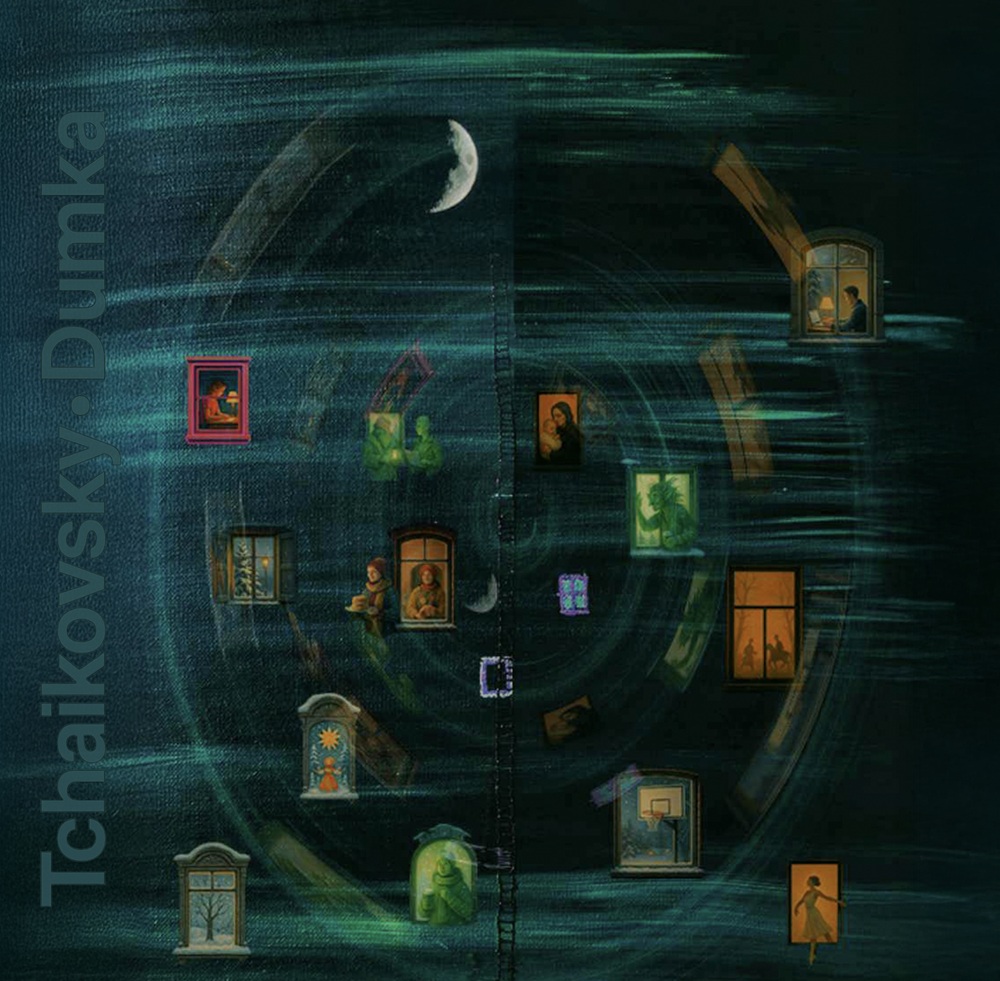
TCHAIKOVSKY’S EMOTIONAL RANGE IS NO JOKE!
If you thought Tchaikovsky was all grand ballets and sweeping symphonies, think again. In Dumka, Op. 59, a compact but emotionally potent piano work, he folds an entire world of feeling into a single movement, and pianist Rina Kharrasova captures every flicker of that emotional spectrum in her gripping new release, out June 26th, 2025.
Hailing originally from Russia and now based in Miami, Kharrasova is steadily establishing herself as a rising interpreter of Romantic and early modern repertoire. Her approach is marked by clarity, sensitivity, and a deep narrative sensibility; all of which shine in this interpretation of Dumka, subtitled “Russian Rustic Scene.” The work’s contrasting sections demand not only technical finesse but also emotional maturity, and Kharrasova brings both in spades.
From the very first notes, her restraint is riveting. She lingers in the piece’s meditative opening with subtle pacing and delicate touch, allowing melancholy to bloom in the pauses between phrases. It’s not showy, it’s sincere. The artist, then, transitions into the more animated folk-inspired passages with vitality and flair. The rustic spirit bursts forth, but never at the expense of detail. Her rhythms are crisp, her dynamics carefully sculpted, and the energy feels organic.
What stands out most is how effortlessly she navigates the piece’s internal drama. Tchaikovsky weaves between moods like a novelist changing chapters: somber, exuberant, reflective, stormy. Kharrasova connects it all with a sense of overarching storytelling. She’s not just playing a piece, she’s telling you something with it.
Technically, this performance is clean and intentional. Every phrase is shaped with care, and the inner voices speak clearly beneath the main melody. But Kharrasova’s brilliance isn’t in flashy runs or speed; it’s in her emotional command. She knows when to pull back, when to push forward, and when to let silence do the talking. That kind of interpretive maturity is rare.
Often overlooked in concert programs, Dumka finds new life here. In Kharrasova’s hands, it becomes a personal statement, intimate yet powerful. Her deep ties to the Russian piano tradition are evident, but this isn’t a nostalgic reading. It’s alive, present, and unmistakably her own.
With this release, Kharrasova offers more than just a compelling cover; she reminds us that even Tchaikovsky’s “smaller” works carry massive emotional weight. And in case it wasn’t already clear: Tchaikovsky’s emotional range is no joke, and neither is Rina Kharrasova’s!