



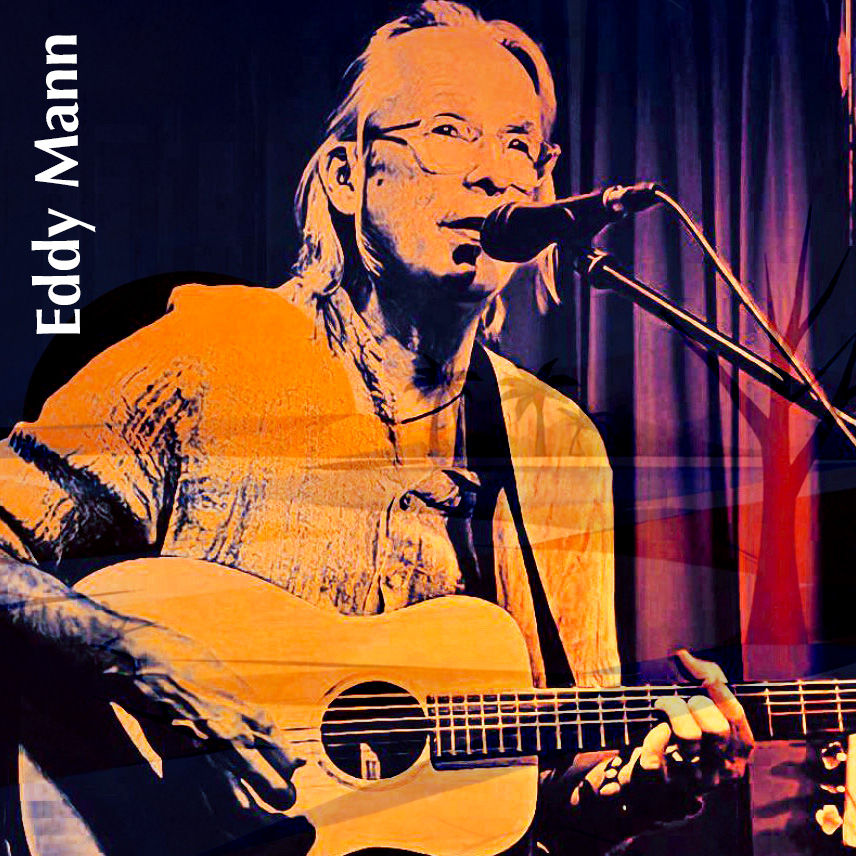
In the contemporary Christian music landscape, where certainty is often marketed as a product and triumph arrives prepackaged inside polished choruses, Eddy Mann offers something quieter — and perhaps more radical. “I Will Never Know the Desert Again,” the latest single from his album The Unveiling, doesn’t seek to overwhelm listeners with spectacle or emotional command. Instead, it creates a space for contemplation, tenderness, and the fragile kind of hope that emerges only after struggle.
Inspired by Revelation 7:16-17, the song draws from scripture promising an end to hunger, thirst, suffering, and spiritual isolation. Yet Mann’s achievement lies in his refusal to treat these images as distant theology. He transforms them into emotional realities. The “desert” becomes not just a Biblical metaphor but an intimate psychological terrain — loneliness, uncertainty, grief, longing for connection. The song recognizes that modern spiritual exhaustion is often less dramatic than cinematic depictions of despair. It arrives quietly, through years of carrying burdens that never fully disappear.
“Never to know the pangs of hunger / Never to thirst for a faithful friend…”
The lyric lands with startling emotional precision because Mann sings it without performance-driven urgency. His voice doesn’t attempt to dominate the listener. It invites them inward. There’s weariness in the phrasing, but also gentleness — the sound of someone who has made peace with vulnerability rather than trying to transcend it.
That emotional openness shapes the entire sonic architecture of the track. Musically, “I Will Never Know the Desert Again” lives somewhere between Country Christian, Americana-inflected Inspirational Pop, and meditative folk balladry. Acoustic textures move softly beneath the vocal, while understated percussion and atmospheric instrumentation create a sense of spaciousness. The arrangement resists the maximalism that defines much of modern worship music. Instead of escalating toward catharsis, the song remains patient. It trusts silence. It trusts breath.
That restraint is deeply meaningful.
Contemporary spiritual music often treats faith as something loud and declarative. Mann approaches it differently. Here, belief sounds contemplative — almost private. When he sings, “For the Lamb on the throne will be my Shepherd,” the line doesn’t function as proclamation so much as surrender. He sounds less like a preacher delivering answers than a pilgrim allowing himself to rest for the first time in years.
This is where the song becomes especially moving. Mann understands that faith is not always experienced as certainty. Sometimes it exists as endurance. Sometimes it survives only as the decision to continue hoping despite emotional drought. “I Will Never Know the Desert Again” honors that complexity without diminishing the spiritual promise at its center.
There’s also something compelling about Mann’s maturity as a performer. His voice carries history. In an era obsessed with youthful perfection and digitally polished surfaces, Mann’s lived-in vocal tone communicates authenticity before a single lyric fully registers. He sounds grounded in experience, and that grounding gives the song emotional authority.
Importantly, the track never collapses into sentimentality. Mann avoids easy emotional manipulation by allowing the song’s spiritual themes to remain tethered to human vulnerability. The promise of eternal peace feels earned precisely because the song spends so much time acknowledging earthly weariness.
The result is music that transcends genre expectations. Yes, this is unmistakably Christian music. But it also belongs to a broader tradition of American songwriting concerned with survival, comfort, and emotional resilience. Like the best spiritual music — from gospel to folk to soul — it speaks to listeners navigating uncertainty while searching for grace.
“I Will Never Know the Desert Again” doesn’t offer escape from suffering so much as companionship through it. In doing so, Eddy Mann creates something increasingly rare: a spiritual song that feels profoundly human.
–Annie Powter