



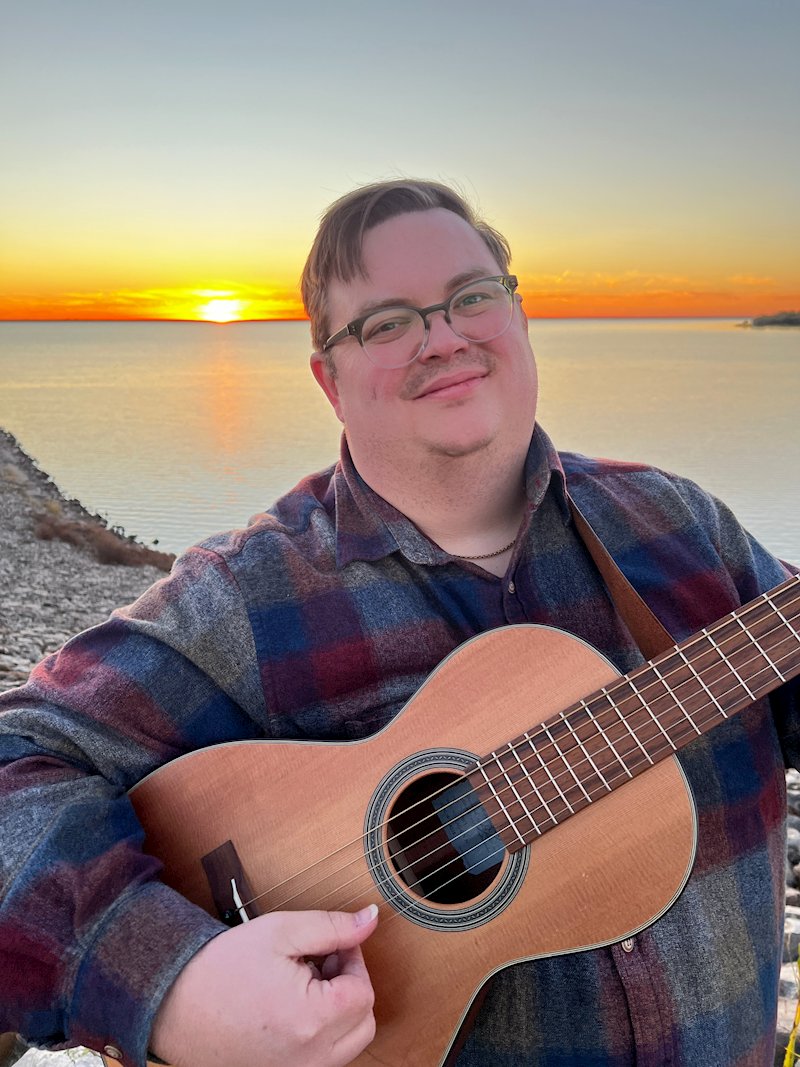
There are artists who make music — and then there are artists who make worlds. John Ross McEwen is firmly in the second category. The Wichita, Kansas singer-songwriter, guitarist, collagist, and experimental video artist returns with “Late Bloomer”, out August 25th, 2026 — a nine-track ambient folk meditation on grief, humanity, technology, existence, loss, and ultimately love. The follow-up to his acclaimed 2023 release “Sinking From the Shore”, this is a record that critic Randy Radic of V13 calls “a subtle, alluring interpretation of the human condition.” Built on American Primitive guitar, minimalism, and ambient textures, and brought to life by a beautifully assembled cast of musicians including saxophone, cello, pedal steel, and keys, “Late Bloomer” is deeply personal and quietly cosmic all at once. We sat down with John Ross to talk about the album, the years of living that made it possible, and the artistic vision behind it all.
- You’ve described “Late Bloomer” as the product of years of floundering as a human and artist — a failed relationship, the physical loss of friends, and ultimately finding the love you so longingly searched for. At what point did those experiences stop feeling like wounds and start feeling like an album?
The wounds from my previous relationship have been mostly healed by meeting my lovely wife, so I had enough distance and perspective to explore the memories and pain without ripping open those wounds. I had some really rough years of self-doubt and loss, and those experiences helped inform the writing, but they weren’t necessarily the driving force behind it.
I came into the process with the intention that these songs would become an album. I started with a list of song ideas that I thought fit together thematically and then worked through them one by one. Some landed right away, while others needed some finessing.
I wrote them all within a four-to-six-month period, with the exception of “Lincoln, MT,” so they’re all an encapsulation of what I was working through or thinking about during that particular period of my life, both in the macro and micro sense.
- The title “Late Bloomer” carries both humility and a quiet defiance — the acknowledgment that some things take longer, and that’s okay. How much of that title is autobiographical, and what does it mean to you personally to be putting this record into the world right now?
It is a very autobiographical title in many ways. One of those ways is my acceptance of my own musical creations and the feeling that they are worthy of being shared and listened to. I’ve been playing music for over 20 years, but I’m not very proficient in music theory. I know it’s important, but I never really took to it. That created a rift and lack of confidence in me that made me believe I wasn’t a “real” or serious musician because I didn’t understand the inner workings of theory. That limiting belief is just one element of the “Late Bloomer” title.
It also speaks to the later blooming of my love for myself and of romantic love. All of these things—self-acceptance, true love, and accepting my artistic craft—came together during the four years I’ve been with the woman I now call my wife.
Some things take time, and there’s no moral judgment in that. It just is. Things can take the time they take, and that’s okay.
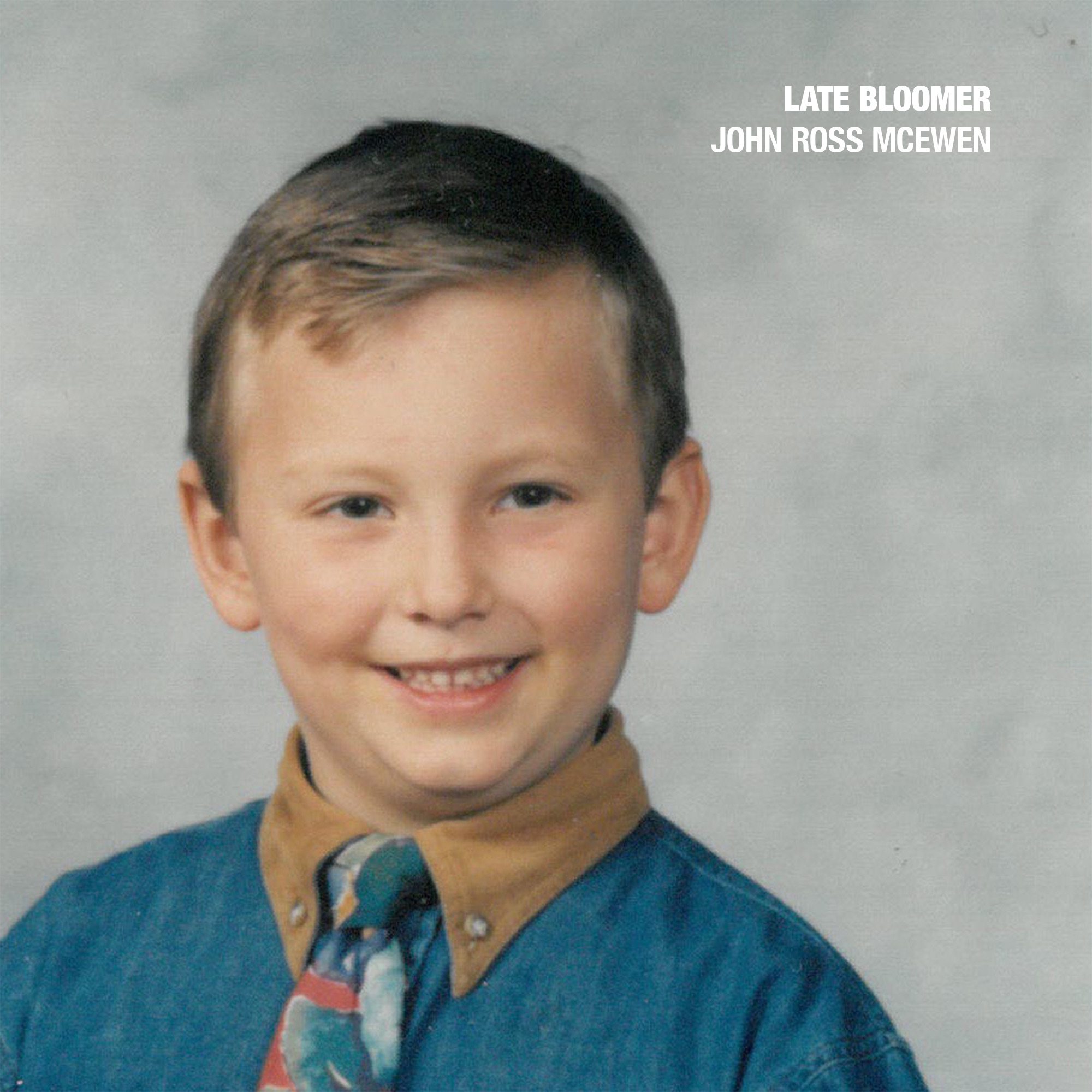
- “Late Bloomer” blends American Primitive guitar, minimalism, and ambient textures to explore themes as vast as grief, technology, and existence. How do you keep something that cosmically ambitious feeling intimate rather than distant — and how do you know when a song has found the right emotional temperature?
To be honest, I didn’t think much about how the songs would be received or whether they would feel intimate or distant. It just kind of is a product of my style, I feel like. While a lot of the lyrical themes are extremely specific to my life from conversations I’ve had and scenarios I’ve experienced, I still feel there is a universality to many of the things I wrote about. Even though the record is deeply autobiographical, most, if not all, people have experienced loss in its many forms, wondered about the universe, or felt some kind of disillusionment with technology.
I didn’t intend to write with a broad stroke or make these songs universally understood. I just wanted even the hyper-autobiographical moments to have elements that could connect to something bigger than just my own experience.
- The album was produced by Andrew Weathers and features an exceptional group of collaborators — saxophone, flute, clarinet, pedal steel, cello, upright bass, and keys all woven through your acoustic songwriting. How did those arrangements come together, and how much did the musicians shape the final character of these songs?
All of the additional elements were written and arranged by the musicians playing them. For each collaborator, I provided a feeling or “vibe” sheet. For instance, for the flute at the beginning of “Paco,” I’d say that I was hearing something breathy, floaty, and playful. Just some keywords and timbre cues, and then I’d allow the musician to bring their own interpretation to my words, music, and cues.
The group of musicians I got are absolutely top-notch, and I knew they would not only understand what I was going for but also find their own inspiration within the music. Zack Warpinski said he wanted the pedal steel to sound like “an ARP 2600 on NyQuil.” I never could have imagined that prompt, but I’m so glad Zack wanted to take it there. His playing, and all of the playing from the other collaborators, really helped shape this record into something special. I feel confident that the songs themselves are really solid, but the instrumentation and arrangements really tie the room together.
- Your artistic practice extends well beyond music into collage and experimental video art, and you’re consistently drawn to themes of nostalgia, place, and the beauty of ordinary moments. How do those other disciplines feed back into the songwriting — and is there a visual world that exists alongside “Late Bloomer” in your mind?
For this record I was so hyper-focused on leveling up my guitar playing and having the songs be the best versions of themselves that there really wasn’t a lot of overlap between collage or video art. But now that the album is released, I have been utilizing my video art equipment to make videos for social media. That’s what feels authentic to me. If I can have fun making something, I’ll do it, even if it may not be what the algorithm wants. Honestly, I wish I had a grand visual world to build for you, but it’s mostly all auditory with this album. I create auditory environments first, before anything else visual is considered. If you listen to the album from the lens of what environment I am in, that is how I approach the tonal and texture world of the record.
- The tracklist includes titles like “Cosmic Hum”, “Chickenshit”, “Frog Shampoo”, and “Swing and a Miss” — a fascinating range from the philosophical to the playfully mundane. How do you hold that tonal range together within a single album, and is that contrast itself part of the point?
Contrast is for sure part of the point. Early on in my songwriting, I was heavily influenced by Syd Barrett. If you listen to either of his solo records, they vary in emotional tonality and sound. That’s something that I feel I don’t intentionally think about or have a gameplan for, it’s just something that happens.
While I don’t think I make huge swings in the music styles, the songs emotionally vary from grief, relationship things, and also questioning our existence and place in the world. The inspiration for “Cosmic Hum” was the anthropic principle. I had read about it and was so inspired by it, so I put a sticky note on my computer with the name so I could be reminded of it often. I was so fascinated by the concept and had to figure out how to put it in a song. I’m very happy with the range of songs, I think the contrast is part of the point. “Late Bloomer” isn’t a concept album, and while there is a theme of loss in there, the contrast is what kept me excited in the process.
- “Late Bloomer” follows “Sinking Towards the Shore” and clearly represents a significant step forward as both an artist and a human being. Where does John Ross McEwen go from here — and is there already a next creative chapter beginning to take shape?
I’m not sure about a new chapter, but in the time I’ve taken to release “Late Bloomer”, I’ve already written a 4 song EP that is completely different stylistically than anything I’ve done before. No acoustic guitars, but more leaning towards my influences as a young musician. I pulled out the first guitar that I bought when I was a teenager, and rediscovering its sounds and power has been so much fun.
I also have been experimenting with a new audio workstation called Model 8, by Gulf Coast Synthesis. It’s based off of a 4 track cassette recorder and has tape physics, it is just wildly fun to play with and record in. All 4 songs were recorded using that software, and I’m excited to see where it all ends up. I’m not giving up my acoustic guitars and emotional songs, I just want to write and work on something that I don’t have to take so seriously. So much of Late Bloomer is me being super serious about all the elements of the songs, my guitar technique, the themes, who I collaborated with, etc. For now, I just want to make some songs for fun with no expectations of it being a project for release.