


Home Blog Page 5

BOSTON’S “MORE THAN A FEELING” RETURNS 50 YEARS LATER

0

NASHVILLE, Tenn. — Fifty years after BOSTON’s “More Than a Feeling” became one of rock ’n’ roll’s most enduring anthems, A Foreigner’s Journey to Boston (AFJ2B) founder and frontman Brandon Miller is taking on the classic that helped inspire him to become a singer. Born in 1991, a generation removed from the song’s original release, Miller discovered its power through Brad Delp’s unmistakable voice, Tom Scholz’s groundbreaking musicianship and production, and a deeply personal connection that began in childhood. Now, alongside acclaimed producer Kent Wells, he is honoring the song’s 50th anniversary with a tribute created in loving memory of Brad Delp and with profound respect for Tom Scholz and the legacy they built. Wells, a longtime producer and collaborator of Dolly Parton, brings a career that includes work with Steve Perry, Steven Tyler, Rob Halford, Mötley Crüe, Stevie Nicks, Sting and Elton John to the new recording.

For Miller, “More Than a Feeling” was personal long before he ever imagined recording it
himself. It was the sound of his dad coming home. When Miller was a child, his father, Russell Miller, spent long stretches working out of state on pipelines. When Russell finally came home late at night, the next morning carried a familiar ritual: his dad making breakfast, the smell of bacon and eggs filling the house, and BOSTON’s debut album coming through the speakers. When “More Than a Feeling” started playing, Brandon knew exactly what it meant: his family was together again.

Before he understood nostalgia, and long before he knew he would become a singer, Brad
Delp’s voice and Tom Scholz’s unmistakable sound had become attached to one of the
happiest memories of his childhood. “This song means so much to me because it’s a huge part of my childhood,” Miller says. “One of the reasons why I chose to be a singer is because of Brad Delp, and Tom Scholz’s brilliance as an engineer, producer, songwriter and
multi-instrumentalist.”

That history also made Miller acutely aware of what it meant to take on a song this iconic. “Brad Delp and Tom Scholz are two of my biggest heroes, and I wanted to honor them and their legacy,” Miller says. “I was born in 1991, so I’m from a completely different generation, but I understand how important this music is and how it became part of the soundtrack to millions of lives, including mine. If I was going to take on a song this legendary, I wanted to do it right and do it justice.”

The timing brought another unexpected layer to the recording. After AFJ2B had already begun working on the song, Miller realized 2026 marks 50 years since BOSTON’s landmark debut album arrived in 1976. The anniversary hadn’t influenced his decision to record it, but it gave the project an even greater sense of purpose.

AFJ2B also carries a unique connection to BOSTON through guitarist Kimberley Dahme, a former member of BOSTON, who toured internationally with Brad Delp and Tom Scholz and contributed to Corporate America and Life, Love & Hope. Today, Dahme brings that history and experience to A Foreigner’s Journey to Boston.

For Miller, the recording also closes a circle in his own career. An 18-year music veteran with a four-and-a-half-octave vocal range and former touring guitarist with Artimus Pyle of Lynyrd Skynyrd, Miller nearly walked away from music before a life-changing dream in late 2024 inspired what would become A Foreigner’s Journey to Boston.

Now, the journey has come full circle. Written by Tom Scholz, “More Than a Feeling” has
always been rooted in memory and longing; in the strange power of a familiar song to take
someone back to another person, another place and another time.

Half a century later, Miller has his own memory attached to it. Not Marianne walking away. A father coming home. For Brandon Miller, it will always begin in that kitchen: the music starts, breakfast is cooking, and his father is home. And 50 years after BOSTON first showed the world that a song could become inseparable from a memory, “More Than a Feeling” is still doing exactly that.
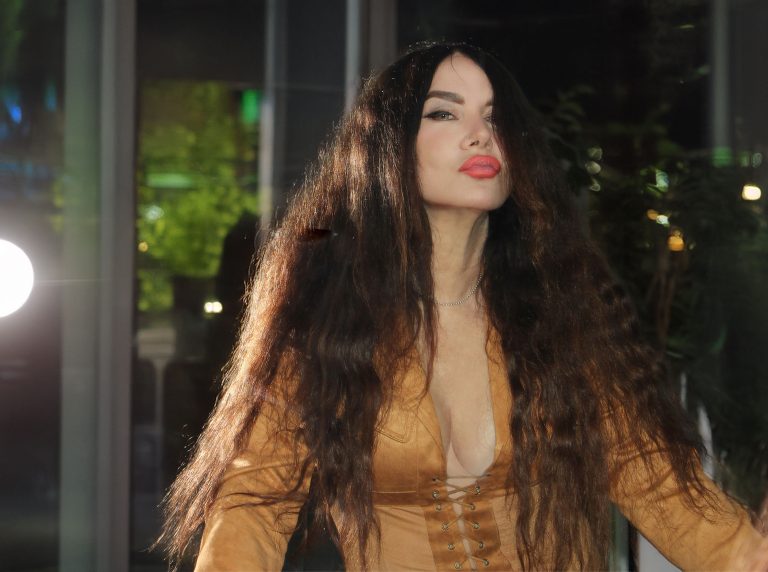



Betty Moon’s 2003 Album Doll Machine Arrives on Streaming Platforms for the First Time

0

(LOS ANGELES, CA) – Singer, songwriter and producer Betty Moon has officially released her 2003 album Doll Machine on streaming platforms for the first time. Originally released in late 2003 through Sextant Records/EMI while Moon was still living in Canada, the album is now available on Spotify and Apple Music via her label Evolver Music, Inc.

As Moon’s third full-length album, Doll Machine captures a bold and unapologetic chapter in her catalog. The record blends Moon’s powerhouse vocals with raw, hard-hitting riffs, punchy hooks, and infectious choruses, further cementing her reputation as a force to be reckoned with in rock and alternative music. Raw, stylish, and full of attitude, the album reflects the energy of an artist pushing forward with confidence and refusing to be boxed in.

The record also includes listener favorites like “Lucky Day,” a pedal-to-the-metal rock banger that captures the album’s intensity and fearless edge. With younger listeners currently rediscovering the grit, mood, and heaviness of ’90s rock, grunge, and alt influences, Doll Machine arrives on streaming at the perfect time. The album’s rock intensity and hook-driven songwriting feels both nostalgic and newly relevant.

The streaming release of Doll Machine gives longtime fans a chance to revisit one of Moon’s defining early records while introducing new listeners to a pivotal era in her evolution. Its arrival also follows renewed momentum around Moon’s recent EP Strangely Beautiful, showcasing the depth and range of an artist whose career continues to bridge eras, sounds, and creative chapters.

Doll Machine is available now on Spotify, Apple Music, and major streaming platforms.

Learn more about Betty Moon atwww.bettymoon.com and Instagram.com/BettyMoon.


For interviews, review copies, or additional information, please contact:

Viscera Cera feat. YESH by LoDeck & The Golden Godz

0

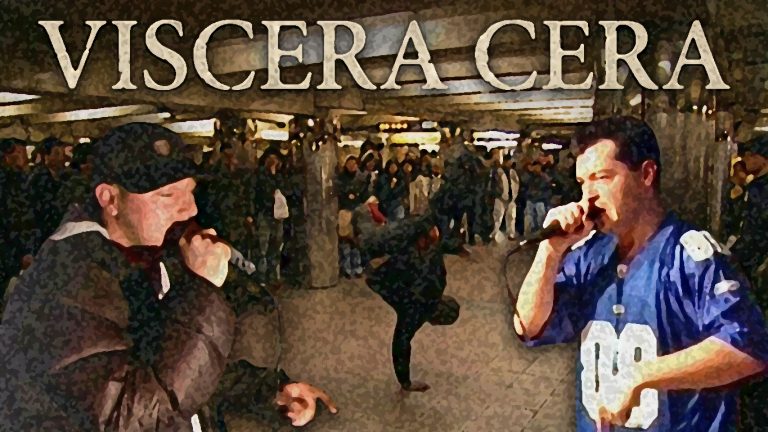
LoDeck and YESH have known each other since the 90s, both coming up from the same South Brooklyn scene that fed the Fondle Em and Rawkus/Lyricist Lounge eras. Despite that history, “Viscera Cera” marks the first time the two MCs have actually linked up on a track. The video dropped August 25th, pulled from LoDeck’s album Dinner at Dorsia, out back in June through his own jOHNNY23 Records. Sol626 of the Golden Godz handled production, and the track was recorded in Las Vegas, where LoDeck is based these days. The title refers to what the artists call the viscera of life, the moments that stick with you and get pulled out on special occasions.

The flow between the two MCs is easy and unforced, the kind of trade-off you’d expect from friends who’ve had decades to build a rapport even without ever putting it on record. What carries the track, though, is Sol626’s instrumental. It’s old-school in the best sense, built around a soulful R&B sample that gives the whole thing a warm, melodic bed to work over, pleasant enough on its own that you find yourself humming along independent of the bars. That doesn’t happen by accident. The press notes describe a meticulous selection process aimed at finding a beat that could mesh two distinct rap styles, and that care comes through.

The video leans into the nostalgia, cutting in archival footage of both LoDeck and YESH from years back, which gives the whole thing a time capsule feel for anyone who came up on that era of New York hip-hop. It’s a fitting way to frame a first-time collaboration between two guys who’ve been circling each other’s orbit for thirty years. LoDeck is already working on his next studio album, and YESH has a show lined up in Santiago, Chile on September 5th. For now, “Viscera Cera” stands as a solid document of two South Brooklyn veterans finally sharing a beat, and Sol626’s production is reason enough to give it a spin even if you’ve never heard of either MC before.

Somebody Like You by Maddox Jones

0

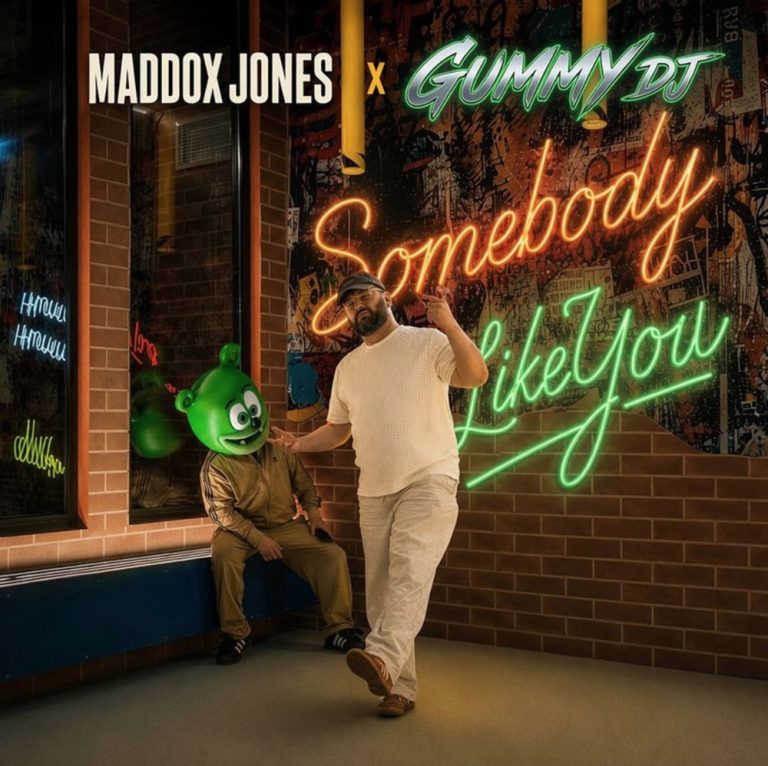
Maddox Jones has never stayed in one lane for long. He started out fronting The Departure, racking up four UK Top 40 singles and opening for The Killers and Placebo, before going solo in 2020 with the EP Headspace, which climbed to number four on the iTunes Singer-Songwriter chart. Since then he’s moved through pop and R&B-leaning material, landing a number one on the Music Week Black Music Club Chart with “Body & Soul” alongside Great Adamz late last year. His latest move is a dive into dance music, teaming up with German producer Gummy DJ for “Somebody Like You”, out July 31st via Radikal Records.

Gummy DJ brings his own momentum to the pairing. Since launching the project in 2023, he’s racked up more than 14 million YouTube views and landed at number three on the Music Week Commercial Pop Club Chart earlier this year with his rework of Sash!’s “Encore Une Fois.” His production here leans on the familiar tools of festival dance music, pulsing four-on-the-floor kicks and arpeggiated synths that build from quiet verses into full drops, giving Maddox’s vocal room up front rather than getting buried under the low end.

The song’s core idea, that longing for connection can coexist with a euphoric chorus, is the kind of balance that either clicks or doesn’t depending on how the vocal sits against the drop, and on paper this one seems built to let the melancholy in the lyric survive the bigger moments rather than get steamrolled by them. The Hamburg-shot video leans into that tension, following Maddox through the city’s streets and riverside before landing in the clubs where Gummy DJ shows up in person.

Between Maddox’s run of UK chart placements and Gummy DJ’s climb on the Commercial Pop Club Chart, “Somebody Like You” reads as two artists at genuinely complementary points in their careers, not a mismatched collab for the sake of it. Whether it lands as more than a solid festival-season single depends on how it plays next to the rest of Gummy DJ’s catalogue, but the pieces are in the right place.

Dream by Milyam

0

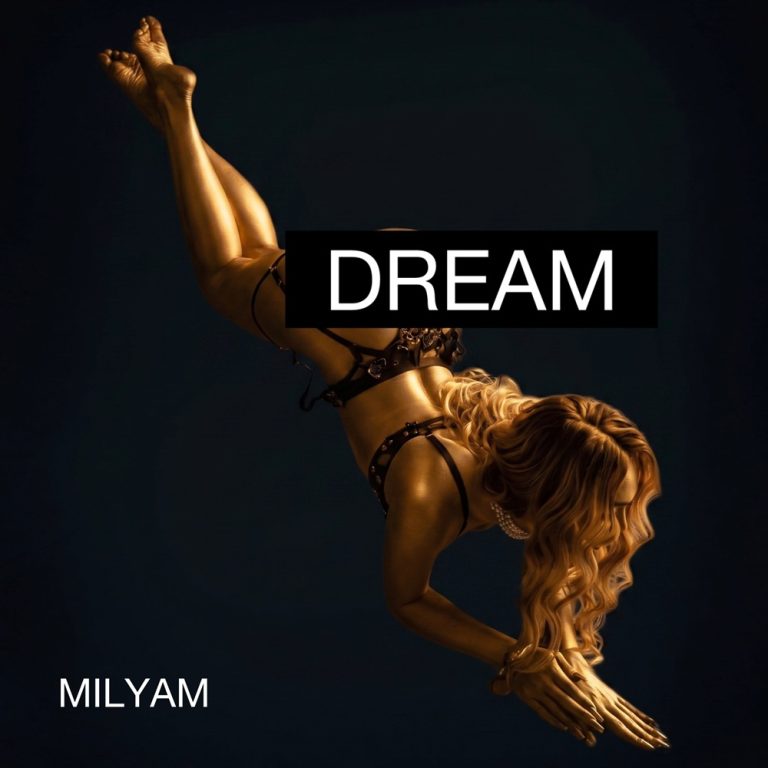
Milyam, pronounced me-lee-AHM, has built her sound out of Los Angeles around a dark, cinematic take on hip-hop and R&B, and “Dream” leans hard into that atmosphere. The track came out July 24th as an FCC-compliant broadcast edit, following an original explicit cut, and it’s released through her own imprint, MILYAM EMPIRE, under which she keeps full ownership of her masters and publishing.

What stands out on “Dream” is the beat, a trap foundation stretched into something more spacious and unusual than a typical rap instrumental. The rhythm sits back rather than driving forward, giving Milyam room to work in a lower, more patient register than the genre usually calls for. She leans into a feminine, sensual delivery throughout, which tracks with how she describes herself, a self-styled “sensual storyteller,” and the writing here backs that up rather than just repeating the label. It’s less about hitting hard than about creating a mood and letting it sit.

The momentum behind the release is real and mostly checkable. Milyam‘s earlier single “Intimacy” advanced as a semi-finalist in the R&B/Soul category at the Unsigned Only Music Awards, picked up an A-List run on Breaking Sound Radio, and was named Song of the Week on California’s KBBF 89.1 FM. Both “Intimacy” and “Dream” were screened by the BBC Introducing team on 1Xtra, and she’s currently getting spins on Amazing Radio across the UK and US. For an unsigned artist running her own label, that’s a legitimate string of placements rather than just a press release claiming momentum.

“Dream” won’t be for everyone chasing a harder trap sound, but as a mood piece it does what it sets out to do, and the fact that it’s landing radio play on both sides of the Atlantic while Milyam still owns every part of it is worth paying attention to.

A JOURNEY THROUGH GOLDEN SHADOWS

0

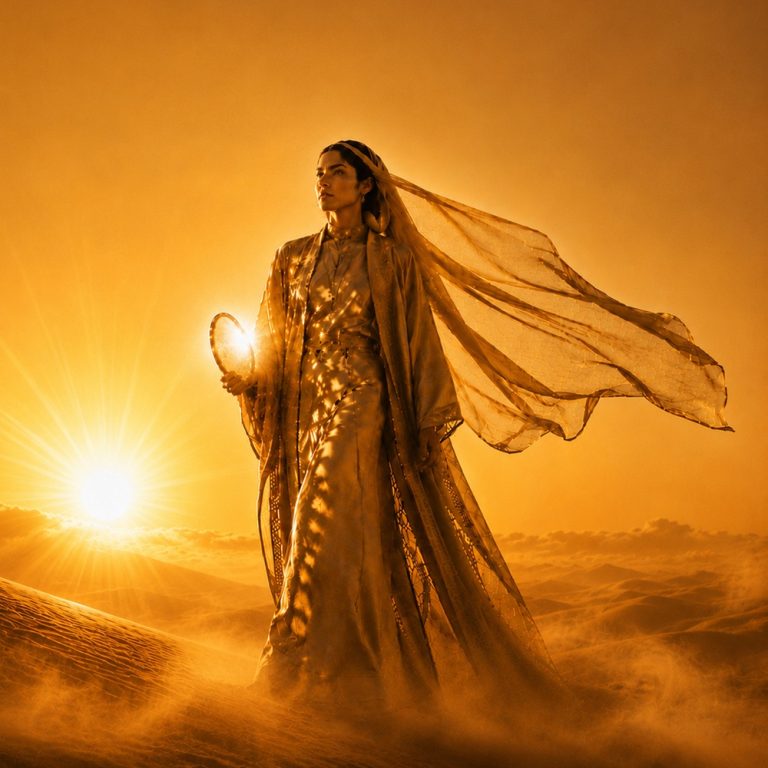
The desert is an unusual place to tell a story about surrender. There is nowhere to hide, little certainty about what lies ahead, and an almost unsettling amount of space to confront oneself. Savanna Soul Music’s “Carry Me” turns that vastness into its emotional landscape, transforming the Sahara from a physical setting into a metaphor for uncertainty, trust, and the willingness to continue without knowing exactly where the path leads.

The Strasbourg-based project moves through Cinematic Afro House, Organic House and electronic textures with a deliberately unhurried sense of purpose. The release avoids the urgency of a conventional dancefloor track, allowing its atmosphere to unfold patiently rather than pushing toward an immediate release.

The opening phrase, “Carry me into the light,” establishes the track’s central tension. Is it a request for rescue, or an admission that control has its limits? The ambiguity gives the song much of its emotional pull. Its mysterious traveler crosses endless golden dunes toward a distant light, trusting a direction without necessarily understanding the destination.

The production mirrors that journey. Organic percussion provides a grounded pulse, while electronic textures stretch outward, creating an almost immeasurable sense of space; against this backdrop, the warm female vocals feel remarkably intimate: a human presence moving through an environment much larger than itself.

In Savanna Soul Music’s “Carry Me,” the desert becomes uncertainty; the horizon becomes faith; the slow rhythm becomes an exercise in letting go. Even its eventual crescendo feels less like a dramatic payoff than the natural consequence of everything that came before.

Savanna Soul Music’s “Carry Me” is not so much about reaching the light as trusting yourself enough to keep moving toward it: a restrained, atmospheric journey where surrender becomes another form of movement..

Cathleen Ireland’s “Do You Care” Turns Digital Rejection Into a Pop Exorcism

0

There was a time when heartbreak arrived through a slammed door, a dead telephone line, or a letter returned unopened. Now it comes through a glowing rectangle informing you that the person who once knew the geography of your skin has blocked your account. Progress, ladies and gentlemen. Cathleen Ireland’s “Do You Care” dives headfirst into this uniquely modern purgatory, where relationships do not necessarily end—they simply vanish behind privacy settings.

Ireland opens with “Bae, bae, block me / But you can’t stop me,” a line that could have been unbearably cute in less capable hands. Instead, she delivers it like someone laughing because screaming would alarm the neighbors. The stuttered phrases—“ka-ka-catch me” and “ga-ga-ghost me”—turn emotional disorientation into rhythm. Language itself begins skipping like a scratched record because ordinary sentences are no longer adequate.

That is the sly strength of “Do You Care.” It dresses abandonment in catchy pop clothes without pretending the wound underneath is fashionable. Ireland is not playing the invincible heroine who deletes the number, buys a new outfit, and struts toward a sequel. She admits the embarrassing truth: sometimes you still want the person back. Sometimes you would settle for friendship, an explanation, or merely proof that you mattered.

“I just wanna talk to you / Wanna be unblocked to you / I just wanna be your friend again,” she sings. There is no armor in that confession. It is needy, bruised, sincere, and therefore more courageous than another disposable empowerment anthem telling us to dance our trauma into oblivion.

Then comes the chorus, built around one brutal question: “Do you care enough for me?” Ireland repeats it until the words stop sounding like a request and become an interrogation. Do you care enough to answer? To remember? To acknowledge that this happened? Every return to the phrase tightens the emotional vise.

The song’s most cutting moment may be its simplest: “Wasn’t I good to you? / I’m not perfection, babe / But I was true to you.” That is the midnight argument everyone has conducted alone, assembling evidence for a trial where the defendant never appears. Ireland understands that rejection does not merely break the heart; it makes the abandoned person question the entire historical record.

Musically, “Do You Care” balances emotional heaviness with a groove that keeps moving. Its contemporary pop and R&B instincts prevent the song from collapsing beneath its own sorrow, while Ireland’s forceful performance supplies both polish and friction. She sounds wounded, but never erased.

“Do You Care” succeeds because it refuses to make heartbreak dignified. It recognizes the obsessive, repetitive and humiliating machinery of longing. In an era when human beings can be removed with the tap of a screen, Cathleen Ireland demands something messier than closure: recognition. The song’s question remains unanswered, hanging in the digital silence—and that silence says plenty.


MIRACLES HIDDEN IN ORDINARY DAYS!

0

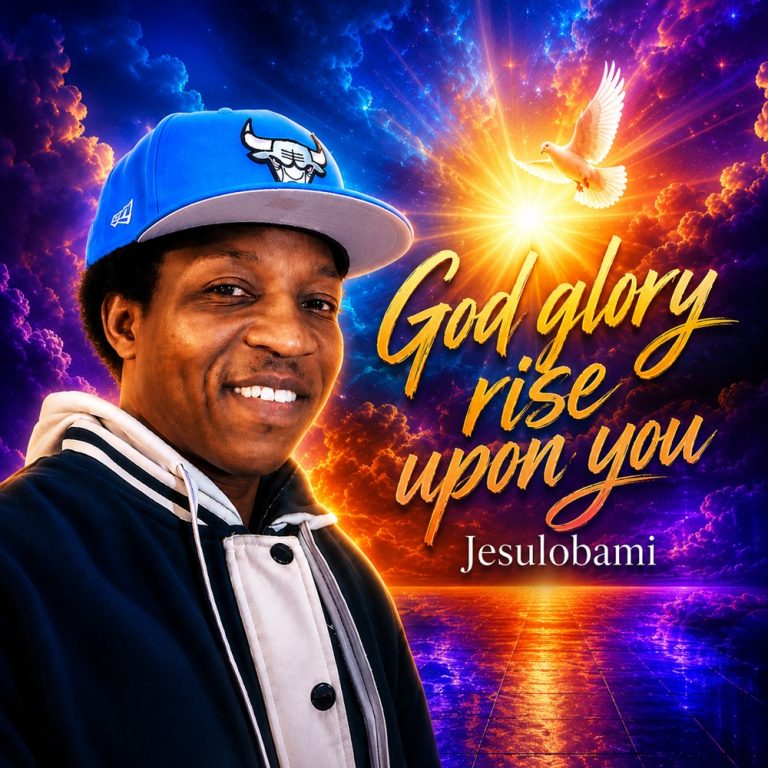
Gratitude can be an act of memory. It asks us to look backward, not simply at what went wrong, but at everything that somehow carried us forward. “God glory rise upon you” by Jesulobami grows from that perspective, turning personal gratitude toward God into a contemporary gospel expression of faith, hope, and encouragement.

Written by John Ikulala, performing under the name Jesulobami, the song comes directly from his reflections on the miracles, protection, provision, and guidance he has experienced throughout his life. That personal foundation gives the track a quality that feels closer to testimony than abstraction. Rather than presenting faith as a distant concept, Jesulobami translates it into something lived, remembered, and ultimately shared.

“God glory rise upon you” blends Christian gospel with African-inspired influences, pairing heartfelt vocals with an uplifting contemporary sound. Its musical character carries the song’s spiritual message without making it feel overly formal or distant. Instead, there is an accessible warmth that allows the central theme of gratitude to remain at the forefront.

And perhaps that is where the song finds its strongest emotional connection. Not every miracle announces itself dramatically. Sometimes it appears as protection from something we never saw coming, guidance when the way forward was unclear, provision arriving at precisely the right moment, or simply the strength to endure another difficult day. Jesulobami’s approach suggests that recognizing these moments can itself become an act of gratitude.

Although the song emerges from Jesulobami’s own relationship with faith, its underlying invitation extends beyond his story. It encourages listeners to look back at their own lives and consider the moments they may have overlooked: the people, circumstances, or unexpected turns that helped carry them through difficult seasons.

Recorded in Bella Coola, British Columbia, the release marks an important step in Jesulobami’s journey as an independent artist. His ambition is not simply to create music about belief, but to use his music as encouragement for those who may be struggling to hold onto hope.

“God glory rise upon you” by Jesulobami is a gentle reminder that faith can be found not only in extraordinary moments, but in the ordinary ones we sometimes fail to notice. Sometimes, all it takes is looking back with gratitude to realize that the road was never walked alone..

Album: Back To The Truth by Ricky Z.

0

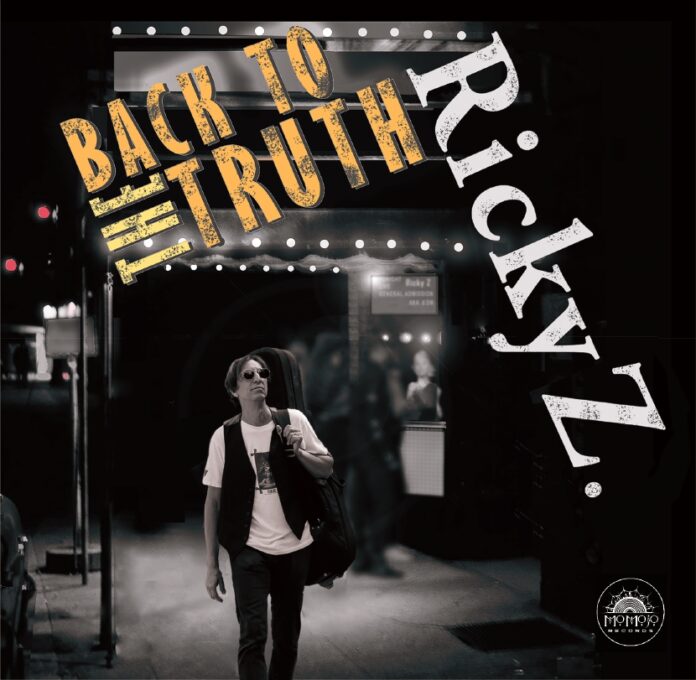
Ricky Z. has spent 25 years as one of LA’s most in-demand session guitarists, with credits running through Steven Tyler, John Fogerty, Josh Groban, Alan Parsons, and a Latin Grammy for his work on Juan Gabriel’s Album of the Year-winning Los Dúos. Back to the Truth is his sophomore solo record, and after a career spent supporting other people’s visions, it plays like a genuine return to his own roots in Blues, Rock and Roll, Cajun, Gospel and Jazz, backed by an equally credentialed cast of session players including drummer Chad Cromwell and bassist Jimmy Earl.

The title track is an incredible jam, carrying a great bluesy, swinging rhythm section that’s genuinely addictive, with great tones from everyone involved and plenty of melodic solo guitar work driving it forward. It’s the clearest showcase on the record for exactly the kind of playing that’s made Ricky Z. such an in-demand player for so long, soloing with real taste rather than just technical flash. “Congo Square” pairs well with it, a rip-roaring blues rocker built around American music history that closes on a genuinely smoking solo.

“Lay My Body Low” stands out for how the vocals harmonize with and mimic the slide guitar, a timeless blues tradition executed very well here, especially in the song’s first half when the arrangement is stripped down to just those two layers before the full band joins and the sound opens up considerably. The Louisiana-inflected “We Make a Good Gumbo,” featuring accordionist Teddy Andreadis of Guns N’ Roses, leans hard into the bayou influences running through the record.

The cover of Leonard Cohen’s “Hallelujah” is very soulful, with tones that are incredibly warm and an execution that carries real depth and nuance, a genuinely worthy addition to an already crowded canon of covers. “God Has Smiled On Me” carries even more weight, an expression of gratitude for God’s blessings delivered entirely through lead guitar melody and supporting harmony with no lyrics at all, and the fact that it communicates that clearly without a single word sung is a real testament to the playing, expressive in a way that recalls John Mayer at his most emotive.

Back to the Truth is exactly what its title promises: a player known for decades of supporting other artists finally stepping fully into his own voice, and the record backs that ambition up with genuinely strong songwriting and playing across the board.


Album: Brightland Shines by Paul Totten

0

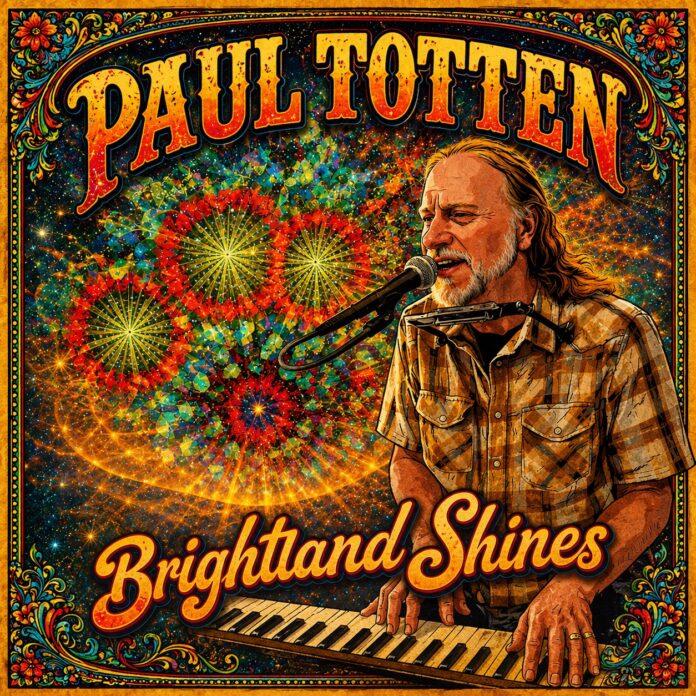
Brightland Shines is Paul Totten‘s independent debut, but the path to it is anything but a beginner’s story. Totten started as a percussionist, earning his BA in Percussion Performance and touring the West Coast on steel drum before spending years playing drums in LA bands, including stints with Le Trureaux Delta Band at the Southern California Cajun Festival and The Hansen Family Band at movie wrap parties. It was covid, and the sudden loss of live opportunities that pushed him back toward piano and eventually toward writing and singing for the first time, and Brightland Shines is the result of that rediscovery, guided along the way by pianist Mark Harrison and vocalist Stefano Langone. Produced by Woody Aplanalp, whose credits include Aloe Blacc and Kamasi Washington, and mastered by Jack Doutt, the ten songs here move through loss, redemption, acceptance and hope with real craft behind them.

Opener “Hundred Year Flood” is a strong way into the record, built on a solid rhythmic foundation with genuinely great keyboard tones throughout. The textures and sounds themselves are what you’d expect from an album rooted in classic rock songwriting, but they carry real character rather than feeling generic, immediately establishing that this is a band, not just a singer-songwriter with backup.

“Eloise” sits at the other end of the spectrum: a slower ballad with a genuinely catchy melody, and the whole band locks into the rhythmic pocket in a way that’s almost hypnotic. It’s a strong example of the record’s range, proof that Totten and his collaborators can pull back the tempo without losing any of the cohesion that makes the more upbeat tracks work.

The closing title track, “Brightland Shines,” stands out as the record’s high point. The groove on it is very good, and while the harmony itself stays fairly simple, the arrangement more than makes up for it, with guitar and keyboard lines weaving around each other in a way that keeps the song constantly interesting even without harmonic complexity doing the heavy lifting. It’s a fitting way to close an album that’s ultimately about a place worth the price of admission, a soulful, free destination that still asks something real of the people chasing it.

With a personnel list built on players who’ve backed everyone from Jimmy Haslip to American Idol contestants, Brightland Shines plays like a genuinely collaborative record rather than a solo vanity project, and for a debut this considered, it’s a confident, well-earned introduction to Paul Totten as a songwriter.