

Home Blog Page 6

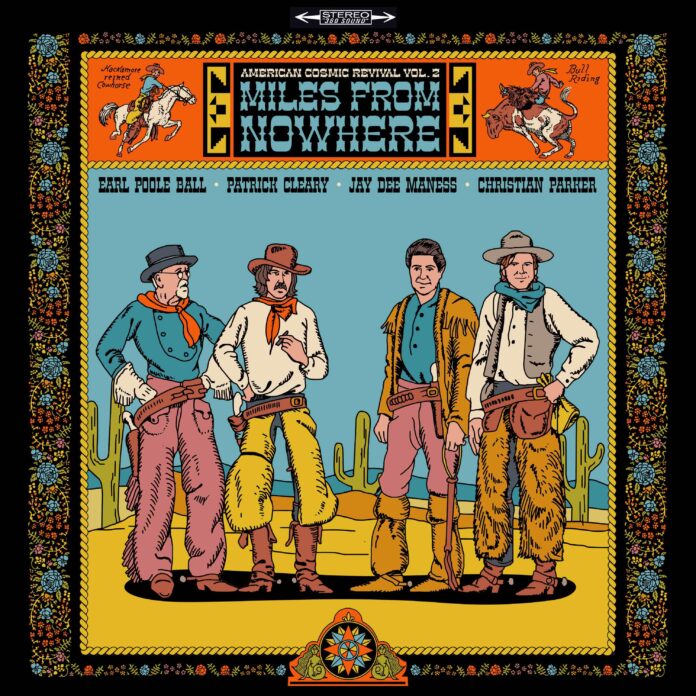
Album: American Cosmic Revival Vol. 2 by Christian Parker, Patrick Cleary, Earl Poole Ball

0

Following last year’s American Cosmic Revival Vol. 1: Back At Home, which paid direct tribute to the International Submarine Band’s Safe At Home, Christian Parker and Patrick Cleary widened the lens considerably on Miles From Nowhere. Rather than revisiting one classic record, the album pulls from the broader Cosmic American Music songbook, including Gram Parsons, The Everly Brothers, Merle Haggard, George Jones, and Bob Dylan, gathering songs connected less by a single source and more by a shared thread of heartache, loneliness, and the search for home. The lineup backing that vision is genuinely stacked: legendary pianist Earl Poole Ball, whose resume includes Johnny Cash, Gram Parsons and Buck Owens; pedal steel greats JayDee Maness and Gary Jacob; and arranger Stevie Blacke, whose string work has appeared on records by Willie Nelson and Glen Campbell.

Track 4, “Train Leaves Here This Morning,” leans more country than most of the record, and the arrangement, with harmony working alongside the slide guitar, is genuinely excellent, locking in perfectly with the song’s own narrative and theme. “If We Make It Through December” is the clear standout for its chords alone, carrying a very 70s singer-songwriter quality that pushes it well past generic country territory. These musicians are storytellers first, and that comes through here in particular, a song about a season that’s supposed to be joyful running headlong into real hardship, with the only way through being each other. It’s a lot of heart poured into one performance. “Hear The Wind” closes the album out on a deceptively simple composition; the melody itself is plain, but the arrangement underneath it is anything but, harmonically rich and full of moving parts and leading tones that keep the momentum pulling forward right to the end.

Recorded at SubCat Studios in Syracuse and mixed by Sean McDonald in Pittsburgh, the album is built on rich harmonies, acoustic guitars, and Ball’s unmistakable piano work, honoring the character of the original Cosmic American Music era while letting each performance find its own identity rather than just imitating the source material. As Parker put it, these are songs about people searching for a place to belong, and that search comes through clearly across the record’s eleven tracks. Miles From Nowhere treats this music as a living tradition rather than a museum piece, and the results back that ambition up.


Album: Blues Grass by Arlen Roth

0

Arlen Roth has been at this since he was nine years old, played the first Woodstock reunion concert in 1970, and has spent the decades since working alongside everyone from Simon and Garfunkel to Bob Dylan, John Prine, and the Bee Gees. A GRAMMY nominee with four nods for his album All Tricked Out! alone, and a name Gibson has ranked among the most influential acoustic guitarists of all time, Roth brings all of that history to Blues Grass, a record joined by The Rank & File Band, with his daughter Lexie contributing vocals across several tracks and Jimmy Vivino guesting on “Ruby Are You Mad at Your Man.” The whole project plays like a guitarist’s guitarist finally sitting down with the bluegrass and Americana songbook that clearly runs in his blood.

“I’ll Fly Away” is an incredible jam right out of the gate, and “Nine Pound Hammer” carries that same energy, both tracks giving Roth room to stretch out and show off exactly the kind of playing that’s made him a legend among guitar players. “Rank Strangers” goes the opposite direction and is gorgeous in its simplicity, built on what sounds like two chords for the entire song, yet it’s breathtaking, with a tone so lush and warm that the restraint becomes the whole point rather than a limitation.

“Bury Me Beneath the Willow” is a stunning ballad that somehow sits in a major key while still managing to make you weep, a genuinely rare trick for a song to pull off, letting warmth and grief occupy the same space at once. “The Little Girl and the Dreadful Snake” closes out the record’s most memorable stretch with a swing so immersive you can’t help but move with it, pulling the listener fully into its storytelling rather than just playing behind it.

Across all twelve tracks, what stands out most is how effortlessly Roth moves between raw technical command and genuine emotional restraint, never treating one as more important than the other. Blues Grass isn’t just a showcase for a guitarist with nothing left to prove; it’s a record that treats the American folk and bluegrass tradition with real reverence while still sounding completely alive in his hands. For longtime fans of Roth’s playing and newcomers alike, this is an easy, rewarding album to sit with from front to back.


Replay by Ersin Secrin

0

Ersin Secrin works as a songwriter and lyricist rather than a performing artist, and the “Replay” recording here is an AI-assisted demo built to showcase the song’s concept, energy and commercial direction to artists, producers and labels who might eventually take it on. The lyrics, story and creative concept are Secrin’s own; the AI is being used purely as a tool to put a listenable shape around them rather than as a finished production.

As a pitch, it does its job clearly. “Replay” is built around a strong feel-good beat, an uplifting rhythm and a chorus designed to be instantly memorable, aimed squarely at beach clubs, car playlists and festival crowds rather than anything more introspective. There’s no attempt at a complicated narrative here, and that’s clearly by design; the song is chasing pure energy and instant appeal over storytelling depth, which is exactly the right instinct for a track meant to demonstrate summer-hit potential rather than lyrical complexity.

Judged as a concept rather than a finished record, it’s a reasonable one. Songs built around this uncomplicated, sun-and-freedom feel-good formula have a long, reliable commercial track record, and the hook-first approach here gives a future producer plenty to work with. The demo format does mean it’s hard to fully evaluate performance, tone, or production choices the way a proper release would allow, since none of that is meant to be final, but the underlying bones, the concept, the intended mood, the structural instinct toward a big, replayable chorus, come through clearly enough to understand what Secrin is going for.

For anyone in a position to develop songs rather than just review finished ones, “Replay” reads as a legitimate submission worth a listen on its own terms, a well-targeted pitch for a specific commercial lane rather than a polished single. It’s less a song to review in the traditional sense and more a concept worth passing along to the right artist.

The Hammer Goes Click by Marcus Christ

0

“The Hammer Goes Click” is Marcus Christ‘s second collaboration with producer Bankroll, and it arrives as one of the more structurally ambitious tracks in his catalogue so far. The song opens as a street-level narrative, a robbery told from multiple angles, a gun drawn, money taken, jewelry pulled from pockets, before pivoting into a diss track aimed at any rapper willing to step up to him on the mic. What sets the structure apart is the second half’s shift in perspective, moving from ground-level confrontation into something the artist frames as commentary from a much higher vantage point on vengeance and consequence. Recorded in Whittier, CA with engineer Jester, the same setup behind his earlier Whittier, California project, the track is billed as Marcus Christ at his most confident and technically locked-in.

By his own account, the song’s origin was almost accidental: a Jorja Smith track came on unexpectedly and sparked the idea that eventually became this single. That instinctive, unplanned creative process seems to be part of how Marcus Christ works generally, turning sudden moments of inspiration into pointed, confrontational lyrical statements rather than carefully engineered concepts. His own framing of the release, quoting “even a poisoned apple looks healthy,” fits a song built around surface-level normalcy hiding something more dangerous underneath.

“The Hammer Goes Click” also arrives as part of a broader rollout building toward Marcus Christ’s album The American Pharaoh, following earlier singles like “Get The Haters Back,” “On My Block,” and “Don’t Wait.” Those tracks have been setting up an album explicitly framed around ambition, identity, and rising above circumstance, and this single’s mix of street narrative and lyrical challenge fits comfortably into that larger arc, a gritty, technically sharp entry meant to keep momentum building ahead of the full project.

THE RHYTHM OF COLLECTIVE BELIEF!

0

Every generation finds new ways to make old ideas audible. The protest songs of the 1960s had their guitars, chants and communal refrains; decades later, Deptford Sound Collective’s “#RiseUp” arrives with synthesizers, dance beats and an Ibiza-ready sense of euphoria. Yet beneath the change in sonic vocabulary sits a remarkably familiar impulse: the belief that music can gather people around something larger than themselves. What changes here is not necessarily the message, but the space in which it is delivered.

“#RiseUp” translates the collective’s engagement with solidarity, civil liberties and social change into a glossy blend of euphoric EDM, disco and 80s-inspired dance. Soaring builds, glowing synths and an infectious rhythmic pulse give the track an immediate summer appeal, but its optimism carries a deliberate purpose; at its centre is a simple philosophy of #LoveNotHate, delivered not through confrontation, but through collective movement.

That choice makes the track more intriguing than its straightforward club architecture might initially suggest. Protest music often depends on disruption: stopping, speaking up, demanding attention. “#RiseUp” works differently. It embraces repetition, momentum and euphoria, allowing the dancefloor itself to become part of the statement. When bodies move together, individuality briefly gives way to participation; the beat becomes something shared.

There is little ambiguity in what Deptford Sound Collective want to say, but perhaps ambiguity is not the objective. The strength of “#RiseUp” lies in its accessibility and its refusal to separate enjoyment from meaning. It understands that a message can travel through pleasure just as effectively as through urgency.

Deptford Sound Collective’s “#RiseUp” explores an enduring possibility: that music does not always need to interrupt celebration to communicate resistance. Sometimes, it can find its power precisely by bringing people together inside it: one beat, one movement and one collective belief at a time!

THE CONTRADICTIONS WE CALL ROMANCE..

0

Modern romance has given us more ways than ever to desire each other while remaining emotionally distant. We can obsess from afar, perform intimacy, crave attention, and still keep the most vulnerable parts of ourselves protected. “Amore Nero黒い愛” by @MoStFeAr translates that contradiction into a dark, atmospheric exploration of what contemporary desire can become when mere wanting begins to replace connection.

The Orlando artist’s album enters a world where heartbreak and obsession are not opposing forces but deeply intertwined ones. Inspired by the film Obsession and the character portrayed by Inde Navarrette, the project follows a protagonist caught in a particularly uncomfortable paradox: wanting someone to become consumed by him while remaining emotionally unavailable when that desire is finally returned. The fantasy is not necessarily about love itself, but about the reassurance of being wanted.

That distinction gives Amore Nero黒い愛 much of its psychological weight. Rather than presenting romance as something pure or uncomplicated, @MoStFeAr examines the ego, longing, fantasy, and emotional avoidance that can exist beneath it. The album seems less interested in asking “who do I love?” than asking “why do I need to be loved this intensely?”

That uncertainty becomes the atmosphere. Alternative indie textures, dark-pop moods, R&B grooves, and hazy electronic passages move through the project without settling into a single identity. The music feels nocturnal and cinematic, shaped by restrained vocals, warm melodies, glitching textures, and carefully layered production. There is often something slightly volatile beneath the beauty, as though every soft surface is concealing a more complicated thought.

The slower pacing is part of the appeal. @MoStFeAr does not rush to resolve its emotional tension. Instead, tracks are given space to breathe, allowing electronic distortions and more experimental moments to emerge almost like cracks in an otherwise intimate soundscape. The result feels less like a collection of songs than an environment: one built for headphones, late nights, and the kind of introspection that tends to become louder when everything else goes quiet.

The artist’s influences: Ethel Cain, Cigarettes After Sex, Drake, PARTYNEXTDOOR, Aftertheparty, and others are reflected in this emphasis on atmosphere and emotional ambiguity. Yet Amore Nero黒い愛 does not feel like an exercise in imitation. Its strongest quality is its commitment to mood as storytelling.

There is also something deliberately visual about the project. @MoStFeAr has spoken about imagining darker, more cinematic surroundings while creating the music in Orlando, essentially constructing the landscape internally. That imagination translates clearly: the album feels like urban twilight, dim rooms, flickering screens, and memories replayed long after they should have been put away.

Perhaps that is why the artist’s invitation to “bathe” in this universe feels appropriate. Amore Nero黒い愛 is not designed to be skimmed for immediate answers. It asks listeners to sit with its darkness long enough for the contradictions to become familiar.

“Amore Nero黒い愛” by @MoStFeAr is less a traditional romance than an examination of what happens when desire becomes tangled with ego and emotional distance. It understands that wanting to be loved is not always the same as wanting intimacy; and that sometimes, the person we are most obsessed with proving our worth to is, in fact, ourselves.. 

Fiona’s Phobias’ new 6-track DEMOns delves into the human psyche,

0

Fiona’s Phobias new 6 track DEMOns explores the dark corners of the human psyche and facing inner demons through dark romantic sounds, cinematic horror lyrics and satirical undertones.

Theatrical Horror & Psych influenced duo bridge genres of Goth, Pop Punk, Dark Cabaret, Metal and Alt Rock in fiery fusion of eerie melodies balanced with upbeat angsty energy with catchy pop vibes.

Fiona’s Phobias is the collaborative HUMAN effort between multi-instrumentalist Nikki Line and vocalist Krisanna Marie. They are an alternative rock, gothic-metal, pop punk and dark cabaret fusion. The duo draws heavy influences from the macabre, theatrical vaudeville, horror and anime. Formed in 2022, they debuted in 2024 with their 1st track “Imaginary Sins,” which featured a quirky, fast-paced fusion of heavy guitars, haunting melodies and introspective lyrics that dove right into psychological fears and inner demons. They are known for their signature quirky and spooky style reminiscent of the TV show “The Munsters” and “The Addams Family” as well as their Broadway musical flare and symphonic atmosphere style. They self-identify as “anxious introverts”.

DEMOns presents 6 Tracks that don’t stick to any one genre or cookie cutter mold, but rather a sampler hybrid of various metal undertones, pop punk, goth, surf, vintage vaudeville and alternative heavy rock.


cae Announces New EP alt girl encounters – AVAILABLE NOW!

0

BIRMINGHAM, AL — Birmingham, Alabama experimental rap artist cae announces the release of his new EP, alt girl encounters, out February 23, 2026 — a nine-track, independently released collection that blurs the lines between lo-fi rap, bedroom pop, electronic experimentation, and raw rock energy into something genuinely singular and hard to place. Willfully abstract, emotionally honest, and built during one of the most personally turbulent periods of his life, it is the first release in what cae describes as an evolving new direction — and it sounds like proof that the direction is exactly right.

“This EP was made during a transitional period in my life,” cae says. “I was taking a break from releasing music and going through a breakup. I turned to music, skating — anything to keep my mind off things — and started investing my time in discovering new electronic and rock music influences and was listening non-stop. I started trying to sample and play around with it in my production as well as in my vocals. I admire the fluidity and expression-driven vocals that rock can give a song versus normal rap vocals. This EP is the first of many releases incorporating and evolving this more raw rock-rap style.”

alt girl encounters moves like a big cat through tall grass — creeping, flowing, and entirely unpredictable. Equal parts emotional passion, surrealism, dissociation, and psychedelic vision, cae’s unabashedly vulnerable melodic vocals, whispers, and panoramic atmospheres guide listeners through a mysterious world that belongs entirely to him. Lo-fi textures collide with technological soundscapes. Raw emotion bleeds into abstract construction. The result is a release that operates at the intersection of modern internet culture, emotional realism, and experimental sound — turning everyday feelings into immersive, cinematic experiences.

For fans of psychi and skaiwater, the nine tracks — b4u, dreamt abt u, ur my fav artist, usexual, her past’s ur present, ur slave, r u ai, y cant u, and ihu — form a cohesive emotional arc through longing, loss, obsession, and the particular dissociation that comes from trying to process a relationship’s end while the rest of the world keeps moving.

cae already arrives at this release with serious platform traction — over 50,000 listeners across platforms and 15 million plays on his breakout track “Crave You.” BeatCrave has called his music a blend of “introspective lyrics and atmospheric beats, capturing the complexities of longing and desire,” describing him as an artist carving out a unique space in the emotional hip-hop landscape.

alt girl encounters pushes that space into stranger, more textured territory — and a deluxe edition with more polished songs in the same style is already planned for later this year.

Planeswalkers Announce Debut EP The Mind Room

0

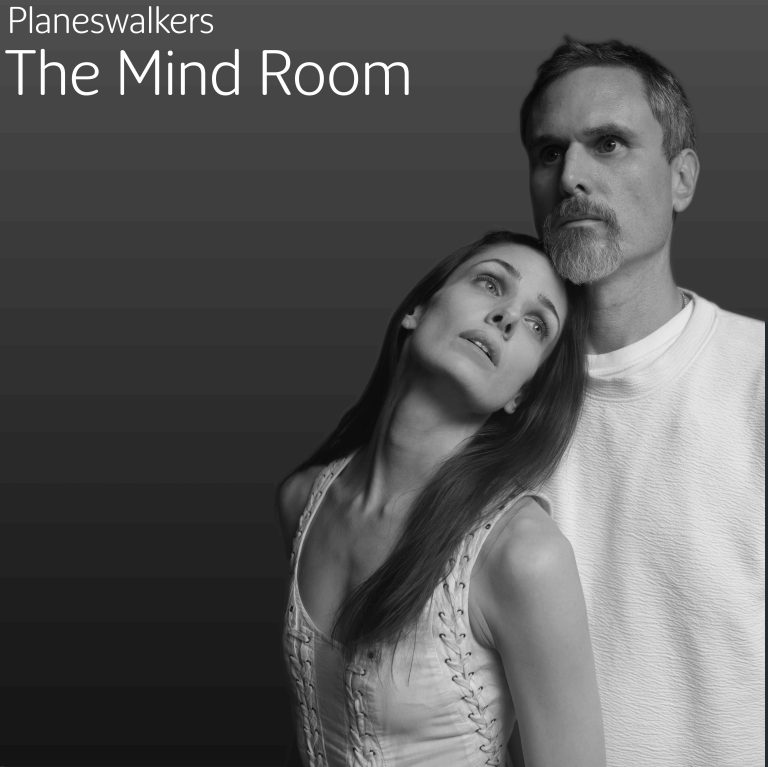
A new project has arrived from the netherworlds. Planeswalkers — the collaboration between ethereal gothic artist Arden Leigh of Arden & the Wolves and visionary industrial and electro musician and producer Andrew Means (3TEETH, Patriarchy) — announce the release of their debut EP, The Mind Room, out September 1, 2026 on all digital platforms. Dark, immersive, and operating at the intersection of ambient, electronic, experimental, industrial, and witch house, it is a release built not only with musical craft but with intentional, occult purpose — a hypersigil in sonic form.

For fans of Massive Attack, Imogen Heap, Zola Jesus, Portishead, and The Buttress, The Mind Room is the record those influences were quietly pointing toward all along.

The project was not planned. Arden Leigh had made a deliberate decision to stop starting new music projects entirely, committing instead to collaborations under the name of her solo project. Then Andrew Means arrived with four tracks in late 2025 — and within just the first few seconds of what would become “Horizons,” something shifted.

“I could already hear his genius,” she says. “I got the feeling of something stark yet hallowed, like being in a small room with a black and white film installation in the corner of a modern art exhibit, and not wanting to make a sound because you know you’re in the presence of something sacred even if you don’t understand it yet. I knew these songs had to be written about something special.”

Andrew persuaded her that the work they were creating together deserved its own name — its own identity. The name they chose, Planeswalkers, reflects both their shared occult practice and a lyric already written into “Body” about walking the planes. The two share a practice of astral projection that became, at times, a literal part of their creative process.

“There were times when we’d finish working on music and then lie down on my floor and astral project together,” Arden says. “It’s a really amazing gift to have met someone who shares my two main interests of music and magick like that.”

“This EP has been a wonderfully explorative process into newly discovered sonic realms with Arden,” Andrew says. “The lyricism and the musical expression go hand in hand in a way that I am ecstatic about. The synergistic partnership between myself and Arden is something I am incredibly excited about and I am looking forward to creating many great works with this project.”

The Mind Room is a high-concept work built around a subject Arden Leigh approaches with both personal investment and studied precision: facilitating healing from extreme trauma through remote means.

The EP explores one of the fundamental catch-22s of severe trauma — particularly trauma stemming from organised abuse or hypnotic programming — where tripwires embedded in the psyche can prevent a person from consciously confronting what has happened to them. Even in milder cases, denial and avoidance function as coping mechanisms when the reality of trauma feels too intense to face directly.

“I understood the cry for help from the loved one in question as a genuine expression of their desire to heal,” Arden says, “and their subsequent avoidance of it as a symptom of that which they were healing from. Answering that call meant studying and innovating methods of communicating remotely to create safety and awareness among their internal parts — to foster the trust needed to begin slowly unpacking their memories with them.”

The vocal performances across The Mind Room dramatise that process — functioning simultaneously as narrative, as emotional witness, and as the EP’s defining hypersigil: a work of magick, in the tradition described by Arden’s teacher Grant Morrison, that alters reality in accordance with intent through narrative and storytelling.

Arden and Planeswalkers recommend The Plural Association at powertotheplurals.com for resources on plurality, including traumagenic DID, and for those who wish to make a donation.

Arden Leigh’s otherworldly vocals merge with Andrew Means’ menacing atmospherics and ambient grooves across a sonic palette that moves freely between ambient, electronic, experimental, industrial, and witch house — drawing from multiple genres without settling comfortably into any of them. The result is exactly what the project’s name suggests: music that moves between planes, that exists in the space between the familiar and the sacred, between the seen and the unseen.

John Ross McEwen Announces New Album Late Bloomer – OUT NOW!

0

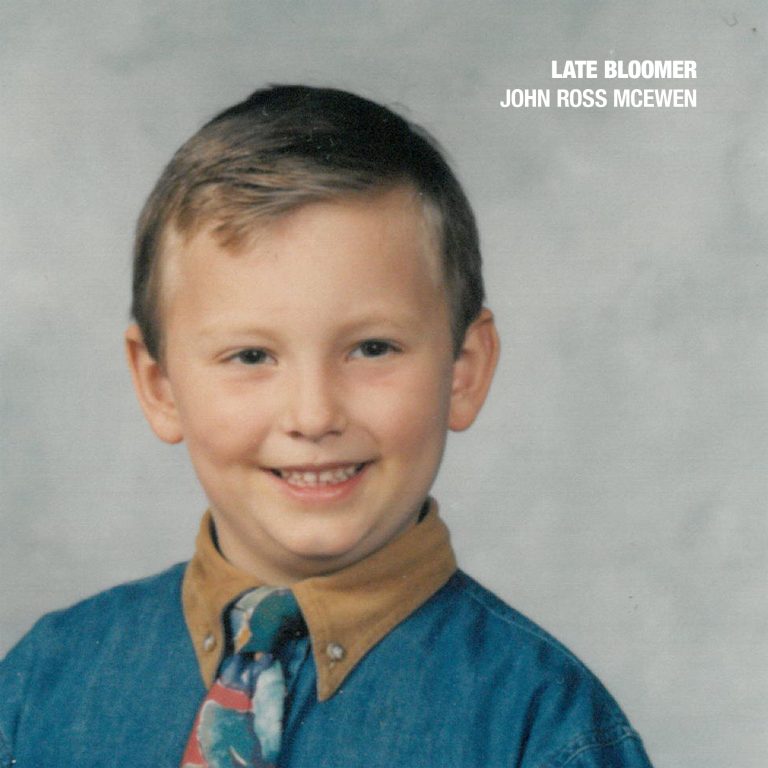
WICHITA, KS — Singer-songwriter, guitarist, and multimedia artist John Ross McEwen announces the release of his new album, Late Bloomer — a quietly extraordinary record of ambient folk music that explores grief, humanity, technology, and existence through intimate acoustic arrangements, American Primitive guitar, minimalism, and ambient textures. The follow-up to his profound 2023 release Sinking From the Shore, it marks a significant artistic evolution from an artist already operating at a rare level of emotional intelligence and depth.

“Late Bloomer,” McEwen says, “intimately explores cosmic themes of grief, humanity, technology, and existence by blending influences of American Primitive guitar, minimalism and ambient textures. This album is the product of years of floundering as a human and artist, a failed relationship, the physical loss of friends, and ultimately finding the love I so longingly searched for.”

That honesty — unguarded, earned, and free of performance — is what defines everything McEwen makes. His is an artistic practice rooted in humility and vulnerability at a moment when both feel increasingly rare. Whether working with sound, paper, or moving images — his broader practice also includes collage and experimental video art — he returns again and again to themes of nostalgia, place, and the beauty found in ordinary moments. On Late Bloomer, those themes expand outward into something cosmic: the personal becomes universal, and the ordinary holds the weight of everything humanity is currently navigating together.

The hard-won wisdom threaded through these songs is palpable from the first listen. McEwen is reaching toward something beyond the personal — toward the outer limits of the Universal Mind — and he does so with the particular one-of-one artistic approach of someone who has genuinely been through it, and come out the other side not intact exactly, but transformed. Late bloomers often do.