



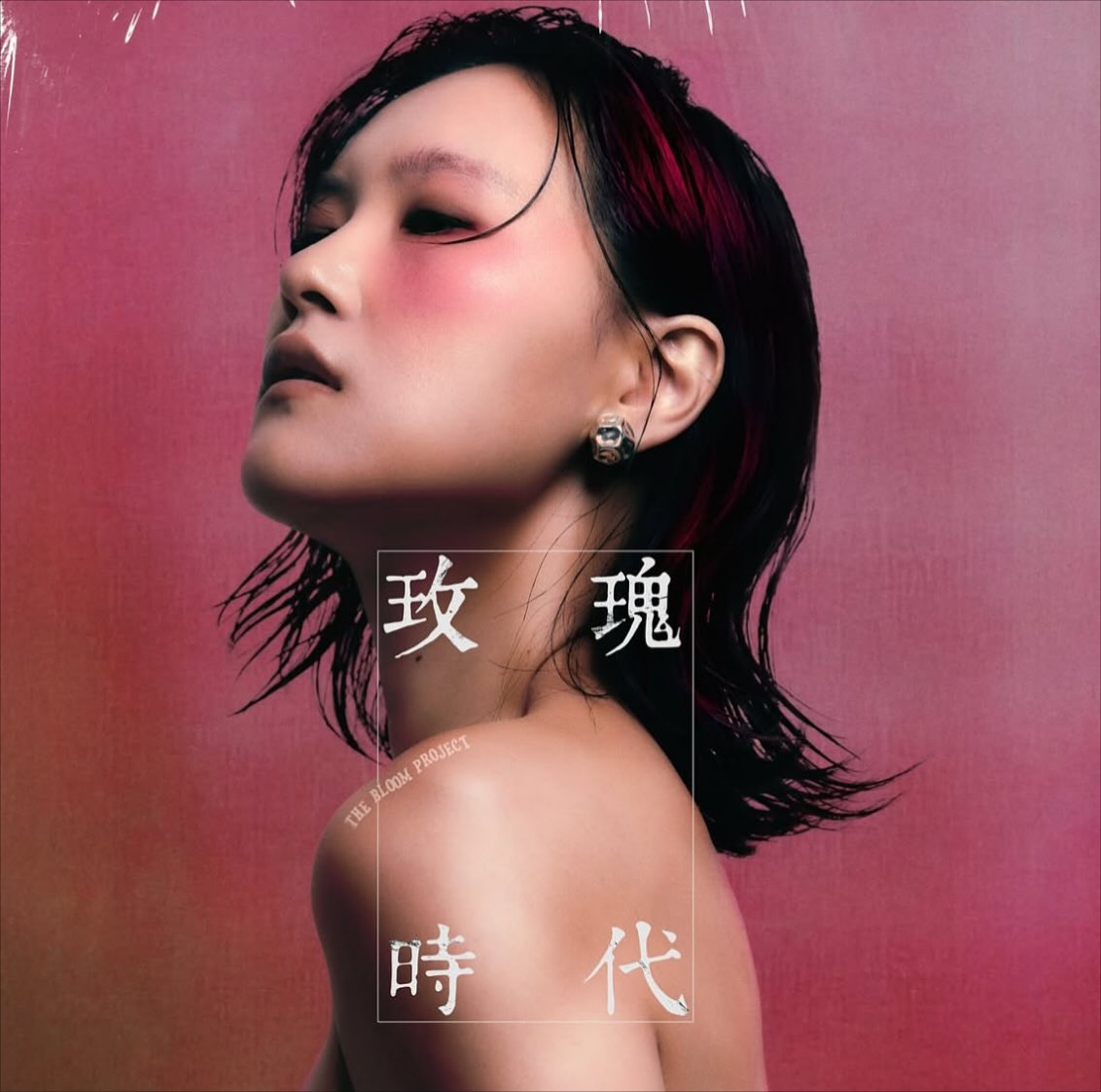
THE FUTURE HUMS IN OLD MELODIES!
Adai Song’s The Bloom Project is not just a reinvention of sound, it’s an act of cultural alchemy. The album pulses with a rare kind of confidence: the knowledge that the past and future can coexist in a single breath. Drawing from the golden age of shidaiqu, Shanghai’s early 20th-century fusion of Chinese folk and Western jazz, Adai reimagines these old melodies through an electronic, feminist, and deeply modern lens. The result is an eight-track mosaic where history vibrates against sub-bass, and identity blooms in stereo.
It opens with “A Lost Singer,” a reclamation of a 1937 ballad once drenched in longing. Here, Adai replaces the passive ache of the original with quiet determination. Piano and erhu weave through a steady pulse, and her voice hovers, delicate but unyielding. The woman who once wandered in search of belonging now builds her own world.
Then “Night Shanghai” flickers alive, the city rendered as a heartbeat and hologram. Deep-house beats and guzheng flourishes illuminate its soundscape, while Adai captures the loneliness of neon nights with cinematic subtlety. There’s beauty in the melancholy here, but also motion, the sense that even isolation can dance.
“Make Way” transforms the once-genteel “Rose, Rose, I Love You” into a bold proclamation. The rose no longer waits to be admired; she declares her autonomy, thorn and all. With pipa, koto, shamisen, and shimmering synths, Adai crafts a transcontinental dialogue in sound. Every element feels essential, as if the instruments themselves are conversing across time.
“I, I Want” teases desire into dialogue: playful, rhythmic, and unapologetic. The trap beats and Chinese timbres mirror two voices circling one another, blurring the line between flirtation and self-assertion.
“Carmen 2025” reinvents Bizet’s rebel through electronic ritual. Guzheng arpeggios and temple percussion fracture into an EDM drop that feels like both opera and uprising. It’s defiant, timeless, and strikingly alive.
Then, quietly but unmistakably, comes “Wuxi Tune.” Inspired by the southern storytelling tradition Wuxi Jing, the song begins with an invocation: Let me sing to you all. What follows is a spell of resilience, not romance. Adai builds the track around UK Garage rhythms, letting jazz inflections and guzheng phrases weave through saxophone improvisations. It’s where old art meets new intent, where folk storytelling finds itself reborn in electronic cadence. “Wuxi Tune” may be the album’s hidden thesis: walking your own road while singing the songs that made you.
“Wild Thorny Molihua” reclaims the jasmine flower’s fragile reputation, turning gentleness into rebellion. The shakuhachi sighs like wind through memory, while Adai’s voice blooms sharp and fearless: They call me soft and pure, but never looked closely. By the end, softness becomes its own kind of steel.
The album closes with “River Run,” a graceful unraveling. Guzheng and airy synths dissolve into one another, carrying the listener forward in quiet surrender. It feels like the moment tradition lets go, flowing not away, but through.
What The Bloom Project achieves is nothing short of luminous. Adai doesn’t simply blend East and West; she stages a meeting where both evolve. Her production, refined yet full of breath, turns nostalgia into propulsion. Each track hums with its own life force, yet all share one truth: that the future isn’t a break from history, it’s its continuation in a new rhythm.
In Adai Song’s world, memory dances, language glows, and the future hums in old melodies!