



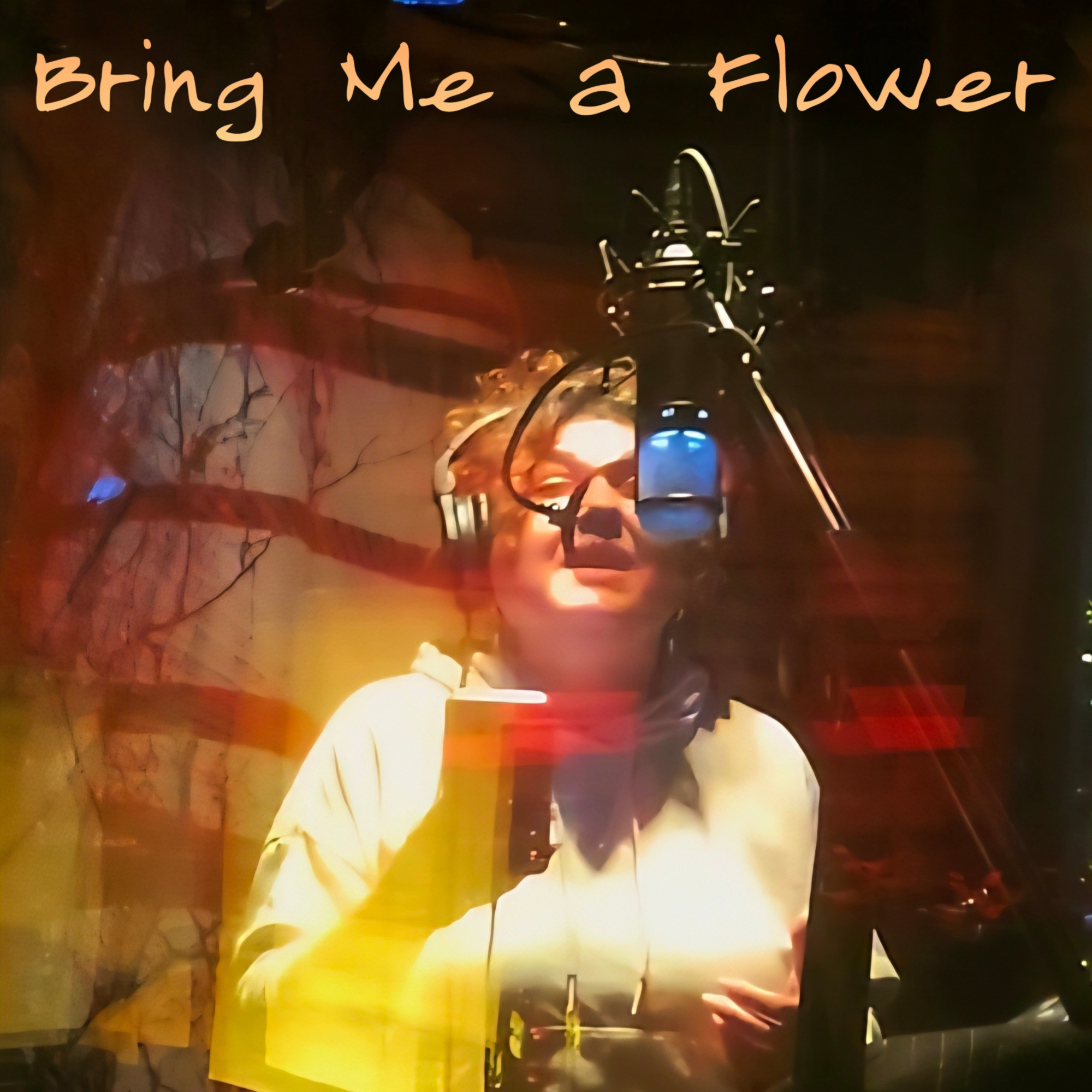
There’s a moment in Baldy Crawlers’ “Bring Me a Flower” when time seems to stop—when the accordion sighs, the harmonies hover like mist, and the listener feels something both ancient and achingly current stir inside. It’s not just a song. It’s a séance of empathy. The kind of art that doesn’t demand attention, but quietly earns it, note by handcrafted note.
Martin Maudal, the luthier-philosopher at the heart of Baldy Crawlers, builds more than instruments—he builds bridges between sound and soul. Every chord in “Bring Me a Flower” carries the fingerprint of the man who carved its body from wood and wire. This is music as craftsmanship in the purest sense, and yet it never feels self-conscious. It feels lived in—human, humble, and illuminated by spirit.
The origin story could have come from some half-lit corner of a Kerouac novel. Baldy Crawlers began as a way for Maudal to demonstrate his custom guitars. But something happened when he hit record. The songs started to speak, and Maudal listened. “Because it began as a marketing tool,” he says, “we didn’t limit ourselves to any genre.” That freedom gave birth to a sound that transcends category—a fusion of folk, Americana, and something cinematic that lingers like smoke over desert highways.
The new single, “Bring Me a Flower,” finds its roots in California mythology—the vigilantes oscuros, or “dark watchers,” ghostly figures said to stand sentinel over the Santa Lucia Mountains. Maudal takes this folklore and, with a poet’s intuition, ties it to the immigrant experience. The song tells of those who seek hope across borders only to meet fear and inhumanity. But it doesn’t linger on despair. Instead, it reaches for endurance and grace.
“Sure, there was anger as I wrote it,” Maudal admits, “but the song turned out to be better than what I felt. It turned out to be about more than anger—about hope.”
That sentiment hums through every measure. Norrell Thompson’s lead vocal is breathtakingly restrained, her tone both vulnerable and resolute. Elizabeth Hangan’s harmonies rise like dawn light behind her, while Ross Schodek’s bass and Carl Byron’s accordion create an earthy pulse beneath the melody. The atmosphere is cinematic but never heavy-handed—each element balanced like brushstrokes in a painting that reveals more each time you step back.
The lyrics read like a psalm for the forgotten: “Bring me a flower, thou dark mountain watcher / I’ll bring you myself and I’ll grant you a boon.” In that exchange—between giver and receiver, hope and heartbreak—Maudal captures the eternal human transaction: the wish to be seen, the yearning for mercy.
Maudal’s background as a Berklee-trained musician and his time spent straddling the jazz and punk worlds bleed subtly into the arrangement. There’s precision and rebellion coiled together—a sonic tension that gives the song its quiet power.
Like his guitars, the song feels handmade. You can almost hear the wood breathe. And behind it all, there’s Maudal’s philosophy—a belief that music, at its best, is an act of empathy.
“Bring Me a Flower” isn’t a protest—it’s a prayer. It doesn’t demand revolution. It reminds us why we care in the first place. In a time when the world feels divided and numbed, Baldy Crawlers invite us to stand still, listen, and maybe, just maybe, bring a flower too.
–Lonnie Nabors