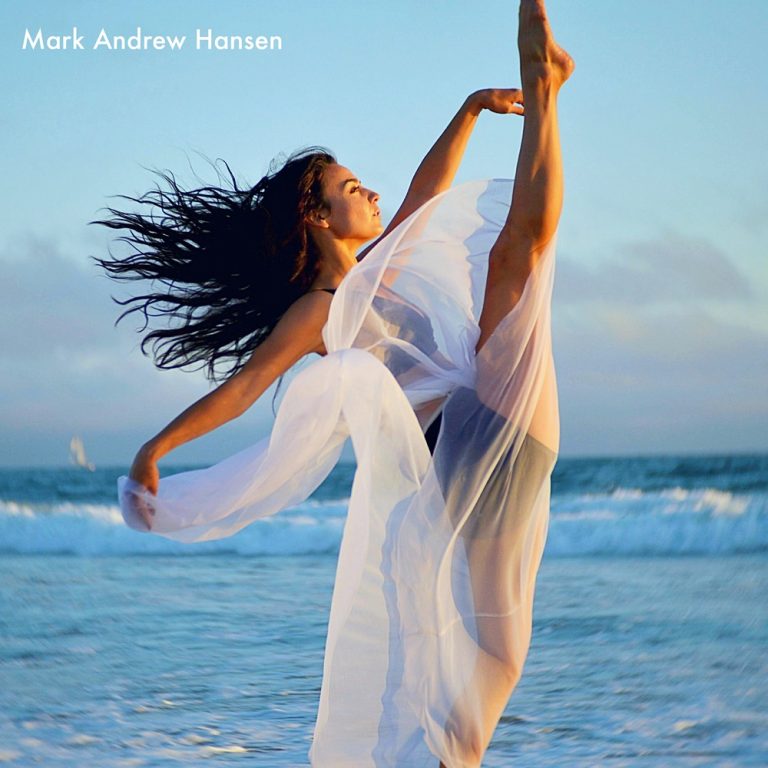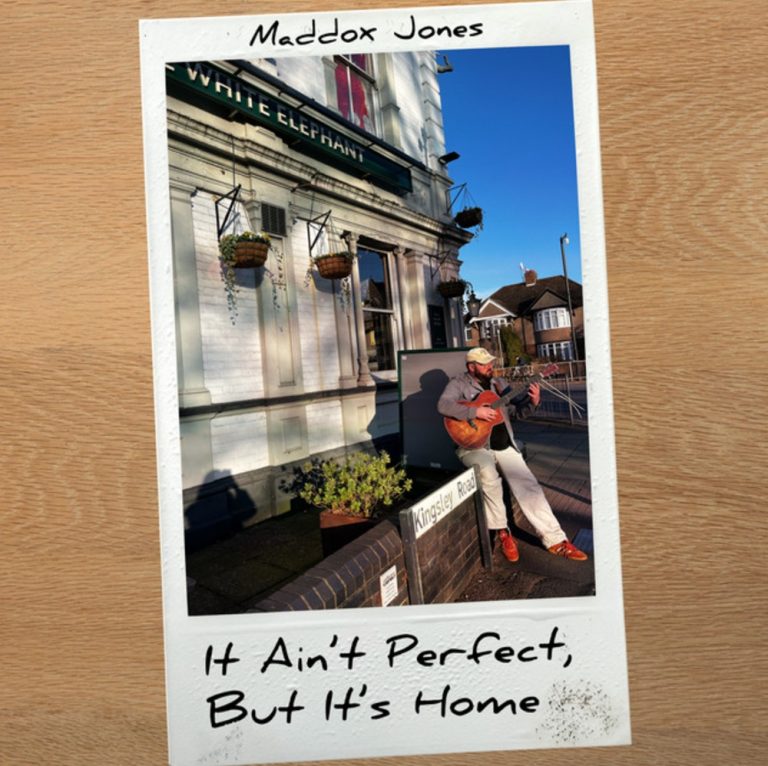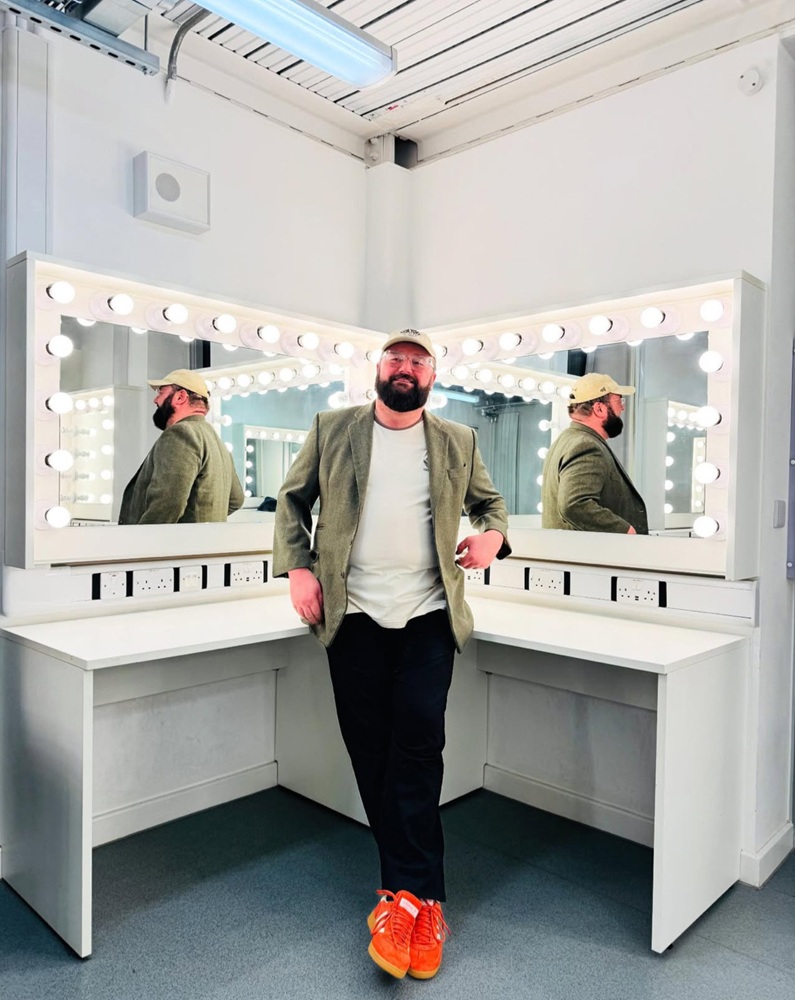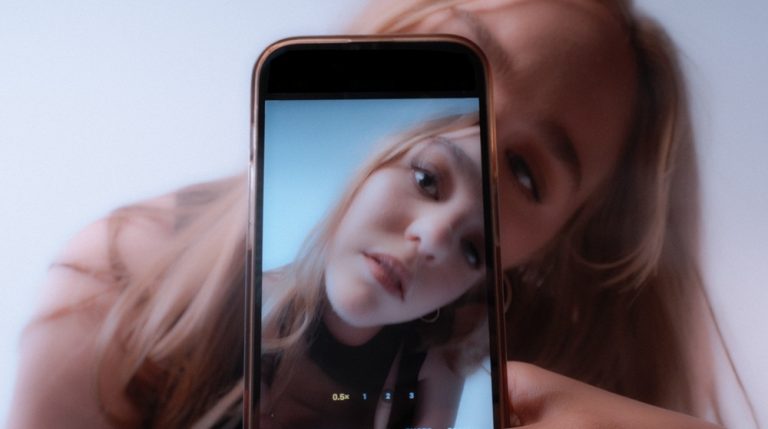



Montevideo’s CRUZA dropped “alma” on February 6th, the second single from vocalist and visual artist Lucia Molina’s project. Her debut “.38” earned praise from Radio Click Digital for what they called a seductive reinvention of Latin Soul, and “alma” takes a different direction entirely. The track opens with “Mi madre pierde las cosas” (My mother loses things) and builds from there into something deeply introspective. Molina draws inspiration from her Uruguayan roots and European Spanish heritage to create a sound that sits somewhere between cinematic folk and flamenco jazz. The production strips away digital polish in favor of something more visceral and live-sounding.
The language barrier was no barrier to entry at all; without understanding a word, I was completely captivated by the song from the first listen. There is a powerful human vulnerability to every minor detail of this song, from the supporting layers of guitar to the arrangement itself and how unbelievably dynamic it is, and finally to Lucia Molina’s incredible vocals that are full of life and humanity and tell the story with the texture, tone, and execution as much as the words themselves or even more.
Molina also works as a model and actress, and the visual side of CRUZA leans into what’s been described as a “Dark Academia” aesthetic. “alma” translates to “soul,” and the track lives up to that. It’s about memory, lineage, and the things we carry even when they feel lost. Molina’s planning to take this project to the stage, and based on the raw power in this recording, those performances are going to be something.
London’s Alexis Lace released “Stork” back in November as the fourth single from her album Silver. She wrote, produced, recorded, mixed, and mastered the entire track herself. The song deals with choosing a childfree life and the relentless judgment that comes with it, especially for women. Alexis Lace has decided not to have kids since she was young, and she’s spent her whole life fielding questions about it, being told she’ll change her mind, and dealing with men who thought she’d eventually give in. The track is blunt about that frustration and the double standard that exists around parenthood expectations, particularly how society assumes women should want children while men get a pass on the actual labor involved.
The rhythm in this song is unique. It’s something AI can never replicate; it’s full of little details and very human, creative choices that make it what it is. It doesn’t evolve much across the track because it serves the narrative, like all the other harmonic layers. The main event here is the powerful message conveyed through the vocals. The lyrics are incredibly striking and are blunt about the subject matter, which are absolutely necessary in my opinion because a subject matter like this doesn’t really work if the execution is shy about it.
“Stork” is labeled as one of the more serious and controversial tracks on Silver, and it earns that weight. Though it really shouldn’t be that controversial because it should be the common consensus that women get to decide whether they want to partake in the prolongation of the species’ existence by sacrificing their bodies or not, and Alexis Lace isn’t softening her stance or trying to make it palatable; she is speaking her mind through her art like an artist should.
Southern Rockers Hillbilly Vegas are sharing their new single & video for “I Hope You Know“. The track is the 1st single from the Oklahoma based band’s upcoming album “A La Mode”, which is slated for release in May via Quarto Valley Records.
“I Hope You Know” is a song about the chaos of a relationship that’s deteriorated to the point of no return. The song is driven by guitars with a southern style, rocking blues groove – with just the right touch of grit that the band is known for.
The band’s Steve Harris says “I Hope You Know’comes from a very personal experience in my life, but it’s a moment a lot of people recognize. It can be a romantic relationship, a friendship, family, or even a professional relationship. In my case, it was a professional relationship and a lifelong friendship that slowly deteriorated due to substance abuse. It’s realizing the person you trusted isn’t in control anymore, and that you can’t fix it for them. Sometimes the only thing left to do is let go and hope it gives them the motivation to fix themselves.”
The video for “I Hope You Know“, which was directed by GR1M (Chase Matthews, Crucifix), was filmed in Oklahoma and produced by the band. Harris explains the concept: “With the ‘I Hope You Know’ video, we paid tribute to where we come from and the music that built us. ’70s era rock was the greatest era of rock and roll. We kept it fun – like rock n’ roll is supposed to be and let the visuals reflect that golden age. We shot it at our warehouse during the worst snowstorm the U.S. had seen in 60 years, which forced us to keep it simple. Honestly, that made it even better.”
About Hillbilly Vegas:
Hillbilly Vegas’ dynamic sound caught the ears of an independent label in Nashville in 2011, and their first album “Ringo Manor” was released and sold more than 10,000 copies – driven by the hit single “Little Miss Rough and Tumble”. The band has gone on to chart 5 songs on Billboard’s Rock charts, including “Let It Ride” – which remained on the chart for 13 weeks and reached #10, “Feels Good”, “High Time For A Good Time”, “Hell To Pay”, “Two Gun Town”, and fan favorite “Shake It Like A Hillbilly“.
The band has earned a reputation for rousing live shows – bringing a loud, party-like atmosphere that is all-inclusive. They’ve shown they have a broad appeal across different genres, pleasing crowds while performing shows with rockers Blackberry Smoke, The Kentucky Headhunters, Wolfsbane and Ted Nugent; along with country icons Alabama, Travis Tritt, Blake Shelton, and Wynonna Judd. Hillbilly Vegas has played before huge crowds at NASCAR events, as well as many major bike rallies, including the legendary annual Sturgis Motorcycle rally. They have a strong UK following, and have played the Maid of Stone and Steelhouse festivals. The band is managed by David Spero (Joe Walsh, Cat Stevens/Yusef Islam, Bad Company). Tour dates are being booked in support of the album release for later this year.
Founded by tech entrepreneur Bruce Quarto, the California-based independent label, Quarto Valley Records, represents Rock, Blues, Jazz and Americana genres with an impressive artist roster featuring legacy musicians Paul Rodgers, GRAMMY® award-winning Edgar Winter, Savoy Brown as well as the legendary talent that comprises The Immediate Family, GRAMMY® award-winning producer and renowned drummer and songwriter Tom Hambridge, GRAMMY® award-winning producer and percussionist Narada Michael Walden, blues-rock artist Sean Chambers, British blues sensation Bonham-Bullick, Wings member Denny Seiwell, acclaimed Americana singer-songwriter Al Staehely, singer-songwriter, guitarist, producer Steve Postell of The Immediate Family, esteemed Americana-Blues singer-songwriter David Starr, the soulful Richard T. Bear, pianist and songwriter John McAndrew, Oklahoma-based high-energy southern rock band Hillbilly Vegas and emerging artist Dominic Quarto.
Mark your calendars as London-based duo Beat The Drum drops their latest offering, “Black Sunset,” a captivating single that captures the magic of finding love in the city during the summer. Released today, this dream-like track infuses swirling psychedelic vibes with influences from Arooj Aftab and Massive Attack, marking the first in a series of innovative releases planned for 2026.
Beat The Drum, the dynamic musical collaboration of Chris Calloway and Steve Murrell, continues to evolve their eclectic sound by blending diverse influences into mesmerizing compositions. For “Black Sunset,” the duo teamed up with classically trained British Tamil singer Nisha Sivan from West London, whose enchanting vocals add a layer of soul-stirring depth to the track. This collaboration not only highlights the duo’s boundary-pushing creativity but also introduces audiences to Sivan’s unique spirit and energy.
“We recorded this beautiful dream-like song about finding love in the city in the summer this year,” shares Chris Calloway. “It has a swirling psychedelic feel to it, and we were looking for something special to add to it. We were playing live and met and heard British Tamil artist Nisha Sivan, who has a wonderful voice and spirit. We played her the song, which she loved, and she was kind enough to add her voice and energy to the recording.”
What sets “Black Sunset” apart is its significance as the inaugural release in Beat The Drum‘s 2026 lineup, as well as the first of two songs featuring Nisha Sivan. The track beautifully captures the essence of urban romance, transporting listeners to a realm of pure musical bliss through its psychedelic ambiance and heartfelt narrative.
The recording process took place at the duo’s secret HQ on the edge of London, with Sivan’s vocals captured at Mill Hill Music Complex in North West London using a mobile recording rig for accessibility. This unique approach underscores Beat The Drum’s commitment to innovative and inclusive production methods.
“We are excited to be creating music that stimulates and moves us,” adds the duo, reflecting on their artistic journey.
As Beat The Drum pushes boundaries with their evolving sound, “Black Sunset” sets the stage for a year filled with soul-stirring melodies and collaborative magic. Fans can stream the single now on all major platforms.
There’s a certain confidence in how FREZYA introduces FURTIVA: no rush, no concession to format, no concern for quick payoff. At just over seven minutes, the track treats duration as a working surface rather than an obstacle, unfolding with the patience of something meant to be lived inside. This isn’t built to grab attention once; it’s built to hold it under repeated exposure.
The production favors progression over repetition. Instead of circling a single groove, the track advances through distinct phases, each recalibrating the listener’s sense of speed and threat. Low frequencies slide and distort like machinery under strain, while Brazilian phonk textures roughen the edges of the rhythm. An amapiano-informed grid keeps the movement fluid, never static, and dark brass punctuations cut through with a sense of consequence, arriving like warning signals rather than hooks.
Vocally, economy is the guiding principle. FREZYA’s delivery stays controlled, almost austere, letting tension accumulate without theatrical release. When the baritone refrain enters, it doesn’t escalate the drama; it stabilizes it, grounding the track as it continues to shift around it. The lyrics operate in fragments and assertions, favoring implication over storyline, more concerned with atmosphere than exposition.
What sets FURTIVA apart is its awareness of context. This feels composed with adaptability in mind: music that can stretch, reset, or be repositioned without losing its internal logic. Its pacing anticipates long-form visual narratives, gameplay loops, and environments where music must support sustained focus rather than momentary impact. The cinematic quality comes from structure, not surface gloss.
As an opening move, FURTIVA defines FREZYA less as a conventional act and more as a system: one designed for circulation, integration, and longevity; and the closing stretch, FREZYA’s FURTIVA doesn’t resolve cleanly; it holds its ground, leaving an afterimage that feels calibrated for reuse rather than closure.
Melbourne, Australia – Melbourne-based artist Paul Louis Villani has unveiled his original single, “There’s Not Enough Black In Your Images,” a raw and unapologetic exploration of societal pressures, authenticity, and the disillusionment arising from forced compliance. Released on all major streaming platforms on February 8, 2026, the track draws exclusively from Villani’s personal life experiences, challenging external standards that conflict with individual beliefs and provoking reflection on the dynamics of power, weakness, and resilience in contemporary society.
Villani, who refuses to conform to norms that do not align with his principles, crafts a sound that resonates with themes of frustration and defiance. The single serves as a powerful social commentary, addressing the rise of mediocrity, the suppression of strength, and the internal conflict of those compelled to compromise for financial security. Recorded in his personal studio in Melbourne, Villani handles all instruments except percussion, employing MIDI, Logic X drum loops, and subscription-based AI tools to refine vocal stems iteratively until achieving the desired groove and vibe. This solitary process eliminates the need for external collaboration, allowing Villani to maintain complete artistic control and avoid unnecessary human interaction.
In Villani’s words: “Life experience is the only contributor. Being forced to comply with standards that are not my own—that make no sense to me—by people that I cannot assimilate with nor want to. Pathetic humans and being forced into doing something I don’t believe in, just to protect my income, just pisses me right off.”
The lyrics of “There’s Not Enough Black In Your Images” form a poetic narrative critiquing the inversion of power structures, where the weak ascend while the strong are marginalized. An excerpt illustrates this tension:
“The weak rise to power, A strange and fateful hour, While the strong stand aside, No longer able to abide. But why do we allow The meek to lead and cower While those who are true and brave Are left to be enslaved? Perhaps it is fear, That drives us to hold dear The weak and uncertain ones, And cast aside the strong.”
A surreal telephone call interlude adds layers of symbolism: “Hello. I am calling to let you know there is not enough black in your images… More black helps erase your white.”
This release stands out for its alignment with the mindsets of those experiencing genuine disappointment, frustration, anger, and the constraints of wage dependency, while potentially evoking conflict and guilt in those promoting what Villani describes as “false lefty bullshit.” Villani emphasizes the significance of the work: “It will fit real people’s mindsets and make pretend and false people feel conflicted and should make them feel guilty for pushing their false lefty bullshit into our lives.”
Villani does not perform live and focuses solely on studio production, underscoring his commitment to uncompromised artistry. The single is available for streaming and download, inviting listeners to engage with its message of reclaiming strength and pursuing justice amid adversity.
With Mother, The Ingrid return not with a dramatic statement, but with something far more intimate. Following their debut single, Limerence, the band continues to shape a sound grounded in vulnerability, reflection, and the delicate complexity of human connection.
At the heart of the track is Jess Charleslyn’s voice: clear, restrained, and deeply present. Her delivery feels less like performance and more like quiet witnessing. The lyrics move through memory and emotional distance with gentle honesty, asking questions that linger rather than resolve. Mother does not seek clarity; it trusts ambiguity, allowing listeners to sit inside uncertainty without the comfort of a conclusion.
The arrangement mirrors this emotional subtlety. Josh Platt’s drumming functions as narrative architecture, guiding the song’s pacing with cinematic sensitivity. Each rhythmic shift feels intentional, shaping the emotional arc without ever demanding attention. Meanwhile, Will Hornsblow’s guitar work drifts through the soundscape with dreamlike fluidity: blues-rooted phrases softened by shoegaze textures that create atmosphere rather than structure. The result is immersive but spacious, intimate yet expansive.
There is a quiet introspection woven into every layer of the song, perhaps born from the band’s formative years creating music during lockdown, a time when emotional processing became inseparable from artistic expression. That reflective origin still breathes through Mother, giving it a sense of lived sincerity.
The Ingrid’s collaborative philosophy deepens the song’s resonance. Their collective approach to creativity, grounded in shared visibility and artistic community, reflects the very themes of connection and relational meaning that shape the track. Mother is not loud, not definitive, not resolved. It is something rarer: a suspended emotional moment, held gently in quiet tension..
There’s something instantly grounded yet celebratory about Larry Mossburg’s latest single, “Everyday.” Rooted in rap trap energy but carried by a laid-back confidence, the Ohio artist delivers a track that feels less like a performance and more like a lived routine unfolding in rhythm. Released January 16, 2026, the song captures daily life not as repetition, but as momentum.
From the opening hook, Mossburg sets the tone with a mantra-like pulse: “Every day we wake up, we just ball till we fall / Every day we wake up, we can go and hit the mall.” It’s not just flexing, it’s framing life as motion, ambition, and presence. The repetition works like a heartbeat, grounding the listener in the artist’s personal rhythm.
Musically, the track benefits from a hybrid recording approach, blending modern digital precision with analog warmth, giving the beat both clarity and texture. The production feels polished but not sterile, leaving room for Mossburg’s personality to breathe. His flow glides effortlessly, especially in lines like “I’m smooth like a sailor,” delivered with an easy charisma that never feels forced.
Influenced by the sleek confidence of Jet Life and Taylor Gang aesthetics, Mossburg leans into smooth storytelling rather than aggression. Whether he’s gaming with friends, cruising the city, or reflecting on success, the track moves through scenes of everyday life with relaxed pride. Even the bravado carries a playful charm: “I’m so high I’m in orbit… making noise in my city call me big shaker.”
What makes “Everyday” resonate most is its simplicity. It celebrates routine without dullness, success without pressure, and ambition without tension. With a homecoming performance in Ohio on the horizon, Larry Mossburg isn’t just documenting his life, he’s inviting listeners to move with it..
There are songs that pass through you, and there are songs that quietly sit beside you, breathing, remembering, and unfolding. “We Are What We Protect” by The Kiss That Took A Trip belongs firmly to the latter. It doesn’t rush to be heard; it waits to be felt.
Released as the opening milestone of a 20-year artistic journey, this six-minute alternative pop meditation moves like memory itself: slowly, tenderly, and with undeniable weight. From the first piano chords, warm and reflective, the track carries a nostalgic glow that feels both deeply personal and universally human. Acoustic textures shimmer gently beneath atmospheric layers, building a soundscape that feels cinematic yet intimate, like watching old light fall through familiar windows.
The emotional core of the song rests in its fragile honesty. When the voice asks, “How can I trust, if I just don’t find the strength?” the question lingers long after the note fades. It’s not dramatic, it’s exposed. Vulnerable. Real, and then comes the quiet revelation, repeated like a truth learned slowly over time: “We are what we protect.” The line lands with spine-tingling clarity, not as a grand declaration, but as a lived realization: something earned through years, mistakes, and resilience.
Musically, the track blooms in layers. Twinkling piano, restrained acoustics, and swelling strings gradually expand into airy synth washes and subtle percussion, creating a slow-burn ascent that feels both grounding and transcendent. Even in moments of melancholy: “wasting all my best days,” the arrangement carries warmth, never despair.
This is not simply a song,it’s a reflection shaped into sound; a quiet celebration of endurance, imperfection, and artistic evolution. After two decades, The Kiss That Took A Trip doesn’t just look back, it listens inward; and what it finds is something beautifully worth protecting..
Some songs unfold. Others enchant. Tales of Scheherazade by Grey & Purple Songbook does both: slowly, and deliberately, like a lantern being lit in a palace corridor where night stretches endlessly into story..
Sweeping violins begin and rise with baroque elegance, rich with tension and anticipation. The arrangement feels ceremonial, almost regal, as if preparing the stage for a tale that must be told to survive. When the voice enters, the theatrical dimension becomes undeniable. It does not simply glide over the instrumentation; it shapes it, carrying narrative authority in every phrase. There is refinement, but also intensity, and together they create a cinematic presence that places the listener inside the unfolding drama.
The track’s gradual expansion makes it especially compelling. Layer by layer, rhythm and texture gather strength, anchoring the ornate classical foundation with subtle groove and forward motion. The music never rushes its transformation. Instead, it builds patiently, allowing tension to accumulate through shifting dynamics and delicate harmonic turns.
When the chorus opens, it feels vast, expansive without losing control. Lush reverb stretches the vocal lines into something almost mythic, yet the emotional arc remains focused and purposeful. The grandeur feels earned rather than imposed, and this restraint gives the song its power.
Grey & Purple Songbook demonstrate remarkable precision in shaping their crescendos. Each return feels fuller, more resolved, as though the music itself has traveled through countless nights of storytelling.
What sticks through Grey & Purple’s Tales of Scheherazade most is the seamless fusion of eras. Baroque drama, cinematic scale, and modern production coexist effortlessly, always in service of narrative. This is not ornamentation for spectacle, it is storytelling transformed into sound; and like Scheherazade’s own legacy, the music leaves you suspended between tension and wonder… waiting for the next night to begin..