


BETWEEN THE FLESH AND THE ECHO
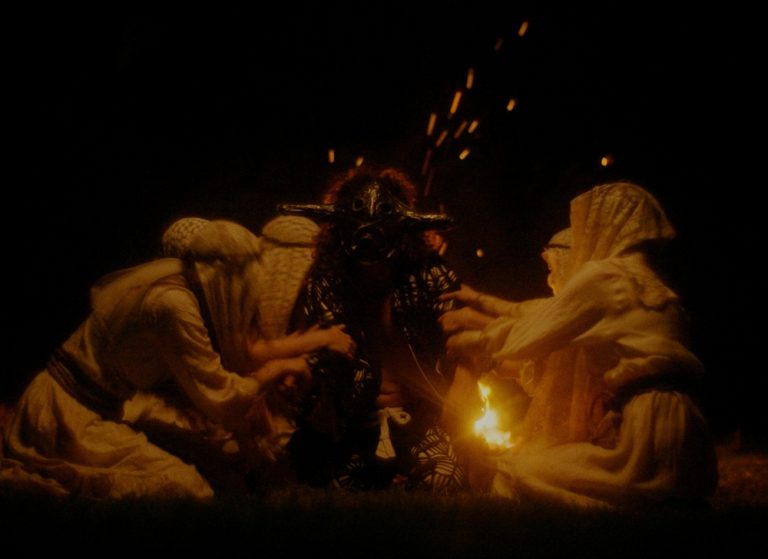
In SKINWALKER, Ani Even doesn’t simply release a debut; he sheds a skin. What unfolds across its eleven tracks is a kind of sonic metamorphosis, where electronic architecture meets primal impulse, and identity becomes something both porous and pulsating. The Copenhagen-born project from Bror Lynge sits at the crossroads of ancestry and experiment: darkwave for the spirit world, pop for the underworld.
From the opening seconds, SKINWALKER feels like an invocation. “Be With Me” enters not with aggression but with atmosphere, the faint crackle of what sounds like an erupting volcano, a few scattered piano chords, and a voice that seems to hover between innocence and ache. “We dream of a place free of hate,” he sings, a line so simple yet so heavy in context, like a whisper to the void. What begins as fragility transforms into a mantra: “Be with me, be with me, be with me;” there’s purity to it, as if the singer is reaching for light in a collapsing world. It’s a quiet opening, but one that sets the emotional tone for the transformation that follows.
By the second track, “I Know That You Lie,” Ani Even’s world has already expanded into confrontation. The production shifts into sharper terrain: driven, space-like, and charged with unease. Every silence feels sculpted, every synth cut deliberate. The track’s structure mirrors deceit itself: fragmented, uncertain, and cyclical. The repeated line “I know you lie when you talk to me” lands like a spell breaking. There’s a grungy defiance to the sound, yet the real electricity lies in the restraint: the willingness to let silence speak as loudly as distortion.
“Skinwalker,” the title track, stands as the album’s core ritual. “I’m gonna change again,” he confesses, as if announcing both curse and blessing. The song mirrors the myth it borrows from, the shapeshifter, the being who wears many truths at once. The production here feels like a living organism: dense synths breathing in and out, percussion that mutates with each repetition. Transformation becomes not just lyrical but sonic, each sound evolving in real time, shedding its former self as the track unfolds.
Then comes “It’s a Great Deal,” an unexpected shift: groovy, percussive, and oddly uplifting. It’s as though Ani Even lets the ritual loosen its grip for a moment, allowing the listener to dance within the chaos. The near–a cappella treatment highlights his vocal dexterity; the rhythm feels both playful and deliberate, a reminder that catharsis can live even in absurdity.
“Rotten to the Core” follows with ghostly intensity. The chant-like repetition of the title line forms a kind of exorcism: “Rotten to the core, rotten to the core.” Beneath the layers, a voice more fragile, almost tender, emerges, questioning inherited darkness: “I see a coin behind your ear, maybe a father placed it there.” Then comes the disembodied backing vocals: “are you? are you? are you?” — echoing like voices of conscience. The track builds and drops in perfect cycles, its tension both ritualistic and cathartic, like purging a collective guilt through sound.
The album’s middle section reaches emotional depth with “Not My Friend,” one of its most haunting moments. It opens with birdsong, a deceptively peaceful gesture, and chant-like harmonies that blur the line between devotion and confession. The lyrics confront inner duality: “The evil side of me, I keep on feeding.” Yet the track never collapses into despair. The layered vocals create a kind of inner dialogue, as if Ani Even were facing himself in multiple mirrors, each reflecting a different truth.
“Run” brings forward motion again. The rhythm, built on steady eighth notes, feels like a heartbeat in full sprint. The song captures the sensation of liberation through exhaustion: “I wanna be everything you want me to be, so let me run, let me chase another sun.” There’s urgency, but also surrender. It’s a track that radiates both escape and embrace, freedom tinged with longing.
The tenderness of “A Boy Who Is Crying” cuts through the album’s heaviness. It begins with a siren, an almost wailing sound that morphs into rhythm, setting a tone of restlessness. The lyrics, “I’m holding the hand of that boy who’s crying, and I need to comfort him again,” feel like an act of inner reconciliation. The music oscillates between urgency and melancholy, ending with a devastating line: “Cover your ears, my boy, they didn’t mean it.” It’s one of the record’s most affecting gestures: an acknowledgment of innocence lost and compassion reclaimed.
In “Silent Service,” Ani Even slows the pulse, creating an atmosphere that feels both sacred and unsettling. The subtle breathing-like rhythm beneath the vocals makes the track feel alive, as though the song itself were inhaling. When he sings “I can breathe again,” the line stumbles slightly, not as a mistake, but as a moment of truth. By the time the track swells into its grand, almost tribal finale, it feels like the culmination of something deeply physical; an exhale after long confinement.
“Deep Void Visitor” drifts into abstraction. Here, Ani Even plays with absence: vocals used sparingly, beats emerging and dissolving like smoke. The track’s rhythm alternates between propulsion and suspension, mirroring the experience of moving through emptiness, searching for something that resists definition. It’s a remarkable composition, capturing the sensation of disorientation and eventual clarity with near cinematic precision.
The final track, Djævlebørn, begins in whispers, almost secretive, before erupting into a polyrhythmic storm of percussion, layered voices, and whistles. What follows is not merely a song but a summoning. Hope and despair collide, dissonance finds harmony, and the record concludes with a single sharp, spoken line that lands like a verdict. It’s a rare moment in contemporary music: a closing that feels like both death and rebirth.
As a whole, SKINWALKER achieves what many experimental debuts only attempt: it creates a universe of its own logic. Ani Even has built a bridge between the cold precision of electronic production and the warm pulse of human vulnerability. His self-coined genres, chantcore and caverave, feel entirely apt: this is music made for underground cathedrals and modern rituals alike.
By its end, SKINWALKER leaves the listener altered. It’s not merely a collection of songs but an initiation, a confrontation with transformation itself. Between the flesh and the echo, Ani Even reminds us that change is not a choice; it’s indeed the pulse that keeps us alive..
As a debut, SKINWALKER is fearless; and as a listening experience, it is transformative: a dark communion where the boundaries between human and myth, past and future, are dissolved by Ani Even into sound..