Home Blog Page 52

From Power to Unity: The Musical Evolution of Superman

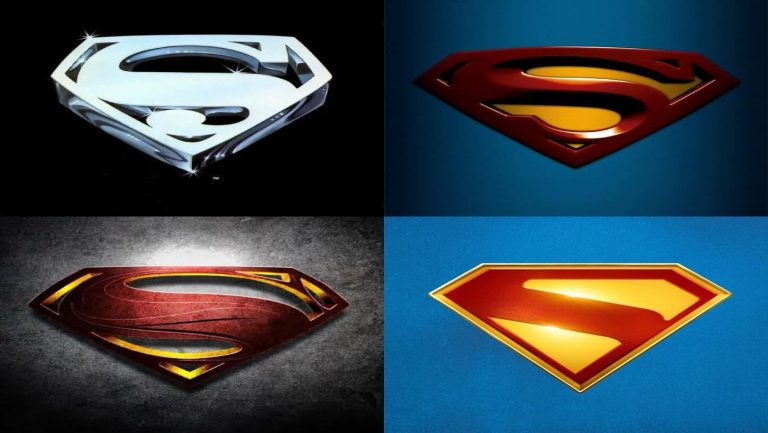
Superman has been interpreted musically throughout the years in lots of different ways. Being a symbol of hope, you would think that all the music representing the character would sound hopeful, but actually, that’s not the case. An outlier is the “Man of Steel” soundtrack, which, like the movie it is a part of, is much more about the heroism and power of Superman. The latest offering in Superman (2025) sticks a lot closer to hope as the central theme. So how are they different and how are they similar, and which take is more effective in my opinion?

Well, let’s start with the similarities first. For this comparison, I will use the main “Flight” theme by Hans Zimmer for Man of Steel and “Theme from Superman” by John Murphy & David Fleming. They start with two identical notes, which I think is fascinating. It’s almost like these two notes and their relationship to each other sound objectively like superman or exist as a universal truth, and then the themes diverge in their interpretations. The two notes in question here are C and G. Together, they form a very consonant and stable sound. Setting a foundation for the themes.

Hans Zimmer’s composition evolves into a huge-sounding orchestra paired with distorted slide guitars, and the goal here is to focus on the power of Superman: The ultimate savior that will persevere against all odds. The main melody starts high and comes down gradually as the intricate rhythms of the string section build up the tension. It delivers that power in a stellar way.

On the other hand, John and David’s version (after paying homage to the John Williams theme) has more of a unified sound where all the instruments are supporting one gigantic singable melody. Mirroring the hope and awe that Superman inspires in us. As if all these instruments were a huge crowd of people singing in harmony and unity for a better world.

These are two pieces of music with different themes, and even though they are about the same character, they can’t really be compared because they set out to achieve different goals artistically. That being said, though, for me personally, 2025’s “Theme from Superman” takes the cake and just hit the mark emotionally because it’s not about the power of the savior, it’s about the empowerment of the collective for the good of humanity, which is a much more potent message in my humble opinion.

Pol Sembrano Unveils Lead Single “Anywhere” Ahead of Bold Self-Titled Album Coming February 2026

0

Pol Sembrano is a Filipino-American composer and classically trained pianist from Seattle who has now established his own sonic and spiritual imprint on emotionally charged and immersive synth pop, new wave and electronic music. After the initial teaser EP release of his early singles mixes, Pol has officially launched the roll-out of his upcoming self-titled album, due in February 2026. The album is produced by Canadian heavyweight musician (Belvedere, Vixin) and producer, Casey Lewis of Echo Base Studios. The music is danceable and experimental at the same time. A thought-provoking party vibe the likes of which hasn’t been seen since the late 00s or even the 80s.

The lead single, “Anywhere”, is multi-layered and offers a singular deep dive into the upcoming album. Released September 9th, “Anywhere” showcases Pol Sembrano’s unique gift of deep communication, vulnerability, innate wisdom and knack for pop-infused melodies. Fans of artists like the Pet Shop Boys, Depeche Mode, Blondie, New Order, Future Utopia, The New Pornographers, CHVRCHES, Erasure, Poolside and even Madonna will find inspiration in this brilliant and wide open creative mind.

“Anywhere” is entirely upbeat, fully adventurous and about a fearless embrace of the beauty surrounding us.

“I wrote the song “Anywhere” as a homage to world travel as I have been visiting different nations regularly for the past few decades.  Setting foot in a new country and experiencing its culture, sights, cuisine and people is, for me, an unforgettable experience.  My father, before he passed, mentioned that traveling is the best education and one should not limit oneself to a predictable comfort zone or personal confines.  It is especially worthwhile to travel with someone whom you love since both are creating long lasting memories to be shared.  Life, in my world, is more about experiences and less about routines of day to day living.
I am fortunate to have visited fifty-seven countries during my lifetime, Taiwan being the most recent.  Other countries I’ve explored include Ecuador, Moracco, Croatia, Sweden (since I am a huge ABBA fan) and Malta.  I anticipate many more destinations in my future since the world is a huge place, then again, it isn’t.

My most unforgettable travel moment was visiting Thailand on December 26, 2004.  I was at West Railay Beach in the southern part of the country when the southeast tsunami occurred (due to a massive 9.2-9.3 earthquake in the Indian Ocean).  As I saw the wall of water approaching the beach I ended up gathering my belongings and headed inland, hoping to escape the enormous wave.  Unfortunately, I was engulfed by the water and was completely submerged amidst rocks and other debris.  When the wave made its way back to sea I was completely disoriented and was trying to make sense of it all.  I was incredibly fortunate to have lived to tell this story.

This unforgettable episode in my life will surely not hinder me from traveling.  It will, however, remind me that life is precious and I need to make the most of my time to experience new things and most of all – express myself through my music”

With a focus on vintage synths inspired by experimental artists of the 80s and 90s, Sembrano also puts an emphasis on his existential lyrics. It’s a form of artistry he likely wasn’t able to explore much as a classical pianist, not to mention programming. But he has embraced this expression wholeheartedly.

We Rave You calls his sound “A Sonic Odyssey of Love, Loss, and Liberation”, and Big Takeover Magazine describes it as “danceable yet thought-provoking, nostalgic and fresh” while likening the sound to Depeche Mode and New Order. Grungecake commented that Pol “combines intricate melodies, existential lyrics, and a polished production style reminiscent of icons like Depeche Mode, New Order, and Blondie.”

La Grande Motte by V OF

0

V OF TURNS A CITY INTO SONG!

With La Grande Motte, French singer-songwriter V OF transforms one of the Mediterranean’s most distinctive seaside resorts into melody, rhythm, and pure celebration. The track is, indeed, a sunlit tribute, a musical postcard, and a heartfelt anthem dedicated to the city the artist calls home.

Having lived in La Grande Motte for nearly a decade, V OF is no outsider looking in. He’s become one of the city’s loudest champions, first through La Grande Motte et ses Bons Plans, a popular guide connecting locals and visitors alike, and now through music. Though not trained as a professional musician, V OF embraces music as a universal language, one capable of reaching across cultures and borders to share his devotion to this unique place.

The sound of La Grande Motte is immediately infectious. Built on samba-tinged rhythms, bright percussion, and sweeping melodies colored with oriental and gypsy-inspired touches, the single radiates both warmth and movement. Each layer feels like an echo of the city itself: its golden beaches, its vibrant nightlife, its striking architecture, and its endless sense of festivity. There’s a pulse running through the song that mirrors the heartbeat of summer: joyous, communal, and impossible to ignore.

Vocally, V OF delivers with sincerity rather than showmanship. His tone is grounded and intimate, carrying a natural honesty that allows the city’s story to shine. In both the French and English versions, his voice draws listeners into a shared embrace: not polished to perfection, but open, human, and real. It’s this very unpretentiousness that makes the track feel like a collective anthem, one meant to be sung and celebrated by many.

Lyrically, the song is painted with simple yet evocative strokes: references to sea, sky, and city transform into something larger than mere description. The chorus, repeating La Grande Motte as a “city of beauty by the sea,” takes on the cadence of a modern hymn, a chant of belonging. What results is not just a portrait of a city, but an invitation for listeners everywhere to step inside its world and carry a piece of it with them.

La Grande Motte is music as community. It doesn’t just showcase a destination, it embodies it. With its blend of festive grooves, multicultural textures, heartfelt vocals, and radiant imagery, the single captures the essence of a place that has inspired millions. For V OF, this release is not about stardom but about connection; and in that, he succeeds: his love letter to La Grande Motte resounds as a shared anthem of joy, nostalgia, and most importantly, unity! 


“Love Through Sound”: A Song of Harmony in a World on Edge

0

It begins softly. A whisper in the static. A voice, clear and sincere, floats in like morning light through a dusty windowpane. The first note strikes not like thunder, but like memory—familiar, warm, and oddly haunting. This is Alex Krawczyk’s “Love Through Sound.” But make no mistake… something deeper lies beneath the gentle melody.

She sings of Casey Jones and Cumberland mines. Of bluebirds in morning dew and strangers shaking hands. At first, you might think it’s just a simple folk-pop tune, a nod to Jerry Garcia and the spirit of the Grateful Dead. But if you listen closely—and you must listen closely—you’ll hear it: a story not only of music, but of something more… elusive. Connection.

Because what happens when the world grows too loud, too divided? When our voices become noise and our truths become shouting matches? Alex answers not with a scream, but with a song. And not just any song—this one is woven with care. Co-written with Robbie Roth, and recorded at Union Sound in Toronto, “Love Through Sound” is both a tribute and a prayer. A gentle rebellion against the chaos.

And like all good mysteries, it reveals itself slowly.

The lyrics are layered. “Your golden road has strangers shaking hands…” she sings, and suddenly you realize this isn’t about one band or one era. It’s about a hope—naïve, perhaps, but necessary—that art can still save us. That love—through music—can still bridge what politics and pain have divided.


Behind her voice, a cast of characters adds depth to the tale. Roth, a steady hand, lays down acoustic textures. Tim Bovaconti and Caroline Marie Brooks whisper on electric strings. Devon Henderson’s bass keeps time like a heartbeat. And Davide DiRenzo, with drums that never demand, only guide. The piano work by Robbie Grunwald? Like a secret left in plain sight—beautiful and barely there.

But this isn’t just a story of instruments. No, it’s a story of intention.

Krawczyk doesn’t belt or bellow. She leans in. She trusts you’ll meet her there, in the quiet. That you’ll hear the refrain—“Love through sound”—and let it echo somewhere inside you. It’s not a hook; it’s a message. A mantra. A mission.

And when the final note fades?

You’re left with silence. The kind that asks questions. The kind that makes you wonder: Can a song really change anything? Can a melody rewrite the script?

Maybe not. But maybe… it can change you.

And that, dear listener, is how the truth often hides—in plain sight, wrapped in harmony.

Alex Krawczyk didn’t write a song. She whispered a secret.

You just have to be still enough to hear it.

–Kevin Morris


“Who Was I” — Jeremy Parsons Stares Down His Own Past

0

Ah, twenty-five. That strange, combustible age when time still feels like it waits for you, yet already whispers that it won’t. Jeremy Parsons, the Texas troubadour who has always worn his heart like an open secret, brings us “Who Was I”, a song that doesn’t just ask the question—it lingers in it, circles it, holds it up to the light.

Listen closely. It begins almost like a confession: “Who was I at 25 / Just a drifter on the wind getting so damn high.” It’s the kind of line you don’t so much hear as feel, like the echo of your own restless youth. The nights lived harder than the days, the dangerous dances with mortality. Parsons isn’t glamorizing it. No, he’s pulling you into the fog, showing you just how lost one can be while believing they’re free.

But there’s a twist. While his parents were raising children and bowing their heads to the comfort of faith, Jeremy was chasing smoke and shadows. He wasn’t building fences. He was breaking them. That choice—the road less taken, or maybe never meant to be taken at all—becomes the heartbeat of the track.


And then, the pivot. Nashville. The dream every songwriter has scribbled on the inside of their skin. He went, he tried, he didn’t quite make it—or at least not in the way that place demands. The lyric tells us plainly: “Made it up to Nashville, didn’t make it all. It can’t ever hurt you if it ain’t what you want.” That’s not defeat. That’s clarity. That’s a man standing on the ashes of expectation and finding warmth instead of regret.

Musically, the song is unadorned, almost stark. Acoustic chords cradle his words, letting Parsons’ voice do the heavy lifting. There’s no grand swell, no studio polish trying to cover the cracks. And that’s the brilliance of it. The cracks are the song. The wear in his tone, the pauses between verses, the quiet insistence that this story isn’t just his—it could be yours, too.

And woven through it all is perspective. A man looking back not with bitterness but with a rueful smile. He admits he didn’t know much. Who does? He admits he flirted with death, but life, somehow, carried him through. And now? He’s older, maybe wiser, and grateful for every bruise and every breath.

By the end, “Who Was I” feels less like a song and more like a reckoning. A haunting reminder that time moves fast, choices echo longer than we realize, and survival itself is sometimes the victory.

So, who was Jeremy Parsons at twenty-five? He was lost, searching, maybe a little broken. But who is he now? He’s the man who turned all that wandering into music. And in the quiet honesty of this song, he just might help you answer the same question about yourself.

–Kevin Morris


Interview with Ehab Nofal

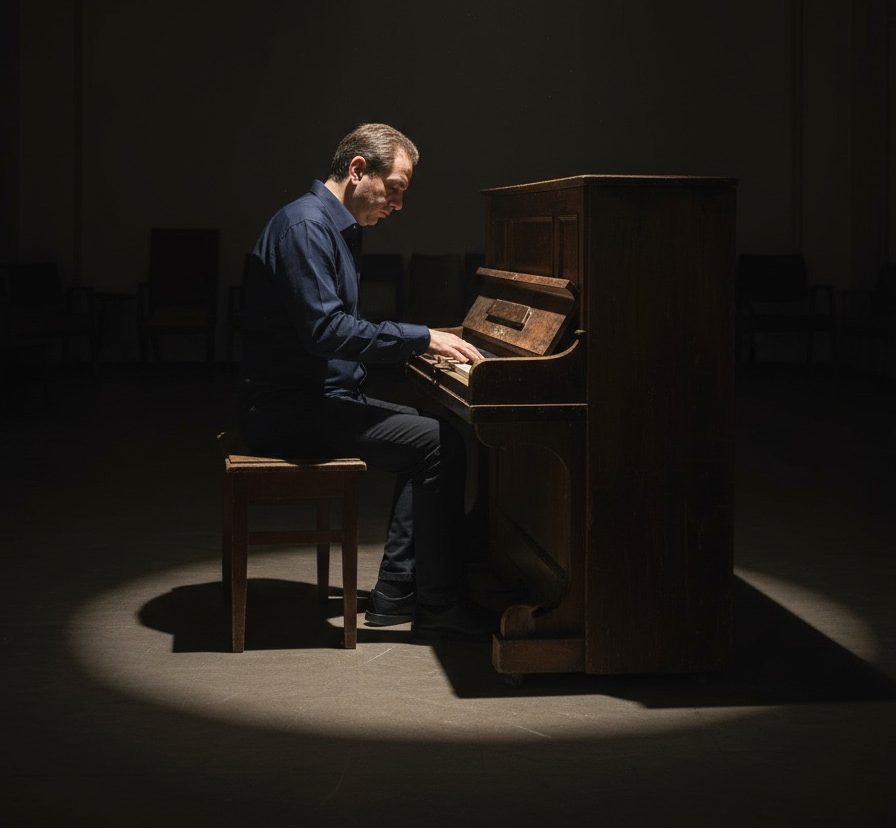
Ehab Nofal is an Egyptian–British songwriter and composer whose work moves effortlessly between worlds. Born in Tanta and now based in Manchester, he has built a catalogue of over 100 songs that span languages and genres. His latest release, Ya Amar, marks a turning point: an album that speaks in English yet pulses with the essence of Egypt.

In this conversation, we’ll explore Nofal’s artistic journey, the vision behind Ya Amar, and how his music resonates with audiences who find themselves caught between cultures. Join us as we step inside the world of an artist who turns borders into bridges.
  • Ya Amar feels like a very personal and culturally rich project. What first inspired you to merge Egyptian rhythms with English lyrics?

Ya Amar was born from my desire to connect Egyptian heritage with a global audience. Growing up between cultures, I always felt that Egyptian rhythms carry a soulfulness that can touch people universally. Merging them with English lyrics was my way to bridge East and West, making the sound both familiar and new to listeners worldwide.

  • You’ve described the album as a way for international listeners to connect with Egyptian music more directly. What do you hope global audiences feel when they hear it?

I hope they feel transported—like they are walking through the streets of Cairo, by the Nile, or the desert. The goal is to let people experience Egypt’s warmth and depth, even if they have never been here. I want the music to feel both authentic and relatable.

  • Many Egyptians living abroad often search for music that connects them back to home. How do you see Ya Amar speaking to that longing?

Ya Amar speaks directly to that nostalgia. It carries the emotional weight of Egypt—the melodies, rhythms, and stories embedded in the songs. For Egyptians abroad, it’s a reminder of home, a bridge back to their roots.

  • Do you feel a responsibility to represent Egyptian identity for listeners who might be far from their roots?

Absolutely. As an artist, I see myself as a cultural ambassador. I want my music to preserve and promote Egyptian identity while still pushing boundaries and experimenting. It’s about honoring the past while reimagining it for the future.

  • The album moves through love, heartbreak, and healing. Which of these themes felt most personal for you while writing the songs?

Healing. Music has always been my way of processing life—its beauty and its challenges. Writing about healing allowed me to share not just my personal journey, but a universal experience everyone can relate to.

  • What kind of reactions have you received from Egyptians in the diaspora who hear your songs in English but recognise the soul of home in the sound?

The reactions have been incredibly moving. Many have told me that listening to my songs brought tears to their eyes because they could hear Egypt in the melodies, even if the lyrics were in English. That kind of response motivates me to keep going.

  • You’ve built a catalogue of more than 100 songs across multiple languages. How does Ya Amar stand apart from your earlier releases?

Ya Amar stands apart because it’s my most intentional fusion. While earlier songs experimented with style and language, this album is a complete artistic statement built on the vision of connecting Egyptian identity with the world.

  • What does your creative process look like when you’re shaping a song? Do you usually begin with lyrics, melodies, or a feeling you want to capture?

It often begins with a feeling. I’ll sit with my instrument and let emotions guide me. Sometimes the melody comes first, sometimes a line of lyrics. But the key is honesty—if I don’t feel something deeply, I know the listener won’t either.

  • Balancing two cultures and languages must come with unique challenges. What has been the most rewarding, and the most difficult, part of that journey for you?

The most rewarding part is seeing two worlds connect through my music. When an Egyptian rhythm makes someone in Europe or America stop and listen, I know I’ve succeeded. The most difficult part is making sure I don’t lose authenticity. It’s easy to get pulled into trends, but I always remind myself: my roots are my strength.

  • In your opinion, how does music help preserve cultural memory for Egyptians who grow up outside of the country?

Music is memory. For Egyptians abroad, it’s often the strongest connection to language, traditions, and emotions tied to home. Even if someone doesn’t speak Arabic fluently, hearing a familiar beat or melody instantly ties them back to their heritage. That’s why I see my work as more than entertainment—it’s preservation.

  • Looking ahead, what can fans expect from your next chapter? Are there collaborations, new sounds, or directions you’re excited to explore?

Fans can expect growth. I’m working on collaborations that bring Egyptian sounds into dialogue with international artists. There will be new fusions, more storytelling, and definitely more experimentation. But one thing will always stay: the heartbeat of Egypt in everything I do.

I’ve already released two full albums of 40 music tracks (20 each). The first, Y’ Nile, was inspired by Egyptian cities and areas, even some ancient historical places like Kings’ Valley. The second, Whispers Of Dunes, captured the desert atmosphere and was a real challeng —it was the album that introduced me as a pure musician. I blended traditional Egyptian instruments with symphony orchestra arrangements to create a unique harmonic feel that represents the depth of Egyptian music. After achieving this, I can’t yet predict what direction the next chapter will take. But one thing is certain: I always compete with my own tracks, pushing myself to create new ideas and open new eras in my music.



YA AMAR: A UNIVERSAL LANGUAGE OF HEARTBREAK AND HOPE

0

Some albums aim for the charts, others aim for memory. Ehab Nofal’s Ya Amar, does something rarer: it aims for belonging. It’s a body of work that takes the pulse of Egyptian music and threads it through English words, creating a meeting point where anyone can step in and feel at home.

Nofal, an Egyptian–British songwriter and composer now based in Manchester, has always been a bridge-builder: first between genres, then between languages, and now between cultures. Ya Amar is his clearest statement yet: eight songs that move fluidly between intimacy and release, heartbreak and renewal, all carried by a sound that feels both rooted and adventurous.

The album’s opening track, “Ya Amar,” sets the tone with a glow of warmth that feels like greeting an old friend. From there, the songs unfold like chapters of a story: love pursued, love lost, love remembered. “Back to Your Arms” aches with longing, while “When Our Eyes First Met” captures the spark of possibility with a freshness that’s instantly relatable. By the time we reach “Ya Habibi Dance With Me,” the album shifts toward celebration, reminding us that joy and tenderness are not opposites but part of the same journey.

Closing with “Goodbye Alexandria,” Nofal leaves listeners suspended between nostalgia and hope. The farewell feels at once personal and collective, a gesture to places and moments that shape us but cannot be held forever.

This is Egyptian music speaking in English, not diluted, not disguised, but offered with open arms. For listeners unfamiliar with Arabic yet curious about the soul of Egyptian sound, Nofal has built a bridge sturdy enough to walk across and delicate enough to admire along the way.

With over 100 songs already released, Nofal is no stranger to creativity. Yet Ya Amar feels like more than another addition to his catalogue. It’s a manifesto, a reminder that music is at its best when it unites rather than translates, when it speaks directly to the heart no matter the tongue.

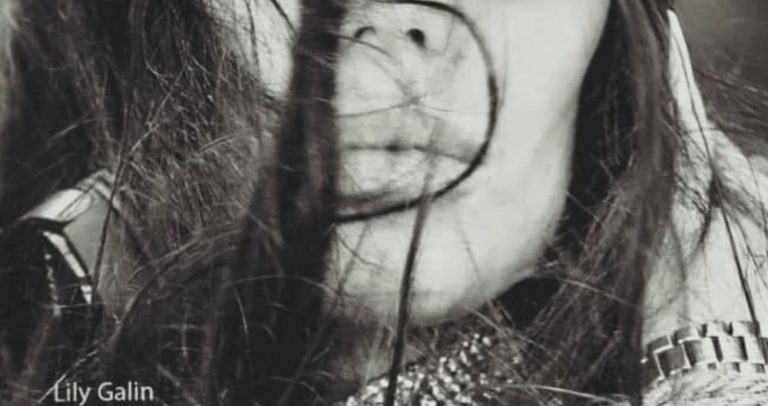
What’s Your Story by Lily Galin

0

LILY GALIN ASKING THE RIGHT QUESTIONS!

Every debut single carries a statement, but Lily Galin’s “What’s Your Story” doesn’t just introduce her voice; it poses a question that lingers long after the song ends. The Chicago-based artist transforms her own journey into an open dialogue, one where listeners are invited to reflect on their own paths.

The track opens with delicate piano lines and atmospheric layers that create a space of intimacy, almost like sitting across from someone ready to share something real. When Lily begins to sing, her voice is warm yet unguarded, carrying the weight of her Lithuanian roots and the resilience shaped by her move to the United States. There’s no artifice here: just clarity, sincerity, and the courage to ask the questions many of us avoid.

By the time the chorus arrives, the song doesn’t rise through sheer volume but through emotional force. Lily doesn’t overstate; instead, she leans into restraint, allowing honesty to take center stage. It’s the kind of performance that makes you feel seen, a reminder that music’s greatest power lies in connection rather than spectacle.

“What’s Your Story” is more than a debut; it’s a conversation starter. It frames Lily Galin not only as a singer-songwriter with undeniable talent, but as an artist willing to meet her audience where they are: in their struggles, in their resilience, in their own unfolding stories. If this first chapter is any indication, she’s not just asking the right questions. She’s offering the soundtrack to our answers! 

Both My Wrists by Tamara Jenna feat. Wiz Khalifa

0

Tamara Jenna returns with a third major single after the success of her two heavyweight collabs (“Moves” featuring Lil Wayne and “Return On Investment with Beka Barz” featuring Gucci Mane). Continuing to blend R&B, Hip-Hop, Grime, and Rap, the latest single of Tamara Jenna, “Both my Wrists” featuring Wiz Khalifa, stands out just as much as the previous two releases mentioned. The track, released in August this year, validates Tamara as both a talented musician and a strategic powerhouse in the industry. 

Producer, guitarist, song-writer, and singer, as well as rapper, Tamara Jenna captures the true independent musician spirit. What’s more impressive is what she does for music outside of her own musicmaking, with willful dedication to the independent music scene and rising artists. She is the founder of TJPL News, a multi-award-winning platform for independent artists worldwide. This work, however, and even her tremendous help to hundreds of independent artists, shouldn’t take attention away from her own music. 

Rising from Birmingham, Tamara Jenna brings her own apparent sub-culture of hip-hop to the table when she collaborates with mainly American rappers, as she does in this track with Wiz Khalifa. Khalifa’s distinct laid-back delivery, as appealing as it always has been, finds a good match with Jenna’s own growingly marked and original delivery, her voice already colored with authenticity and passion, making the song a chill R&B one that is easy to play repeatedly without getting tired of it. Overall, with every new track, Tamara Jenna is not only proving what she is, but what independent artistry has the potential to be. 

Whole Thing by TYYE

0

“whole thing” is the latest single by TYYE. It’s an absolutely addictive song with a great groove and contagious passion. It’s definitely a familiar sound, but it’s executed superbly, from the vocal delivery to the production quality to the choice of instrumentation. It’s simply a great pop song.

This marks the start of a new era for TYYE, embracing his influences like Glass Animals, Ariana Grande, and The Weeknd, and going for a more commercial pop sound for this song. Produced by Braxton Medellin in his home studio, the clarity is impeccable, adding enough color to the stereo vista but not overcrowding it to leave enough space for TYYE’s signature style R&B ad-libs.

Emotionally and thematically, “whole thing” explores the complex territory of non-reciprocal love. Or at least not proportionally reciprocal. The pain that comes with deeply loving someone who wasn’t yours to begin with. TYYE honestly and vulnerably expresses the fear of simply being a temporary fling for someone with the lyrics “I don’t wanna be another step on your path. I want the whole thing”. A universal feeling that most people can unfortunately relate to, and TYYE does a great job of putting it into words.

With “whole thing” now available, TYYE has delivered a compelling preview of what’s to come. This single successfully bridges his R&B foundation with mainstream pop sensibilities, setting high expectations for his forthcoming EP later this year.