

Home Blog Page 59

EP: Bestial by Senior Dunce

0

THIS IS YOUR SIGN TO LET IT ALL OUT AND JUST LIBERATE!

Let’s get one thing straight. This isn’t your average club-ready dancefloor filler. Bestial, the latest EP from Seoul’s unapologetically offbeat producer Senior Dunce, is an electrifying act of personal defiance wrapped in groove-soaked, genre-bending beats. If you’ve ever felt like society’s misfit or carried a storm beneath your skin, this record isn’t just for you; it is you! 

Born from decades of sonic exploration and lived contradiction, Senior Dunce pours his life into this project, channeling years of being the outsider, the overlooked, the bullied, and transforming it into a cathartic celebration of everything we’re told to suppress. With roots in dancehall, house, commercial pop, and a fierce undercurrent of emotional truth, Bestial grips your attention, dances with it, and then dares it to scream!

The EP’s title track, “Bestial,” hits like a glittering primal scream. Featuring powerhouse vocals from Cheshy and wild interjections from Gimpado, the song captures the feeling of finally saying “to hell with it” and stepping into your full, imperfect self. From the opening synth shimmer to the thunderous kick (yes, Senior Dunce’s legendary obsession is alive and pounding), the production pulses with freedom. It’s messy, it’s raw, it’s real, and it’s impossible not to move to.

Lyrically, it’s an anthem for those who are done apologizing. Rather than sanitize or sidestep the darker parts of our nature, “Bestial” faces them with a kind of philosophical swagger. “Say it loud, I’m bestial,” the chorus insists, and it doesn’t flinch. The message? We’ve all got a little chaos inside, and maybe it’s time we stopped pretending otherwise.

The Extended Mix takes this message deeper, letting the track breathe with spacey intros and echoing howls, because sometimes, liberation needs more than a three-minute radio edit. It’s a slow burn into euphoria, and by the time the full beat drops, you’re no longer just listening, you’re released.

Across the EP, Senior Dunce stays true to his ethos: flaws are holy, weird is sacred, and the kick drum is king. It’s a project that refuses polish in favor of pulse, blending high-gloss production with a rugged, deeply human heartbeat. And in doing so, it becomes more than music; it becomes a movement.

So go ahead. Unleash the wild. Sweat it out. Sing it loud. Senior Dunce isn’t just making tracks, he’s making space for you to just be! 
Day Dream by Atmosfellix

0

TRANSCENDED IN LESS THAN SIX MINUTES!

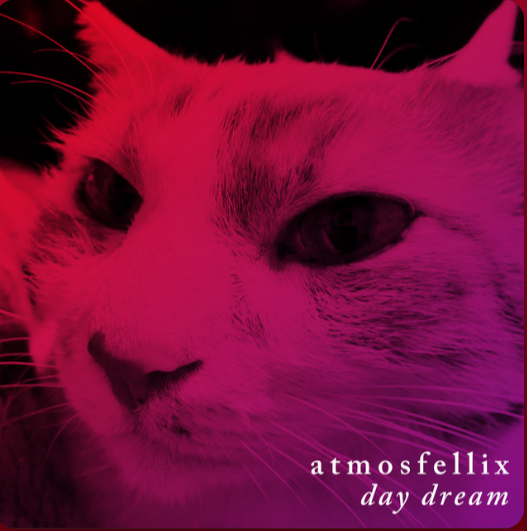
Some tracks don’t just play through your speakers; they dissolve the room around you. Atmosfellix’s “Day Dream” is exactly that: a breathtaking fusion of shoegaze, ambient, and electronic textures that wraps you in sound and releases you somewhere far from ordinary time.

With no vocals to anchor the experience, the track leans entirely on atmosphere, and it soars. Guitars hum with soft distortion, synths shimmer like heat waves, and the production gently carries you between shimmering stillness and layered intensity. The contrast between verse and chorus is masterful: a push and pull between weightlessness and gravity, dream-state and wakefulness.

Think Cocteau Twins reimagined for a future skyline, or Ulrich Schnauss caught in the haze of early morning light. The guitar work echoes the warmth of My Bloody Valentine, but the overall aesthetic is unmistakably fresh, crafted for a listener who craves immersion over immediacy.

As the track builds, you’re not just hearing music, you’re moving through it. And by the end, “Day Dream” doesn’t just conclude, it gently returns you to yourself, as if waking from a lucid dream you didn’t know you were in.

A stunning debut from a promising new voice in the shoegaze/dream-pop world, Atmosfellix has crafted a sound that’s emotionally rich, gorgeously textured, and endlessly replayable. Let yourself drift. You’ll be back, but not quite the same! 

Chris Ianuzzi Unleashes Surreal Sonic Mayhem with Politically Charged Single “Reality Games”

0

Chris Ianuzzi continues to taunt, bewitch and challenge the listener to understand what cannot be understood. This man is not afraid to poke the bear and even does so as a form of play. “Reality Games” artistically comments on our current political climate with reckless abandon and appropriate absurdist and surreal delivery.

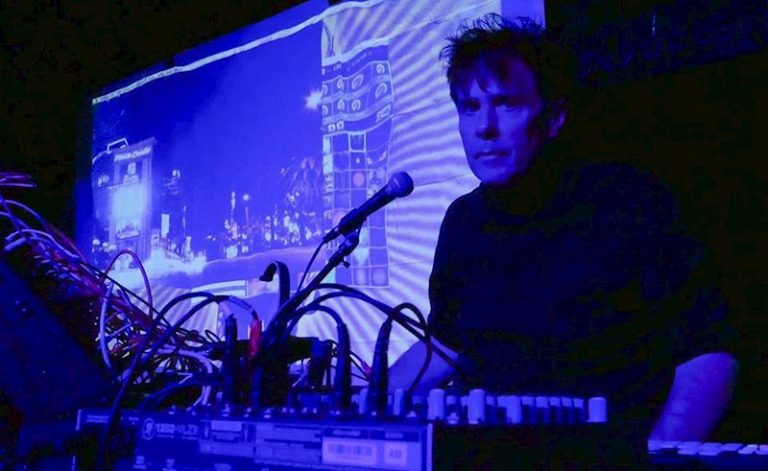
“Reality Games” is the timely and poignant new single from New York-based genius, electronic music storyteller and unapologetic cheshire cat, Chris Ianuzzi. His radical style and sound, although informed by his musical ancestors and contemporaries, from Aphex Twin, Oneohtrix Point Never and Gary Numan to Skinny Puppy, Floating Points and Alessandro Cortini, the direction and imprint Ianuzzi creates is confounding and one of one. His creative force and complex gear setup is a mass of wires, inputs and data that most would not understand, nor would it be special if they did. Chris does not simply step across the border and color freely outside of the lines; he gleefully shows his listeners how to do so themselves.

“In the video there is a scene with a giant that demolishes an icon statue that the people have surrounded. At the same time the lyrics are referring to waking the sleeping giant and letting him know that we need help. The sleeping giant comes and gets a start 🙂
I want the people in this country to come together, be the giant and pull the country through the mess that we’re in.” 
– Chris Ianuzzi

Watch the official music video.

Chris has been in a constant state of rapid evolution with his completely original synth-heavy electronica, adventurous and post-punk hybrid sound. Unafraid to take bold creative risks, Ianuzzi has leaned into sonic experimentation while embracing new technologies such as artificial intelligence and Dolby Atmos production. His efforts are clearly paying off. His AI music video for “Lonesome Highway Superstar” took home several awards (Winner in Japan indies Music Festival – Best Electronica, Winner of Best Music Video in Movie Play International, Winner of Best Music Video in Filmnest International), while “Edge of the Earth” was a finalist at the Cannes World Film Festival and selected for the Japan Indie Film Festival (JIFF).
Chris Ianuzzi’s music is at once apocalyptic and devilishly fun, recklessly leaning into the untethered and unknown. His artistic expressions are challenging and tend to divide public opinion, which is what makes them so potent for those that ‘get the message’.

Watch the official “Reality Games” music video.

Album: The Kiss by The New Solarism

0

A DELICATE EXPLORATION OF STRINGS’ DEPTH AND VERSATILITY

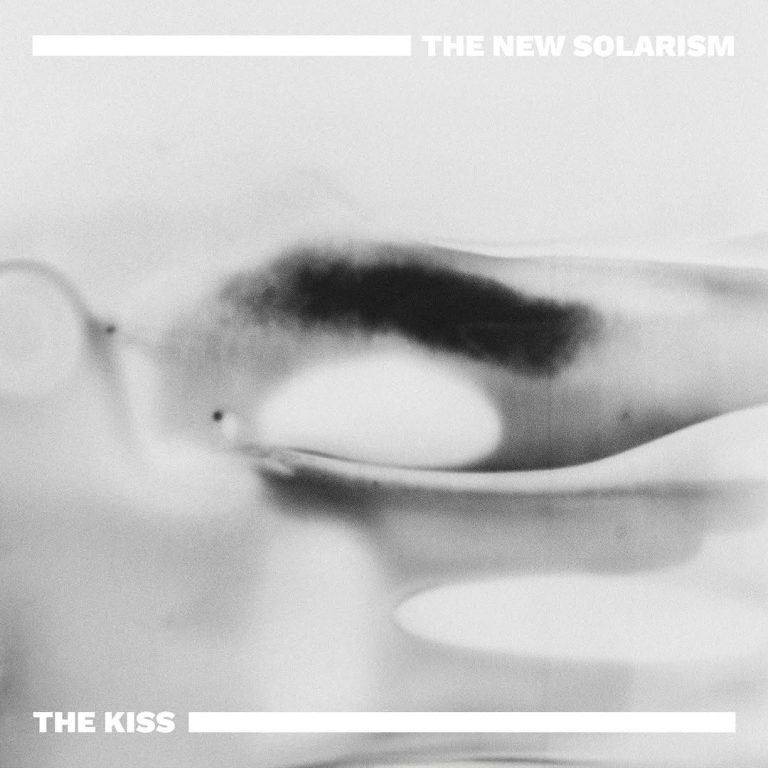
In The Kiss Album, Izabela Kałduńska, under her evocative moniker, The New Solarism, has created an album that feels like a meditation in motion. Composed during the solitude of lockdown and recorded in the historically rich city of Leipzig, this ten-track release doesn’t just revisit the violin’s expressive potential; it surely reimagines it.

Emerging from a canceled pandemic-era theater piece by Berlin playwright Tomas Blum, The Kiss is more than a repurposed soundtrack. It is a narrative of feeling in its purest form: isolation, longing, peace, hope; all told not through words, but through tone, breath, and resonance. With only a violin, loop station, and subtle effects like delay and octave doubling, Kałduńska constructs entire emotional worlds. The simplicity of her setup only sharpens the intimacy of the listening experience.

Each piece, titled after a specific emotion, feels like a quiet encounter with the self. “The End,” originally the theme for Blum’s theater piece, unfurls with a quiet gravity, drawing the listener into a sonic space where memory and possibility intertwine. “Peace,” perhaps the emotional and philosophical heart of the album, arrives not as resolution, but as a yearning, an unanswered question etched into melody.

The influence of artists like Arvo Pärt and Nils Frahm is present, but Kałduńska’s voice is unmistakably her own. Her compositions hover between classical structure and ambient drift, crafting liminal zones where the sacred and the personal coexist. This is music that invites. It offers the listener space: space to reflect, to grieve, and to feel without judgment.

One of the most remarkable aspects of The Kiss is how it manages to be both deeply internal and outwardly resonant. It feels tailor-made for the stillness of late-night listening, but it would just as easily fill a concert hall with its quiet intensity. In an age when technology often overwhelms musicality, Kałduńska opts for restraint, letting each note breathe and resonate in its own time.

There’s something both ancient and futuristic about this album. Recorded in Leipzig, a city long synonymous with musical tradition. The Kiss seems to draw from that legacy while pointing toward a quieter, more introspective future for classical expression.

As Kałduńska tours western Germany with this body of work, The Kiss becomes a vessel; a vessel for unspoken emotions, for questions we don’t yet have the answers to, and for the remarkable range of expression one violin, in the right hands, can hold.

This is music to sit with. To breathe with. To return to. A rare and needed offering in a world still finding its footing after years of disorientation..

Summer Suit by Alex Kate

0

GET YOUR SWIMSUITS READY!!

There’s a new anthem on the horizon, and it’s arriving like a sunbeam through your speakers. Alex Kate’s “Summer Suits” is the sonic equivalent of diving headfirst into the deep end of a pool on a blazing July afternoon. It’s breezy, bubbly, and bursting with confidence, capturing the kind of mood where self-expression isn’t just encouraged, it’s absolutely essential! 

Co-written with Mitch Parks and Ivey Asher, this track was sparked by a simple suggestion from Alex’s boyfriend: “Why not write a summer song?” And just like that, “Summer Suits” was born: an ode to wearing whatever makes you feel free, bold, and beautifully yourself under the summer sun, whether that’s a bikini, a floral shirt, or something wildly unexpected.

The song shimmers with bright synths and a laid-back groove that practically glows, effortlessly channeling that sun-on-your-skin, wind-in-your-hair vibe. From the opening line, you’re pulled into a space where nothing else matters but good company, good vibes, and the freedom to be who you are. And when Alex sings “Summer suits you, summer suits us,” it’s less a lyric and more a mantra; welcoming, cheeky, and full of warmth.

The instrumentation is light on its feet but full of character: poppy, playful, and perfect for a drive to the beach with your besties or a solo strut through the park in your brightest outfit. It’s a track that knows exactly who it is, and dares you to do the same.

“Summer Suits” is a reminder to expand. To show up as our most sun-drenched, joy-filled selves. To dance a little, laugh a lot, and maybe throw on a mankini just for the hell of it.

So yeah, grab your sunnies, crank up the volume, and get your swimsuits ready – Alex Kate just bottled summer in a song! 

My Wife by Director Dzi

0

Director Dzi has released a new song called “My Wife”. The Afro-beat artist has created a soft yet energetic song. The artist, originally from Zimbabwe, now residing in London has great music to offer. He was influenced by various talented artists like Burna Boy, Tems, Probeatz, and Hilzy. You can see their influence clearly when you listen to this song. 

This song has a dynamic mix of guitar chords, saxophone melodies, and energetic afro-beats. The song has a beautiful, soft rhythm and hopeful vibes. 

The real beauty of the song is not only in the smooth and captivating rhythm, but the story behind the song. Director Dzi tends to write songs related to his personal life. He has previously written a song for his niece called “Melanin”.The song had a delicate message to encourage her to be proud of her skin colour and her African heritage.

Director Dzi is a true storyteller, narrating beautiful moments from his life and turning them into art. Additionally, this beautiful song is about the love story between his sister and her now husband, which was created for their anniversary.

It was written from the perspective of a man who keeps thinking of his past lover all the time. Whether he is working or not, during the weekend or during different seasons. He is haunted by the desire to reunite with her.

The real-life couple was separated after being accepted into different colleges. After high school, one went to Atlanta and one went to Oxford. They might have been miles apart, yet fate had a different opinion; they were both reunited once again and now share a beautiful life. Director Dzi was able to capture the beauty of this story in the song, with the fusion between the different instruments and the beats of the song.

The song’s video is the real footage of their wedding. Dzi has chosen to include his listeners in this precious moment, a true, genuine act that makes you feel right at home while listening to his song. 

You can check his song “My Wife” on YouTube 

Laissez-Faire Love by Lucas Pasley

0

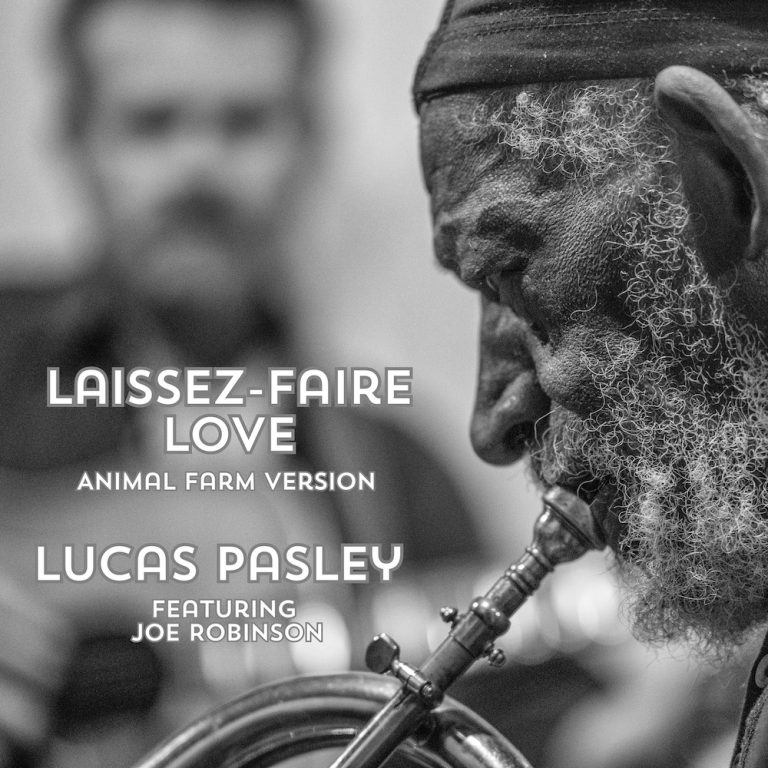
From the quiet town of Sparta, North Carolina, the award-winning singer and songwriter Lucas Pasley brings the spirit of the Southern Appalachian Mountains to life throughout his music.

Returning with his soft voice carrying a deep yet smooth connection full of emotions, he managed to present the raw and honest version of love in “Laissez-Faire Love,” released on May 14th, 2025.

After hearing “Laissez-Faire Love,” you will feel deeply connected with this part of you that you forgot was there. Now you are part of a beautiful movie scene that sparks serenity within. Something in his voice carries a stillness that lingers long after the music fades.

The song is about embracing true love with all its sides. A steady yet soulful song, it will feel like a whisper in your soul. A blend of acoustic guitar and warm vocals allows the emotional tone to shine bright naturally. The mix is clean and balanced. Those acoustic sounds reflect Lucas Pasley’s Appalachian roots, with the soft layers of fiddle and banjo all moving smoothly together in harmony, giving an authentic, almost live feel, all while keeping the focus on the lyrics.

In a world full of conditional love relationships, the lyrics will let you know that true love doesn’t come with rules, and that’s the kind of love we need the most. Quoting from the song: “I want you free, I want you forever free.” Lucas is not trying to be seen. He is trying to say something real, loving, to the point of not holding back.

So, whether you are in a quiet place or on a long ride back home on a slow, sunny afternoon, this song will find its way to your heart. And when the world feels a bit too loud, play “Laissez-Faire Love” just to remind you what gentle, honest love can sound like.

Olivia Millin’s “TTYL”: A Glittering Goodbye Carved from Strength and Soft Sadness

0

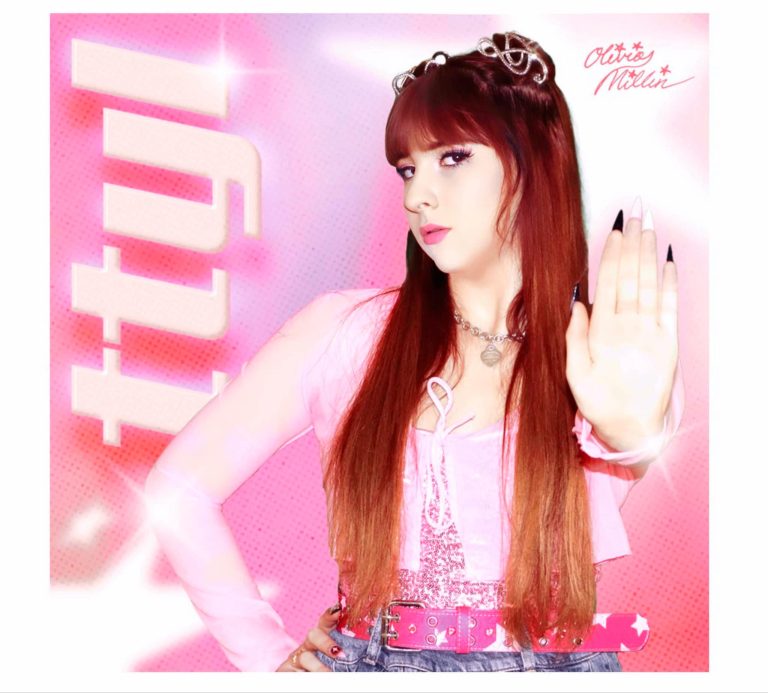
There is a quiet thunder in Olivia Millin’s “TTYL.” It does not crash like a storm, but rather ripples with the steady confidence of a girl who has cried, healed, and now walks away with soft defiance in her eyes. “TTYL,” short for “Talk To You Later,” may wear the sparkling, futuristic sheen of Western dance pop, but at its core, it is a Japanese tale of emotional resilience—the kind told not with fists, but with firm steps taken in silence.

Millin, just 20, carries the poise of someone twice her age. Her voice is clear, deliberate, untouched by overproduction’s temptation to disguise vulnerability. There is no scream in her message—only resolve. “あきらめることはできるけど、私はあきらめない。” (“I could give up, but I won’t.”) This is not rebellion; this is survival. A boundary placed with grace.

The production, led by XVIY, is sleek and stylized, a blend of digital glitter and heartbeat rhythms that recalls the stylings of BLACKPINK and BabyMonster, but filtered through Millin’s quiet introspection. Trap-influenced snares punctuate the air like closing doors, and beneath it all flows a gentle but persistent current of determination. The song is danceable, yes—but more importantly, it is declarative. Not of revenge, but of return. A return to self.

In “TTYL,” Olivia speaks to her past—an unnamed “you” who failed to see her light—and cuts the connection not with violence, but with poise. “Pass you in the halls, act like don’t know you at all…” she sings, not in cruelty but in necessity. In Japanese literature, we are taught to find the poetry in partings. In Millin’s lyrics, we find that delicate balance between sorrow and release.

There is a bittersweet quality to her bilingual transitions. The Japanese lines do not feel added for flair—they carry emotional weight. Language becomes armor, memory, and mirror. When she repeats “ウソつきにはなりたくない” (“I don’t want to be a liar”), the phrase feels both personal and collective—a quiet anthem for those who have worn smiles while being broken inside.

What is perhaps most remarkable about “TTYL” is how Olivia Millin blends vulnerability and power. She does not declare herself unbreakable. Rather, she shows us what it means to break and choose not to remain shattered. In a culture where emotion is often expected to remain hidden or neatly contained, Millin allows us to witness a kind of controlled unraveling—a decision to no longer carry what was never hers to bear.

And though “TTYL” borrows from Western trends in its sonics, its spirit is unmistakably rooted in Japanese storytelling. It is the art of hanashi nagara—speaking while letting go. There is no desire to wound, only to move on. Millin is not saying “goodbye” with bitterness. She is saying “goodbye” because it is the kindest thing she can do for herself.

As a whole, the track is a celebration of emotional boundaries. A modern tanka set to music. The kind of song that a listener might play while staring out a rain-soaked train window, replaying the words they didn’t say—but now feel through Olivia’s voice. She sings not only for herself, but for all who have endured silence, betrayal, and self-doubt—and come out stronger.

“TTYL” is more than a pop single. It is a tender release, a whispered farewell, and a declaration of self-love dressed in soft synths and determined breath. Olivia Millin is not trying to be loud. She is trying to be true. And that, in the end, is far more powerful.

–Jay Rabiwicz


Martone and Intelligent Diva’s “Too Bad, So Sad” Blends Emotional Weight with Polished Studio Precision

0

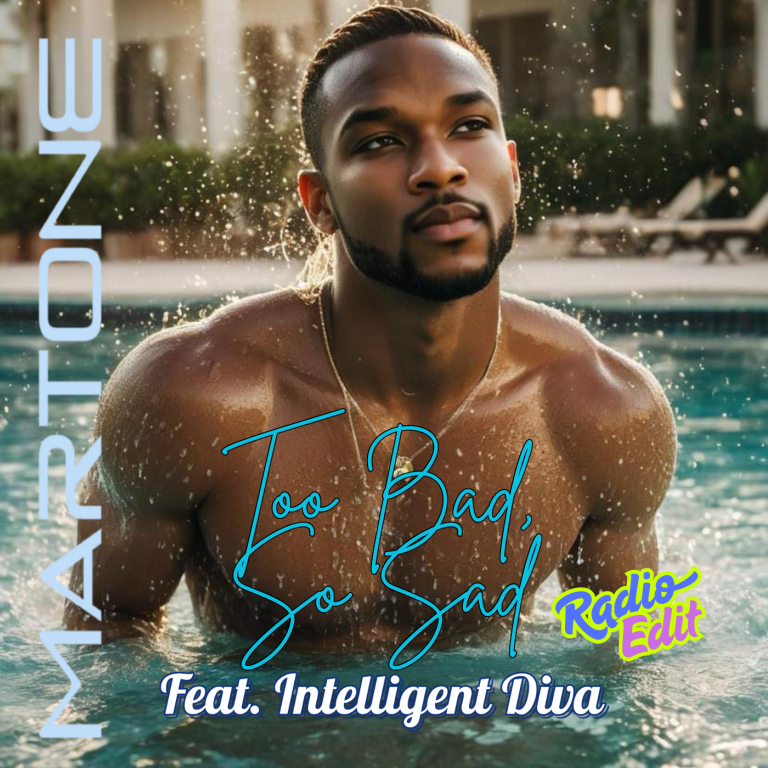
“Too Bad, So Sad”—the latest single from dance music artist Martone, featuring the commanding presence of Intelligent Diva—is a sharply constructed vocal house track that pairs confessional lyricism with a high-gloss production framework. Released ahead of Martone’s forthcoming album Phoenix Rising: The Emperor’s Ascension, the track demonstrates not only creative vulnerability but a well-defined approach to sonic design.

Produced by Michael E. Williams II of Platinum Keyz Recordings, with Intelligent Diva’s vocal production helmed by Stone Schaefer, “Too Bad, So Sad” is a dual-performance single that captures a full narrative arc—one that begins in heartbreak and ends in hard-won empowerment. The arrangement is intentionally spare in places, with a focus on vocal clarity, emotional nuance, and a beat that invites both introspection and movement.

The mix opens with Martone’s lead vocal sitting front and center. Engineered to occupy a clear midrange pocket, his tone is warm, unprocessed, and intimate—floating atop a subtle pulse of filtered pads and crisp sidechain compression. The low end is restrained, more present in intention than in actual weight, allowing Martone’s lyrics to breathe. Each phrase is given space, with subtle reverb tails trailing off into a minimal stereo field that evokes loneliness without collapsing into reverb-heavy cliché.

When Intelligent Diva enters in verse two, the sonic palette shifts without overcrowding. Her performance—more rhythmic and dynamically aggressive—necessitates a different mix strategy. Her vocal is EQ’d brighter, with tighter gating and slightly more compression, giving it a punchier presence that rides the beat cleanly. The engineers make smart use of panning automation to widen her cadence without losing cohesion, keeping the track fluid even as the energy changes.

Underneath it all, the beat is constructed with precision. The drum programming is tight but not busy, with hi-hats that cut through the mix and a kick that remains consistent without ever dominating. The choice of samples leans more toward modern club textures than classic house—digital but not cold, programmed but not robotic. There’s a deliberate balance of emotion and mechanics here, and it pays off.

One of the standout production elements is the use of subtle dynamic movement. The track resists the typical build/drop formula. Instead, it utilizes arrangement and frequency emphasis to carry the listener forward. When the chorus returns after Diva’s verse, the layering becomes fuller—synth pads re-enter, backing vocals are doubled and widened, and the groove deepens. The result is a sense of narrative progress within the mix, which mirrors the song’s lyrical message: emotional upheaval, followed by clarity and forward motion.

From a mastering standpoint, the track is loud enough to hold its own in a playlist shuffle, but not over-compressed. Peaks are well-controlled, and stereo imaging remains focused across devices. The radio edit format—coming in under four minutes—ensures commercial viability while leaving enough sonic variety to avoid fatigue.

“Too Bad, So Sad” is a solid example of intentional mix design in contemporary dance-pop. It doesn’t rely on gimmicks or trend-chasing sound design. Instead, it achieves resonance through honest vocal performances and production choices that serve the emotional content of the song. In an era where digital tools often encourage maximalism, this track makes the case for restraint, focus, and fidelity.

Both Martone and Intelligent Diva bring distinctive performances to the studio environment, and their contrast is one of the track’s greatest strengths. The emotional vulnerability in Martone’s voice pairs effectively with Diva’s assertiveness, creating a sonic conversation that is both dramatic and real. The mix team wisely recognizes this dynamic and builds the soundstage accordingly—never forcing the elements to compete, always supporting the narrative arc.

With “Too Bad, So Sad,” Martone continues to evolve as a vocal artist and curator of thoughtful, emotionally intelligent dance music. Intelligent Diva’s feature elevates the track, while the engineering and mix choices ensure the message cuts through clearly—on headphones, in the club, and beyond.

–Michael Smith


DPB Flexes Faith and Unity with “American Strong”

0

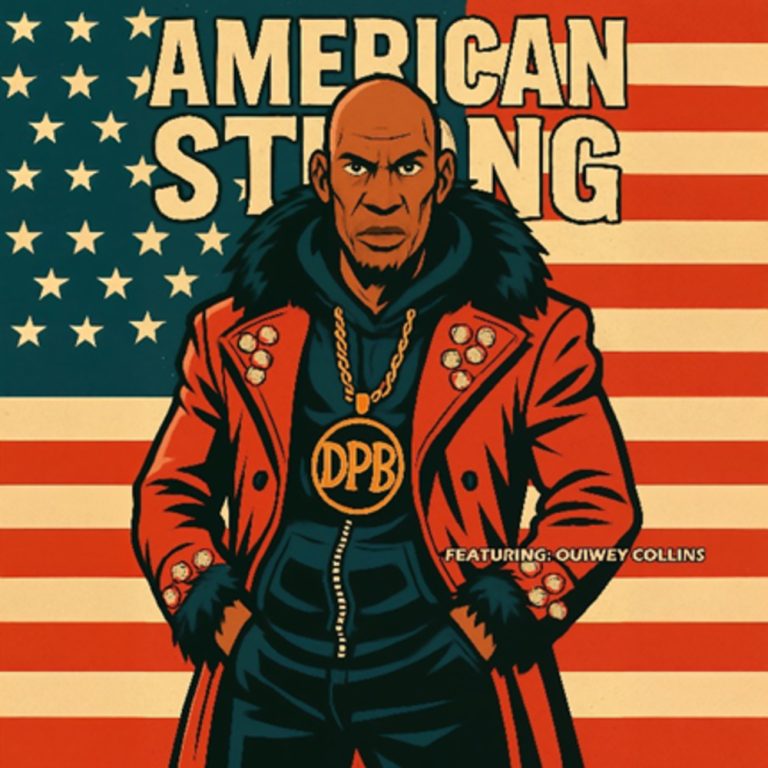
DPB, one of the founding voices in Christian hip-hop, just dropped a heater with a message — and American Strong” isn’t just a track, it’s a statement. In an era where rap is often divided between the flashy and the fatalistic, DPB is standing in the gap, bridging the holy and the hood with unapologetic pride, purpose, and positivity.

Backed by a beat that rides like a summer anthem but hits like a Sunday sermon, “American Strong” is built for movement — both on the dance floor and in the spirit. From the jump, DPB makes it clear this is bigger than bars. “We are one yeah,” he repeats like a mantra, setting the stage for a lyrical mission that blends national pride with spiritual accountability.

Where most so-called anthems stop at surface-level patriotism, DPB digs deeper. His America is rooted in unity, driven by love, and grounded in God. He’s not waving a flag just to wave it — he’s raising it as a banner of hope. “Stop the division, love is our mission,” he raps, cutting through the noise with the kind of clarity that feels rare these days.

But don’t get it twisted. This isn’t just gospel talk over hip-hop drums. The bars are tight, the cadence clean, and the message laser-focused. DPB has been in the game for decades — from the Disciples of Christ days to his solo evolution — and he spits like a vet who’s seen the world shift and still believes in building bridges instead of walls.

The highlight of the track? Its inclusivity. “Black, white, red, brown — yes, my brother,” he rhymes, embracing America’s full color spectrum and pushing back against hate with nothing but love and truth. In a genre where “real” often gets confused with “reckless,” DPB shows that authenticity can come with integrity.

Sonically, the track walks a fine line between hip-hop and inspirational — and it works. The production is crisp but soulful, with just enough bounce to stay in your head and just enough heart to stay in your chest. It’s the kind of song you can blast in your ride, play at a rally, or run back in your headphones when you need a reminder of what we’re fighting for.

Bottom line: “American Strong” is more than a banger — it’s a movement starter. DPB delivers grown-man rap with gospel grit and unshakable faith, proving that hip-hop can still uplift without losing its edge. In a world starving for truth, this joint feeds the soul.

Mic Score: 4.5/5
Powerful. Purposeful. Patriotic with a purpose. DPB’s voice is more vital now than ever.

–Jimmy Sinclair