



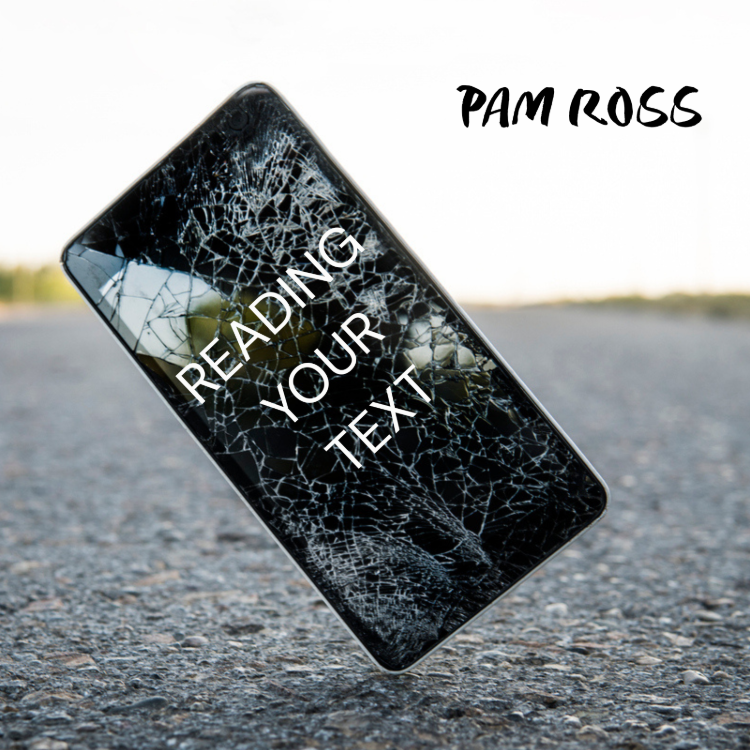
There’s a certain kind of folk-rock song that doesn’t ask for attention—it earns it, mile by mile. Pam Ross’s “Reading Your Text” is that kind of record. It unfolds like a late-night drive when the radio is low, the road stretches on forever, and your thoughts are louder than the engine. Ross has always been a writer who understands emotional geography, and here she maps a familiar but unsettling terrain: heartbreak in the age of the smartphone.
The song’s origin is disarmingly ordinary. Ross witnessed a driver swerving on the road and assumed intoxication, only to discover the real culprit was texting. Instead of stopping at anger, she followed the thought further. What could pull someone’s attention so completely away from survival itself? Her answer—love, loss, unfinished emotion—becomes the backbone of the song. It’s a songwriter’s instinct at its best: curiosity replacing judgment.
From the opening lines, Ross places us right in the driver’s seat. “I’m changing lanes with my signal off / Check my rear view for the cops.” These aren’t metaphors yet; they’re actions. The genius of the song is how seamlessly those actions turn symbolic without losing their realism. When she sings, “You took my heart and I took your word / Then crashed into you when the lines got blurred,” the collision feels inevitable. Emotional trust and physical danger merge into one experience.
The chorus is quietly devastating. “I’m shifting gears with the sun in my eyes / While I read the text where you said goodbye.” Ross captures a very modern form of grief—the endless rereading of a message that offers closure but delivers none. It’s not melodramatic; it’s observational. Anyone who’s ever stared at a phone hoping the words might change will recognize the moment instantly.
Musically, “Reading Your Text” lives squarely in folk-rock tradition. There’s a steady, forward-moving groove, restrained guitar work, and an arrangement that leaves room for the lyric to breathe. Ross’s voice—earthy, unforced, and emotionally precise—does the heavy lifting. She sings like someone telling you the truth because she doesn’t know any other way to say it.
The bridge escalates the tension without glamorizing it: one hand on the phone, one on the gear, judgment slipping just enough to be dangerous. It’s an uncomfortable image, and Ross wisely lets it remain so. There’s no sermon here, no tidy resolution—just acknowledgment.
What makes “Reading Your Text” resonate is Ross’s refusal to separate emotional experience from real-world consequence. This is folk-rock as it’s always been at its best: grounded in everyday life, alert to human vulnerability, and quietly compassionate. Pam Ross doesn’t just write about the road—she understands what we carry with us while we’re on it.
–Denny Elias