



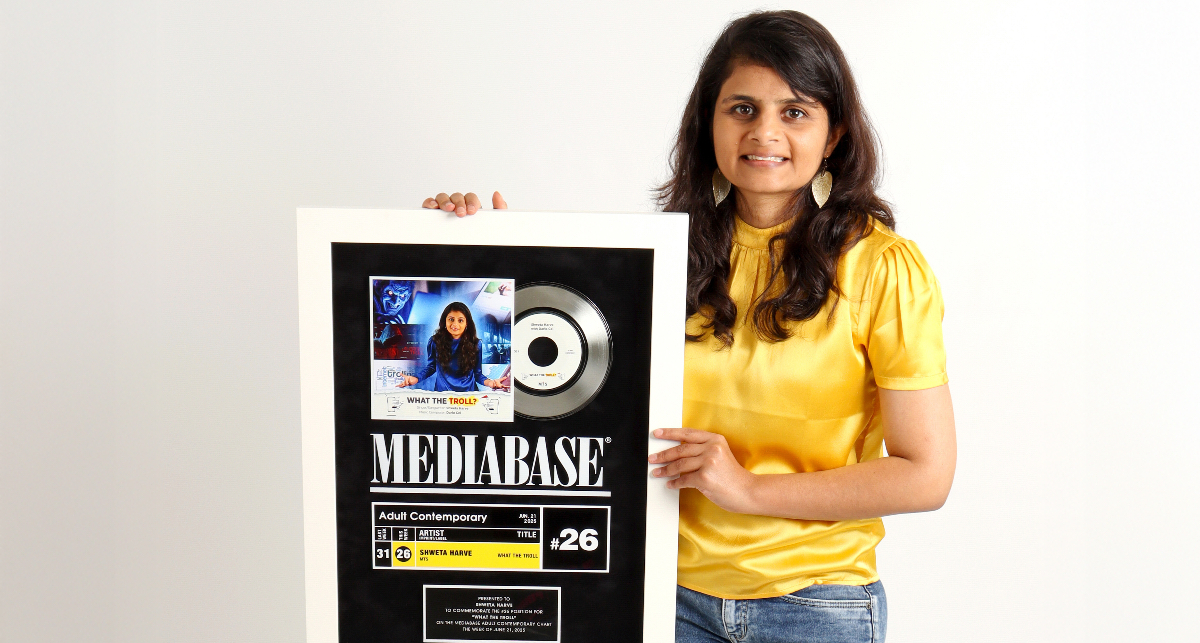
With an artistic voice that fuses introspection, spirituality, and global consciousness, Shweta Harve has quickly become one of the most distinctive singer-songwriters on today’s independent pop scene. Her songs—each a blend of soulful melody and mindful lyricism—have earned her chart placements on Billboard and Mediabase, while resonating deeply with listeners seeking meaning beyond the mainstream. In this conversation, Harve reflects on her journey from personal healing to international recognition, revealing how loss, purpose, and authenticity continue to shape both her art and her outlook on life.
Shweta, you’ve achieved chart success on Billboard and Mediabase. When you first started writing songs, did you ever imagine they’d take you this far?
Honestly, no. When I first started writing songs, it was never about numbers or charts—it was about healing, expression, and connection. I was composing from a deeply personal space, especially after my mother’s passing. To now see those songs resonate globally and chart on Billboard and Mediabase feels surreal. It’s a reminder that when art comes from sincerity, it somehow finds its way to people’s hearts—and that’s the most rewarding success of all.
You’ve called music both a passion and a platform. How do you balance creating something personal while also making a statement about the world around you?
For me, the two are inseparable. My inner reflections often mirror what’s happening in the world, and vice versa. Music becomes a bridge between personal truth and collective experience. When I write, I try to be deeply honest with myself while also asking universal questions—about kindness, mindfulness, or purpose. That’s how songs like “Who Are You?”, “Why So Busy?”, and “What the Troll?”, “Which One Is Real?” were born. They start from something real within me but expand into something everyone can relate to.
Many artists talk about that “first spark” moment when they knew they were meant for the stage. What was yours?
It was in childhood, actually. I remember hearing songs on the radio, then sitting at the piano and playing them back effortlessly after just a couple of listens. That natural connection with melody and emotion made me realize music was more than just a hobby—it was part of who I am. But the true “this is it” moment came later, when I saw how my music could touch people, make them pause, or help them heal. That’s when I knew this wasn’t just performance—it was purpose.
Your songs carry strong lyrical messages. Do you start with words first, or does the melody usually lead the way?
It depends on the emotion. Sometimes a phrase or question comes first—something that feels charged with meaning—and I build the melody around that. Other times, Dario Cei’s instrumental compositions evoke a feeling that naturally brings the words to life. With songs like “What the Troll?” or “How Happy?”, the lyrics and melodies seemed to arrive together, as if the message already knew the tune it wanted to take.
The music industry can be intense and demanding. How do you stay grounded and focused in the middle of all that noise?
My grounding comes from my spiritual foundation and the values my Master and my mother instilled in me—authenticity, humility, and equanimity. I remind myself that I’m here to serve through music, not to chase validation. Meditation, gratitude, and staying connected to the purpose behind each song keep me centered no matter how chaotic things get around me.
If you could collaborate with any artist—across any genre—who would you choose, and why?
I’d love to collaborate with artists who use music as a force for awareness and change—someone like Alicia Keys, who blends soul and social consciousness so beautifully, or Coldplay, for their ability to unite massive audiences through heart-centered messages. Collaborations like these remind us that even in different genres, music has one language: connection.
You’ve been described as fearless in your approach to songwriting. Has there ever been a subject or theme you hesitated to write about?
I wouldn’t say “hesitated,” but there are themes I approach with deep care—like loss, mental health, and identity. These are sensitive topics that deserve honesty and empathy. Sometimes I wait until I’ve fully lived or processed an experience before writing about it. Songs like “Which One Is Real?” “Can You Shed the Past?” and “Have You Loved Like a Tree?” came from that space of reflection—they’re deeply personal, yet they open up universal conversations about healing, release, and love.
When fans look back on your career years from now, what do you hope they’ll say about Shweta Harve and the music you left behind?
I hope they’ll say that the music made them feel—that it helped them pause, listen, and see themselves or the world differently. I want to be remembered not just for melodies, but for meaning—for creating songs that carried hope, introspection, and unity. If my music helps even a few people reconnect with kindness, authenticity, and inner peace, then I’ve done what I came here to do.