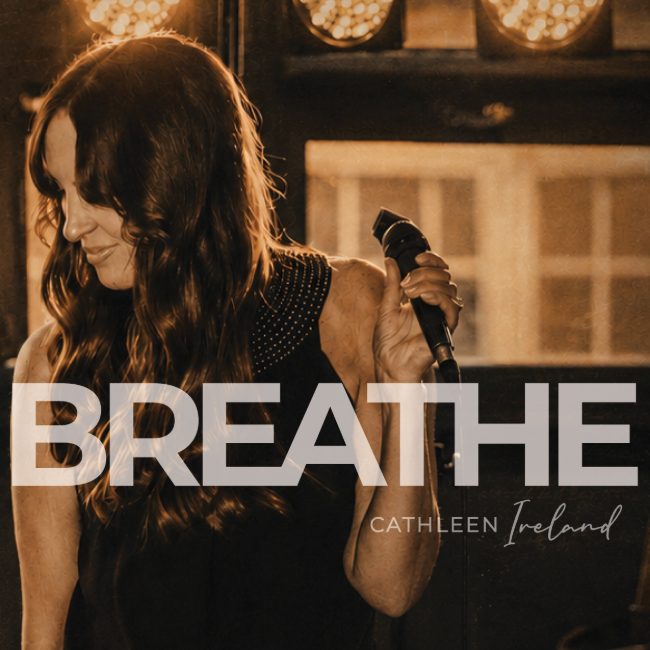
Pop songs often promise escape. Cathleen Ireland’s new single, “Breathe,” offers something more practical: endurance.
Drawn from the realities of balancing family, career, creativity, and personal identity, “Breathe” transforms everyday pressures into a rhythmic affirmation. Released from her forthcoming album In the City, the song captures the emotional complexity of modern adulthood without succumbing to self-pity or easy resolutions.
From its opening lines, Ireland establishes the pace of the life she describes. The details are specific and familiar: preparing for a performance, managing responsibilities, and moving through a schedule that seems to leave little room for rest. The song’s narrator is a mother, wife, bandleader, and artist, attempting to satisfy competing demands while preserving a sense of self.
Rather than dramatizing those pressures, Ireland treats them matter-of-factly. Her observations arrive as snapshots rather than complaints. The accumulation of responsibilities becomes the song’s central tension, mirrored by a production that maintains steady forward motion throughout.
Written by Ireland and Danny E. B. and produced by Sean McDonald at Red Medicine Studios in Swissvale, Pennsylvania, “Breathe” blends contemporary pop textures with a message rooted in resilience. The arrangement is streamlined and efficient. Percussion drives the song forward while layered synthesizers create a polished backdrop that supports rather than overwhelms the vocal.
Ireland’s voice remains the focal point. She sings with clarity and conviction, avoiding excessive embellishment. Her delivery allows the lyrics to carry their own emotional weight. There is confidence in her performance, but also vulnerability, particularly when she addresses the exhaustion that accompanies constant responsibility.
The song’s chorus serves as its emotional center:
“Breathe / You got this, you got this girl.”
Repeated throughout the track, the phrase functions as both encouragement and necessity. It is less a declaration of victory than a strategy for survival. Ireland recognizes that perseverance often begins with something as simple as reminding oneself to continue.
What distinguishes “Breathe” from many contemporary empowerment anthems is its acknowledgment of ongoing challenges. The song does not present confidence as a permanent state. Instead, confidence emerges as a conscious choice made repeatedly in the face of uncertainty.
One of the song’s most revealing moments addresses the gendered expectations that continue to shape professional environments. Ireland references encounters with dismissive attitudes toward women, framing them as part of a larger landscape she has learned to navigate. The lyric arrives without bitterness or confrontation. Its effectiveness lies in its directness.
That perspective reflects Ireland’s broader artistic career. A longtime presence in Pittsburgh’s music community, she has spent decades developing her craft through projects including Friday’s Child, theFIVE6, and her current band, Hot Weather Holiday. Along the way, she has earned recognition from songwriting competitions, international music awards, and film festivals, where her music videos have collected numerous honors.
Those accomplishments inform “Breathe” without defining it. The song does not look backward. Instead, it focuses on the ongoing work of maintaining balance while continuing to move forward.
The production reinforces that theme. There are no dramatic breakdowns or moments of cathartic release. The music remains in motion, reflecting the reality that life’s obligations rarely pause long enough for complete resolution. The song’s momentum becomes its message.
As a preview of In the City, “Breathe” suggests an artist interested less in grand statements than in documenting lived experience. Ireland finds significance in ordinary struggles and transforms them into something communal. Her message is neither revolutionary nor complicated.
It is simply this: the demands may continue, the pressures may remain, but there is strength in persistence.
By the end of “Breathe,” Cathleen Ireland has crafted a song that recognizes the challenges of contemporary life while resisting cynicism. It is a reminder that resilience is often built not through dramatic triumphs, but through the quiet decision to keep going.
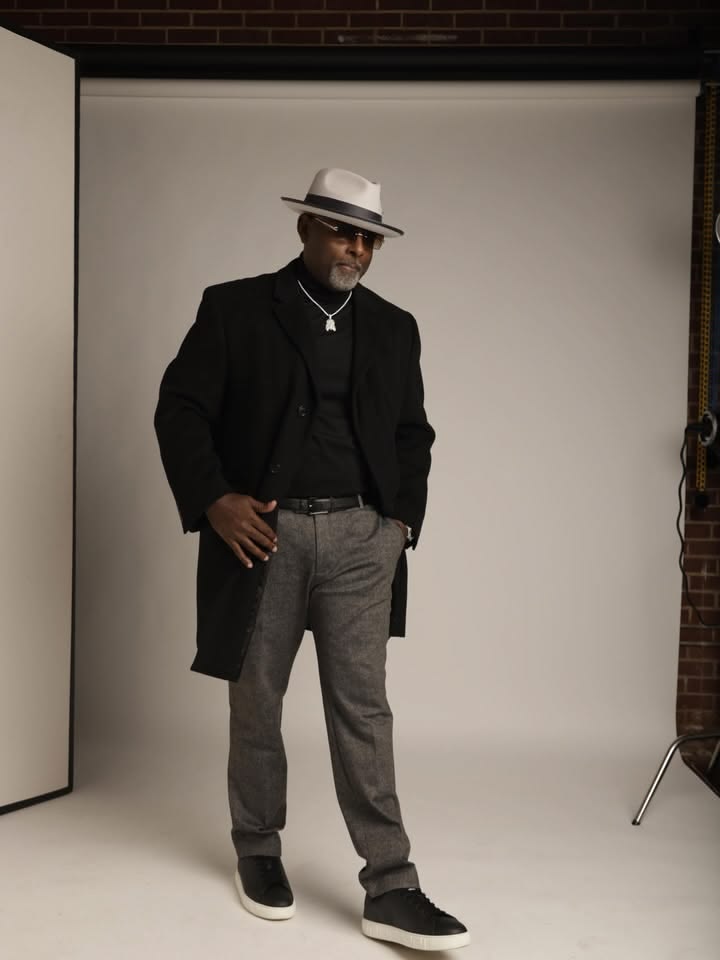
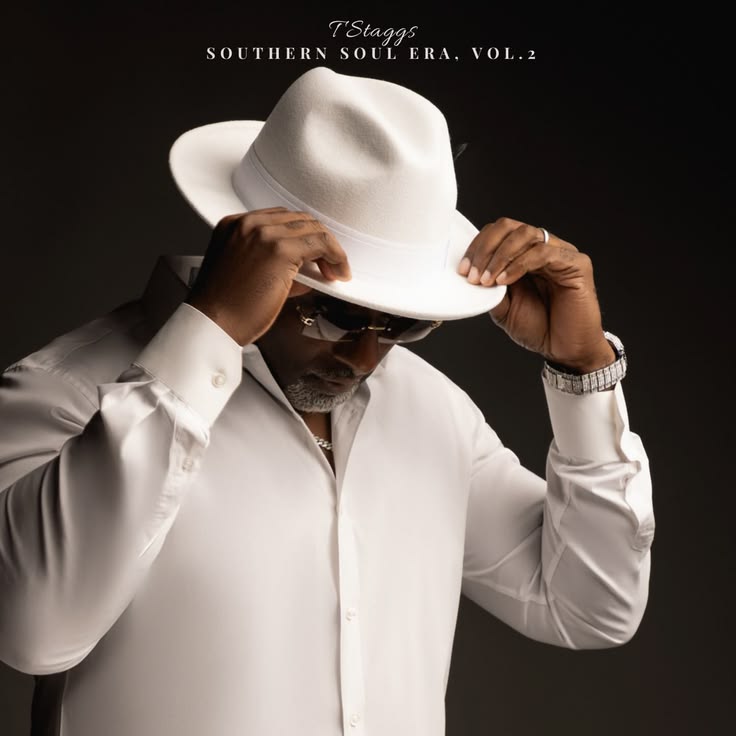
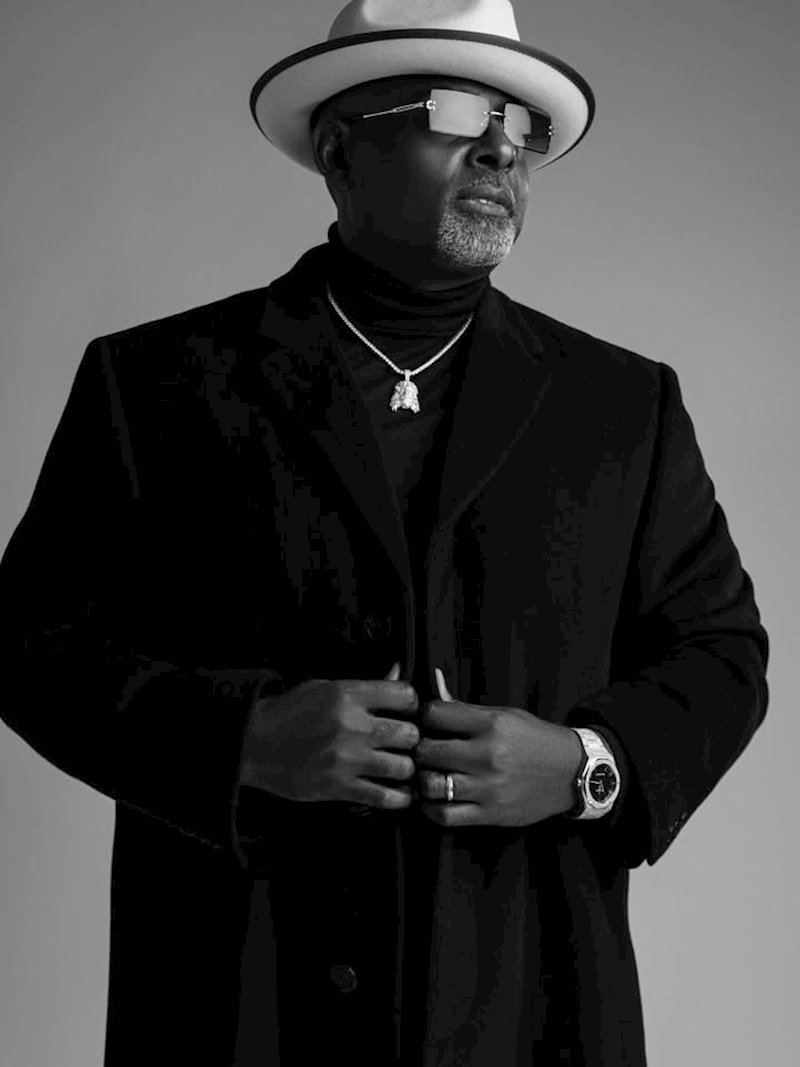
He was raised in the church in Spartanburg, South Carolina, became known locally as “The Wedding Singer”, and has spent his life turning personal faith, love, and resilience into music that moves people. T Staggs is back with “Southern Soul Era, Vol 2” — out now on all digital platforms — and it is everything the title promises: warm, groove-laden, gospel-infused Southern soul that carries the spirit of Bobby Womack, Al Green, Luther Vandross, and Curtis Mayfield into the present day. Eight tracks built on humility, self-belief, and the unwavering conviction that music should make people feel good. We sat down with T Staggs to talk about the album, the journey, and the soul at the center of it all.
You live by the phrase “I aspire to Inspire.” When did that become your guiding principle — and how does it shape every creative decision you make?
Honestly, I came up with this phrase one day while I was in the gym working out a couple of years ago. I would take pics or videos of myself working out and I would then post them on social media. The results of my hard work were paying off. People began to hit me up asking me, “what I was doing to get the results I was getting”. Then one day it hit me, you are inspiring people to take care of themselves physically. So, I then began to post with the caption “I aspire to inspire”. In other words, let my work and results motivate you to become a better version of you. Now with everything I do, I say to myself, will this inspire someone else to be better.
“Southern Soul Era, Vol 2” opens with “Fight For You” — a track that immediately feels like a classic. When a song comes together that naturally, what does that creative moment feel like, and how quickly did you know you had something special?
From the first time I heard the reference track, I knew at that moment, this song had that it factor. You know there is a stigma within the R&B community that says artists are not making real R&B music anymore. I heard them say that the element of singing directly to your love is missing. Telling her how you really feel is gone. The title “Fight For You” within itself speaks volumes meaning I value the relationship so much so that I’m willing to whatever it takes to keep it going. To even have the notion of splitting up is a no no. The first verse in this song says, “Girl I know you been sick and tired of fighting this good fight”. That’s heavy there. All relationships go through times in that relationship where you are just fed up with each other, you are mentally and physically drained. But then the love that you both have for one another is just so overpowering that it causes both of you to continue to fight for the relationship. It’s life. This song details all the emotions. From a singing standpoint, you can since my tone in every word I sing. I mean what I’m singing PERIOD!!
“Hey Hater” is a standout — a gospel-drenched, organ-driven meditation on sending love even to those who wish to tear you down. In a world where that kind of grace is increasingly rare, where does that spirit come from in you personally?
I was raised right. My mom and dad did a good job with my sister, my brother and myself. We were never taught to hate. To elaborate even further, I’ve always been a nonchalant type of person. I don’t care what you think of me, you can’t stop me. If I have the ability to do something, I’m going to do it. It’s just that simple. I love this song. Honestly, this song needs to be the worldwide Anthem type because for the most part all of us have some haters in some aspect. Like the song says, you have some loud ones, and you have some quiet ones. Some folks just hate who you are. It shouldn’t be that way but that’s the world we live in. It’s been like that since the beginning of time.
You grew up in the church in Spartanburg, SC, and that foundation is unmistakable throughout this album. How much of your gospel upbringing consciously informs your approach to R&B and soul — and how much of it just lives in you naturally at this point?
Well, if you do your research, most of the great R&B and Soul singers grew up singing gospel music in the church. Gospel music is about feeling, soul, and rhythm. Gospel music touches your soul like no other genre of music I feel so for those traits to spill over into the genre of R&B and soul, it’s a given, its natural, it’s not manufactured, it’s who you are, it’s how you live, ITS YOU!
Which tracks on “Southern Soul Era, Vol 2” are the closest to your heart — and why?
Of course the track “Still Here” is dear to my heart because its about my dad whom I lost in October of 2024. My dad was in my life all my life. I’ve never known life without my dad so now navigating through life now without him is tough. My dad was in the Army, when I was a kid, every summer he used to go away for summer camp for 2 to 3 weeks and every time he would leave, I would get sick. I guess it was separation anxiety. The only difference is back then I knew he was coming back and now he isn’t. So now I just try to remember all the things he taught and just keep striving to be all I can be. Another track that’s dear to my heart is “Miss Those Days” because it takes me down memory lane of growing up. I grew up in a family orientated rural country neighborhood named “SHILOH”. So growing up my cousins were my closest friends. Some of the things we did were crazy, but I wouldn’t trade those times for nothing in the world. This song captures some of those moments. I’m also really digging the track “Pop My Ishh”. Some might consider this track as a song where I’m boasting and bragging when that’s far from the truth, every lyric on this record is 100% fact. I said all that in the song to basically say, I’m handling my responsibilities as a man from being a husband first and a father second and this is what I plan on doing for the rest of my life. To add a little more context, my life hasn’t always been taking trips to different islands per se, I’ve survived many tough seasons in my life, seasons where I was like “God what is happening here”. But I kept my head up because I knew it don’t rain always, at some point the Sun must shine. So, with that being said, I will forever be thankful. I know where all my blessings come from, God Almighty. Another record I love on this project also is “Strung Out”, the concept where sing and music is the love of my life. I don’t want to go into much detail right now, go listen to this track and let me know what you think. It’s very creative. I guarantee you will love this track.
R&B and Hip-Hop today are largely defined by their commercial shape — trap influences, streaming-optimized sounds, viral moments. You’ve chosen a very different path rooted in classic soul. Isn’t that a risk when it comes to gaining new listeners or mainstream visibility — and does that concern you at all?
I’m not concerned at all because I’m staying true to myself. I’m not chasing anything. I’m of the belief that there is an audience out there for my type of music. What’s life without taking risk? I’m a huge risk taker. I like traveling down the road less traveled. I don’t follow trends. I follow my desires and passions. I also think people get tired of the same old thing. You can never go wrong being true to you. God created you to be different. Why cheat God out of his creative genius trying to be like the next person. Be you, do you, love you.
You co-produced this album alongside Days on 85. What does that creative partnership look like in practice — and how do the two of you find the balance between the classic soul foundation and keeping the sound fresh?
Days is my lil cousin with so much talent. I was on a podcast a couple of weeks ago and the host asked me how long it took us to create Southern Soul Era, Vol 2, and I told him we recorded the entire album in about 9hrs or so. Days live in Atlanta and he drove up to Spartanburg SC one Friday night. He got to my house about 9:30pm and we recorded until about 1:30am. He came back Saturday morning around 10am and we finished the entire album by 3pm that afternoon. This is our 3 album we have worked on together so over time he understands me, my strengths and my weaknesses and how I like to record. We bounce ideas off each other and I have freedom to do whatever while recording. If we both feel it, it’s on the record, if not, we keep it moving. That’s my guy. Again, he is a song writer and music producer, and he is around all kinds of artist while living in Atlanta. He is in many studio sessions with well-known artists so for me to even be able to still have access to him is amazing.
The album spans a wide emotional range — from the sensual groove of “Step With Me” to the explosive James Brown energy of “That Feeling” to the quiet strength of “Still Here.” How did you approach sequencing these eight tracks into one cohesive listen?
With each song having its own emotional exuberance and identity actually it was very easy to sequence it all into one cohesive listen. Of course, we communicate on the placement of each song on the album. It’s about a flow meaning how one song leads into the next song. The following song must compliment the prior song. But again although I titled the album “Southern Soul Era”, you can definitely hear different R&B style concepts in the songs.
You were known for years as “The Wedding Singer” before stepping fully into your recording career. What do you think that experience of singing for people at some of the most emotional moments of their lives taught you about connecting with an audience?
Deep question. First off it allowed me to gain even more confidence in my craft. Singing in front of hundreds of people and all eyes are on you, that can be very damaging if you are not prepared and ready. But good thing is, I thrive in those type moments. God bless me with a gift. I think one of the main things it taught me was don’t take the audience ear for granted. Each ear is precious so handle it with care. It also taught me that eye contact is very important as well when you are performing because it allows the audience to not only listen to your voice but also look into your soul so to speak. It allows them to feel your passion for what you are doing.
Your number one fan is your two-year-old granddaughter — who already knows and sings all your songs. What does it mean to you to have your music living inside your own family like that?
That’s the greatest feeling in the world. Really unexplainable. When I say she knows the songs, she knows all the songs, it’s remarkable. I hope it sparks something is her to where she becomes a singer. She already has the desire and mannerisms as well.
Are there any plans for a Vol 3 — and if so, is there a direction or theme already forming in your mind?
Yes, already in the plans. I think we going to continue in the same vein as we started on Vol 1 going into Vol 2. More soul, more rhythm, more blues. I’m aiming for Vol 3 to be out sometime this year.
Any music videos planned to bring some of these tracks to life visually?
So currently I have visuals for “Still Here” and “Hey Hater”. I plan to do more visuals for a couple more tracks as well.
In such an AI-driven era, how do you see the future of indie artists in particular — and the music industry in general?
Music industry has definitely changed. I’m not really a fan of the AI driven era. To me it’s not real and it’s not authentic, its too perfect and that’s the problem. Perfection doesn’t exist.
You’ve said the goal from the start was to create relatable content — and that you believe you nailed it with this album. For someone who hasn’t heard a single T Staggs song yet, what do you want them to feel the moment they press play — and where would you send them first?
I want them to hear a sound they have never heard before. As they listen from the first note sung, I want them to not only hear the passion but to feel the passion. I want them to say “who is that and where has he been?” lol All the songs are fire if I must say so myself but if I had to choose one song to send them to first, I would send them straight to the first song “Fight For You” because this song sets the tone for the entire album.
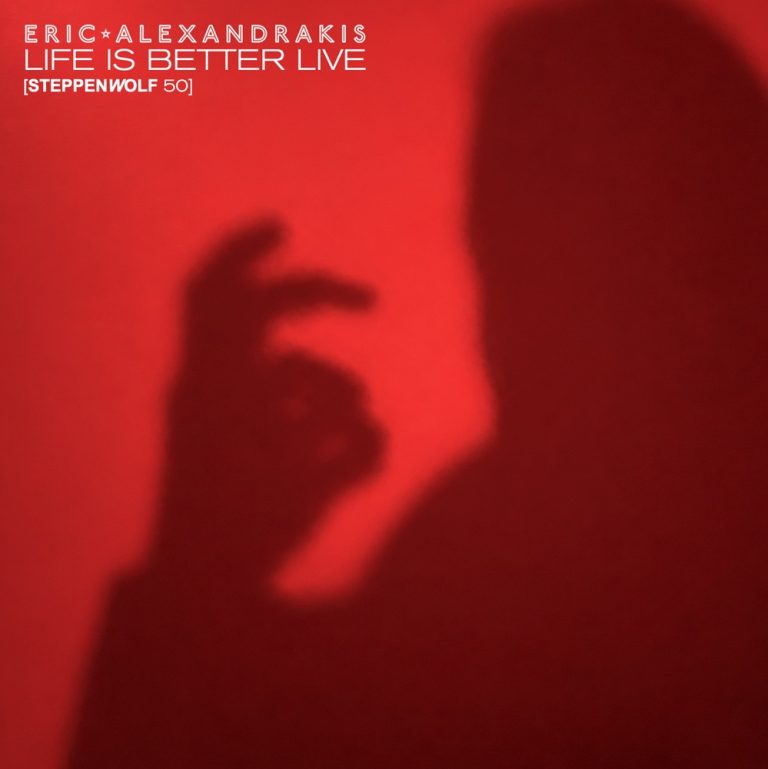
Two-time Grammy-nominated musician Eric Alexandrakis has one of those careers that reads like a name-dropping exercise, except it’s all true. Discovered by Duran Duran’s John Taylor, the Rethymno, Greece-based artist has collaborated with John Malkovich, Yoko Ono, members of The Cure, The Smiths, and Tom Petty & the Heartbreakers, and the late Dolores O’Riordan – he also produced the first digitally watermarked CD, for what that’s worth. “Life Is Better Live,” released on May 18th, 2026, doesn’t arrive as a typical single. It’s the soundtrack to a short film by visual artist Sandro Miller, commissioned for “Steppenwolf 50: Through the Eye of Sandro Miller,” a multimedia exhibition at Highland Park Arts Center marking the 50th anniversary of Chicago’s Steppenwolf Theatre Company. The track was recorded on Okanagan Lake in British Columbia, mixed by Alexandrakis alongside Brian Leitner, and draws explicit influence from avant-garde composers Karlheinz Stockhausen and John Cage.
As an avant-garde piece, it seeks to stretch out the definition of music – what do we consider music versus just sequential noises? It’s best described as an auditory experience that can be enhanced with visual aids, and it was originally curated to accompany Sandro Miller’s short film, so that checks out. However, it can be enjoyed on its own as an evocative experience if you have the imagination and the patience for it.
The Stockhausen and Cage lineage is worth taking seriously here. Both spent careers asking what sound could become when freed from conventional structure, and “Life Is Better Live” operates in that same territory. Whether you find that rewarding or frustrating says more about your relationship with experimental music than it does about the track itself. As soundtrack material, it has a clear context and function. As a standalone listen, it asks more of the audience, and not everyone will want to meet it there. But that’s the purpose of avant-garde music: pushing boundaries and challenging audiences.
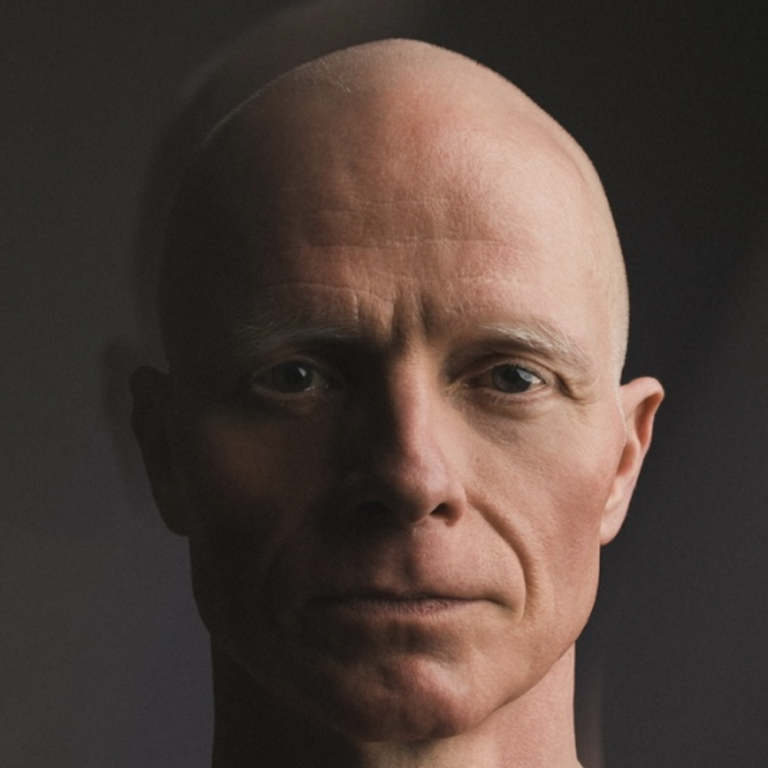
Paul Jenner has been releasing music under the 50mething name since January, when his debut single confronted a personal cancer diagnosis head-on. That willingness to go directly at difficult subject matter is becoming a signature. “O oh it’s AI”, out now, takes aim at something considerably larger: the relentless proliferation of artificial intelligence through modern life, and specifically its darker applications – job displacement, the exploitation of vulnerable populations, and the use of AI to compromise the dignity of women and children. Everything is written and produced alone at home, with Prince somewhere in the background as a guiding influence.
Someone might look at this and say oh well, obviously the 50-something (pun intended) artist is negatively commenting on generative AI, just an old person out of touch with the times, right? But in reality, his commentary is very nuanced and raises very valid points about AI being pushed down the average person’s throat just to drive sales and efficiency to maximize profit, no matter the cost – the cost here being human dignity, as Pope Leo XIV said so eloquently in his encyclical “Magnifica Humanitas”. 50mething gets at the core of the issue and doesn’t shy away from expressing it.
What makes this work as a song rather than just a statement is that 50mething understands the difference between reacting to something and actually saying something about it. The track doesn’t treat AI as a monolith – it acknowledges the technology’s legitimate uses while focusing its energy on the parts nobody in power seems particularly interested in discussing. With seventy tracks reportedly in the catalogue waiting to be released, it’s becoming clear that Paul Jenner has a lot on his mind. “O oh it’s AI” is another reason to keep listening.
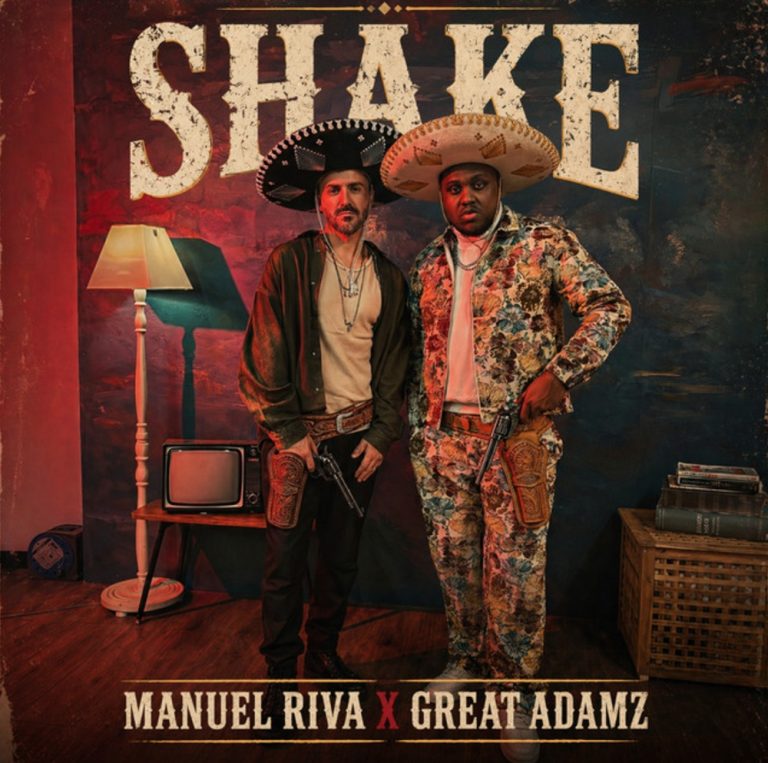
Following their #1 smash ‘Umada’ on Music Week’s Black Music Chart, UK Afrobeats powerhouse Great Adamz and Romanian DJ/producer Manuel Riva reunite for their second collaboration, the vibrant summer anthem ‘Shake’, set for release on May 14th via Radikal Records and Forward Music Agency.
A warm, sun-drenched fusion of Afrobeats rhythms, Latin grooves, and infectious melodies, ‘Shake’ captures the heat and passion of beach parties and long summer days. Built around layered percussion, smooth beats, and traditional instrumentation, the track builds to an irresistible, dancefloor-ready hook that showcases Great Adamz’s signature smooth vocals and charismatic delivery.
While ‘Umada’ brought club energy, ‘Shake’ invites listeners into a more romantic and feel-good atmosphere — the perfect soundtrack for sun-soaked celebrations and unforgettable nights.“In the vibrant realm of Afrobeats, few artists manage to encapsulate the essence of love and community as powerfully as Great Adamz does” — Afro Music News AboutGreat Adamz.
Nigerian-born, UK-based artist Great Adamz has emerged as one of the most exciting voices in the Afrobeats scene. A MOBO Unsung Class of 2022 alumnus, he has scored multiple No.1 hits on Music Week’s Black Music Chart (‘Umada’ and ‘Jeje’), dominated iTunes Nigeria Charts, and won Artist of the Year (Diaspora) at the East African Entertainment Awards. His collaboration ‘Kilon So’ with Erigga and Crae Wolf became one of his biggest records to date, while his fashion moment at the MOBO Awards sparked a trending topic on Twitter.
Great Adamz is currently preparing his highly anticipated album Blessed Boy, due this November via Radikal Records, led by the unity anthem ‘Love Your Neighbour’.About Manuel Riva Manuel Riva is a Billboard-charting Romanian DJ and producer with over 200 million streams worldwide. His breakout hit ‘Mhm Mhm’ reached the Top 20 on the Billboard Dance Club Chart, while ‘Miami’ with Alexandra Stan became a festival anthem and exceeded 20 million streams. Recent releases have earned support from heavyweights including Adriatique, Tiësto, Oliver Heldens, and Sam Feldt. An MTV Europe Music Awards nominee, Riva has performed at major festivals such as Untold and Neversea.‘Shake’ marks another seamless cultural fusion between the two artists and is poised to dominate playlists and dancefloors this summer.
‘Shake’ is available from May 14th on all major streaming platforms.
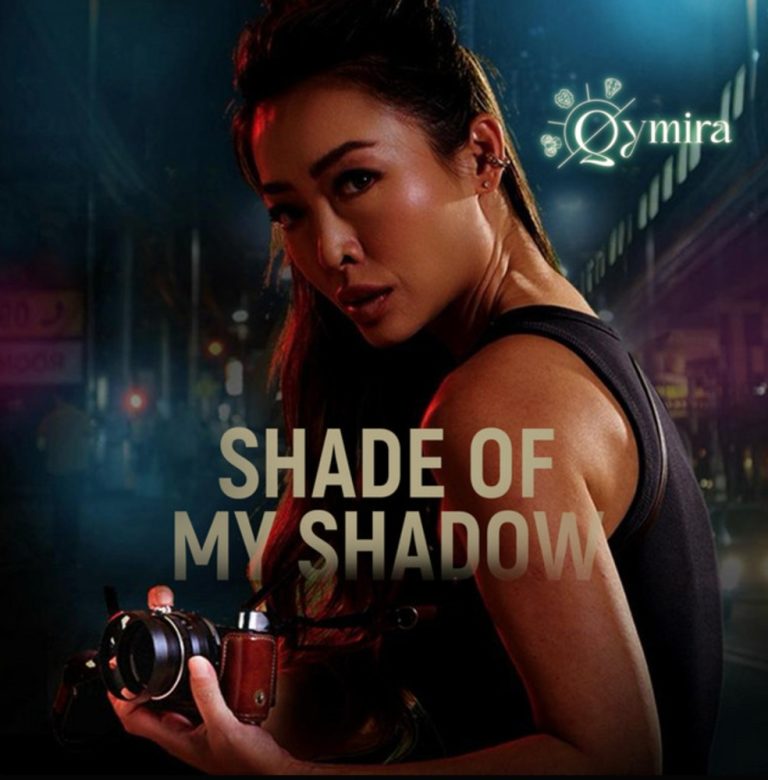
Multi-talented artist Qymira unveils her breathtaking new single and music video ‘Shade Of My Shadow’, out November 2nd via QiiA Media. Serving as the official theme song for the forthcoming feature film Shadow Transit, the release marks Qymira’s debut as a leading actress, film score composer, and on-screen performer in a major motion picture.
A luminous orchestral masterpiece, ‘Shade Of My Shadow’ takes listeners on an emotional journey through memory, transformation, and self-discovery. Written and composed by Qymira alongside celebrated musical director Richard Taylor (Boyzone, Westlife, Ronan Keating), the track was performed with the Qymira Symphony Orchestra. It masterfully blends sweeping cinematic grandeur with intimate vulnerability, perfectly mirroring the inner world of her character, Celeste.
The stunning music video, directed by award-winning filmmaker Pedring Lopez (Netflix’s Maria), was filmed at the iconic Dolphy Theatre at ABS-CBN Studios. Qymira performs centre stage surrounded by her orchestra, wearing a self-designed white gown from her emerging fashion line Qymira Qouture and adorned with custom VERGEZ jewellery, including the award-winning lion choker and Amorae pieces created especially for the film. Interwoven with scenes from Shadow Transit, the video realises six of Qymira’s lifelong dreams: acting in a feature film, composing a film score, creating and performing a movie theme song, performing with a full orchestra, launching her own fashion line, and collaborating with a luxury jewellery brand.
The gripping action-noir film Shadow Transit, directed by Pedring Lopez, stars Qymira as Celeste, a mysterious woman caught between destiny and deception, alongside Yoshi Sudarso. The film has been selected as one of the closing films under QC Selects at the prestigious QCinema International Film Festival (the largest international film festival in Asia). It will world premiere in the Philippines on November 22nd, followed by its UK premiere in March 2026.
Qymira will also appear as a guest speaker on the panel “Actresses as Agents of Change – Women in Front of the Camera Leading the Narrative” during the festival, further highlighting her commitment to women’s empowerment in the arts.“… seamlessly transitioning between lush melodies and a rapped flow, showcasing her incredible versatility and unique talent.”Wonderland. “… stands shoulder to shoulder with the works of Beyoncé and Alicia Keys…”Rapstar NewsBorn in Hong Kong, raised in San Francisco, and classically trained in piano, violin, and voice, Qymira fuses orchestral grandeur with dark urban allure and Asian influences. She broke through with her debut single ‘Satisfied’ (EEDB Remix), which hit No.1 on the UK Music Week Breakers Chart. She has since released multiple chart-topping singles internationally, performed at Salvador Carnival with Brazilian icon Edu Casanova, and conducted members of the Hong Kong Philharmonic, Guangzhou Symphony, Philippine Philharmonic, and Manila Philharmonic Orchestras.
Beyond music and film, Qymira is known as “Mother Gaia” for her philanthropic work through the One Gaia Foundation, which she founded to empower children in need through music, arts, and sports across the Philippines, Hong Kong, Brazil, Jamaica, and beyond.
‘Shade Of My Shadow’ is available now on all major streaming platforms.
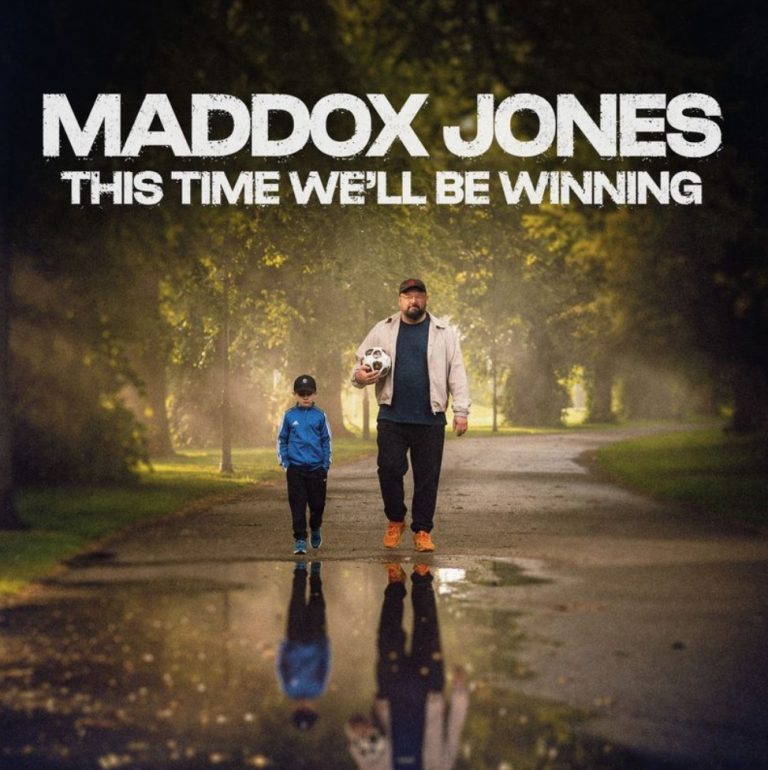
Northampton singer-songwriter Maddox Jones is releasing his new single, ‘This Time We’ll Be Winning’, just days ahead of the 2026 FIFA World Cup, co-hosted across the United States, Canada, and Mexico.
A passionate anthem of hope, belief, and national unity, the track arrives as England fans dare to dream once more. The single received its world debut on TalkSport and is set to ignite stadiums and living rooms across the country this summer. At its heart is a soaring, instantly memorable chorus: “Some might say we’re dreaming, but I just got a feeling, so why can’t we all believe it, this time, this time we’ll be winning.”A classic indie song at its core, big-hearted, anthemic, and built to be sung at full volume, ‘This Time We’ll Be Winning’ captures the infectious optimism that a major international tournament brings.
The track features a powerful, chant-driven singalong section that immediately evokes the atmosphere of iconic sports anthems such as “Seven Nation Army” and “Zombie Nation.” Anchored by the instantly memorable refrain “This time we’ll be winning,” it carries all the hallmarks of a stadium-ready anthem destined to resonate with football fans on a massive scale.
This is not Maddox’s first foray into football anthems. For UEFA Euro 2024, he teamed up with internet sensation The Wealdstone Raider on ‘England Together’, a raucous indie-rock rallying cry featuring England football legend Stuart Pearce in the music video.
For the 2022 FIFA World Cup, Maddox and The Wealdstone Raider released ‘We’re All Here Together (Go England!)’. With ‘This Time We’ll Be Winning’, Maddox completes a remarkable hat-trick of England football anthems, cementing his place as the go-to voice for the nation’s footballing hopes.“Maddox Jones is well on his way to becoming a household name” — Music News “Maddox Jones is an undeniably bright light”, Atwood Magazine.
About Maddox Jones.
Maddox enjoyed early success with the band The Departure, securing four Top 40 hits, sharing stages with iconic acts such as The Killers and Placebo, and performing at major festivals including Reading & Leeds and Glastonbury. As a solo artist, he burst onto the scene in 2020 with the critically acclaimed EP ‘Headspace’, which reached #4 on the iTunes Singer-Songwriter chart. His 2021 single ‘Can’t Wait for the Summer’ hit the top spot on the same chart. Tipped as One to Watch by BBC Introducing Northampton, Maddox has continued to earn industry acclaim, landing at #5 on Music Week’s Commercial Pop and Upfront Club Chart with ‘Make Me Yours’ (from his debut album Believe It) and scoring a #1 on the Music Week Black Music Club Chart with Great Adamz on ‘Body & Soul’.Maddox has a proven track record of electrifying live performances, having supported and shared bills with artists including Thomas Heaton, Beaux, The Lottery Winners, Lemar, Lucy Spraggan, Will Young, and Rebecca Ferguson. He recently announced his first-ever UK headline tour. Maddox is also preparing to release his highly anticipated sophomore album, Waiting for the World to Turn, on November 1st via Radikal Records.
Sydney-based pianist and producer Mark Andrew Hansen released “Love Enough” back in November 2020, right in the thick of COVID lockdowns, and the circumstances shaped the song in ways you can actually hear. Unable to work with anyone in person, Hansen found American vocalist Jes Hudak online, and the two traded files between Australia and the US until the track came together entirely through email. It’s a piano-led pop single, influenced by Hansen’s own admission by Vanessa Carlton’s “A Thousand Miles,” built around the idea of two people separated and imagining reunion. The opening lyric, “It’s a long time since I’ve seen another face like another me,” sets that up plainly. No compression, no auto-tune – Hansen kept the production deliberately unprocessed, letting the performances carry the weight.
This song is very different from other releases by Mark Andrew Hansen that I’ve covered before, like “Afraid of Love No More,” where he handled the vocals himself. Here you can see that the piano lines are created specifically to complement Jes Hudak’s soulful and delicate vocals. The piano accompaniment is warm and works in close harmony with her heartfelt delivery to tell a timeless story about celebrating love and human connection, which is really what we live for and so desperately need to hold on to.
Hansen has said this is one of his favorites of everything he’s written, and that when he hears Hudak sing it, he sometimes forgets he wrote it. That’s probably the clearest thing you can say about how well the collaboration landed. “Love Enough” is a few years old now, but that context, two people making something hopeful across opposite ends of the world while the world was shut down, gives it a weight that doesn’t really age out.
Every artist has that one song that feels like the start of everything. For Joey P., that song is “Walked In.” Originally featured on his EP Star, the track introduced listeners to the sound and style that would become his own, laying the foundation for a journey that has since connected with thousands of fans; and as he approaches his 25th birthday, revisiting “Walked In” feels a bit like opening an old photo album, except the memories still feel remarkably fresh.
Produced by eros, the song settles into a dreamy groove from the very first seconds. Soft piano lines drift through crisp percussion while warm lo-fi textures give the track a relaxed, late-night feel. Nothing here is overdone. Instead, the production leaves plenty of room for Joey P.’s voice to carry the emotion at the heart of the song.
“Walked In” stands out in the way it captures such a familiar feeling: that subtle shift when someone enters a room and suddenly has your full attention. Joey P. takes a simple moment and turns it into something intimate, exploring attraction and connection through smooth melodies and understated storytelling. There is confidence in the delivery, but also a sense of openness that keeps the song grounded.
Listening to “Walked In” today offers a glimpse of an artist at the beginning of his journey, while also revealing just how clearly his creative identity was already taking shape. As Joey P. celebrates this milestone year, the song remains a strong introduction to his artistry and a reminder that some beginnings are absolutely worth revisiting..
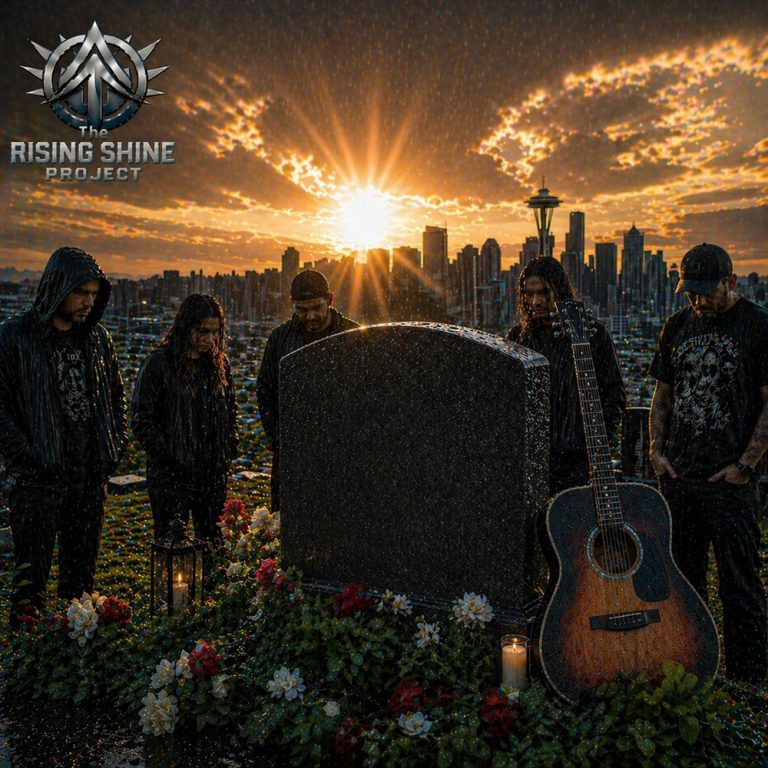
If you’ve experienced loss or found yourself helplessly watching someone struggle with addiction, this song will resonate deeply, serving as a reflection of unspoken pain. The Rising Shine Project‘s “Heals All Wounds” emerges as a quietly powerful elegy that confronts its subject with unwavering honesty. Henry Stoll’s lyrics penetrate the heart: “What’s a promise worth, if it remains unspoken? What good’s a house of dreams, with all the windows broken?”
The single occupies a space within contemporary pop but embraces a sense of restraint: it features a warm acoustic base, minimal embellishments, and delicate AI-assisted textures that enhance the atmosphere without overshadowing the narrative. This production choice ensures that the focus remains on the story being told. Stoll’s vocal delivery prioritizes genuine emotion over perfection, moving from grief to anger and tender exhaustion in a way that feels authentic rather than rehearsed.
Inspired by the songwriter’s real-life tragedy, his adopted son’s death from fentanyl, the song serves as both a tribute and a cautionary tale. While it may not pursue mainstream radio polish, its emotional transparency stands out as its greatest strength. For anyone affected by addiction or loss, this track provides acknowledgment rather than clichés and a space to grapple with complex emotions. The Rising Shine Project’s “Heals All Wounds” is a brave and human expression: raw, compassionate, and profoundly honest in its delicate emotions..



 Of course the track “Still Here” is dear to my heart because its about my dad whom I lost in October of 2024. My dad was in my life all my life. I’ve never known life without my dad so now navigating through life now without him is tough. My dad was in the Army, when I was a kid, every summer he used to go away for summer camp for 2 to 3 weeks and every time he would leave, I would get sick. I guess it was separation anxiety. The only difference is back then I knew he was coming back and now he isn’t. So now I just try to remember all the things he taught and just keep striving to be all I can be. Another track that’s dear to my heart is “Miss Those Days” because it takes me down memory lane of growing up. I grew up in a family orientated rural country neighborhood named “SHILOH”. So growing up my cousins were my closest friends. Some of the things we did were crazy, but I wouldn’t trade those times for nothing in the world. This song captures some of those moments. I’m also really digging the track “Pop My Ishh”. Some might consider this track as a song where I’m boasting and bragging when that’s far from the truth, every lyric on this record is 100% fact. I said all that in the song to basically say, I’m handling my responsibilities as a man from being a husband first and a father second and this is what I plan on doing for the rest of my life. To add a little more context, my life hasn’t always been taking trips to different islands per se, I’ve survived many tough seasons in my life, seasons where I was like “God what is happening here”. But I kept my head up because I knew it don’t rain always, at some point the Sun must shine. So, with that being said, I will forever be thankful. I know where all my blessings come from, God Almighty. Another record I love on this project also is “Strung Out”, the concept where sing and music is the love of my life. I don’t want to go into much detail right now, go listen to this track and let me know what you think. It’s very creative. I guarantee you will love this track.