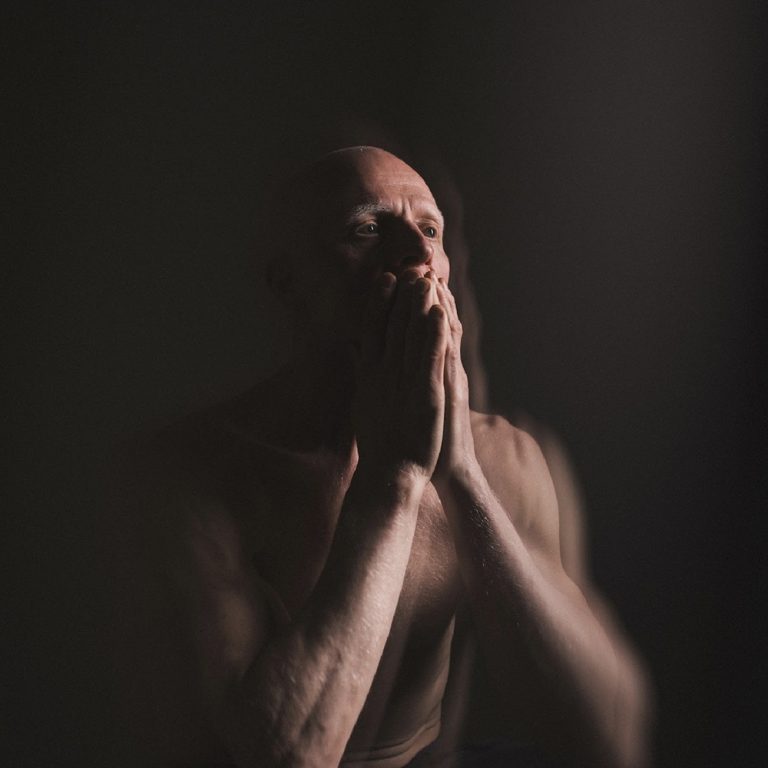
Cinematic and brooding, Night Wolf’s eccentric musical leanings shine once more on his latest single, ‘Death of the Wolf’, featuring the haunting croons of talented vocalist Lois Powell. A duet of forces that coalesce to present a song that’s immediately gripping, thoroughly unforgettable.
Night Wolf is an artist and producer based in Bedford. Accompanied by the Norfolk-based Lois Powell, the pair met at an open mic night and immediately sensed their musical chemistry. On ‘Death of the Wolf’, both Night Wolf and Powell seem to be totally immersed in their comfort zone. The cinematic and orchestral melancholy, standing on the shoulders of a tragic, descending chord structure that’s built on organs and strings, is mixed to perfection by Night Wolf, and is the perfect pairing to Powell’s haunting, forest-witch chants.
About the second release, including the two artists, and the second release on Night Wolf’s newly formed label EscaVolt, Night Wolf states that the song was written during a time of great personal weight, as he was struggling with his mother’s passing away. Having poured even a little of his grief into completing ‘Death of the Wolf’, the song’s stark darkness and honest words do reflect a personal and unshakable sadness. A profound feeling that is captured elegantly by Powell’s understated and porcelain-brittle delivery, adding a tangible sense of vulnerability to the arrangement.
Recorded entirely at Night Wolf’s home studio, with the exception of a piano line that was recorded in a cavernous church, ‘Death of the Wolf’ is an expansion to both Night Wolf’s musical catalog, and production tool kit. A brilliantly done piece of baroque-meets-indie pop that’s thrilling, honest, and exhilarating.
Artillery Saints make it clear that A Flurry Of Furies isn’t interested in easing the listener into anything familiar. The track enters already charged, already alert, like sound caught mid-thought. There’s a sense that something has been set in motion long before you arrive, and the music simply pulls you into its wake.
The production feels deliberately dense, but never cluttered. Electronic layers stack and retract with purpose, creating a kind of controlled pressure rather than outright chaos. Hints of orchestral weight surface in the textures, lending the track a cinematic depth that feels intimate rather than grandiose. Everything is tightly framed; every shift seems measured, as if the song is constantly recalibrating its own tension.
What makes the piece compelling is its refusal to provide easy release. Instead of building toward a single explosive moment, it sustains unease, allowing it to morph and circulate. The atmosphere grows heavy without becoming overwrought, claustrophobic without collapsing in on itself. It’s music that trusts restraint, letting implication do the work that excess often tries to force.
There’s an emotional intelligence here that doesn’t announce itself. The track doesn’t preach or dramatize; it observes. It captures the feeling of existing inside overlapping crises, where urgency becomes background noise, and clarity arrives only in fragments. The result is unsettling, but also strangely absorbing; a soundscape that invites attention rather than demands it.
Artillery Saints leave behind more than just a strong impression. A Flurry Of Furies lingers like an afterimage, carrying its tension with it. It’s a reminder that some of the most resonant music doesn’t shout to be heard; it embeds itself, quietly and persistently, in the listener’s memory..
From its opening moments, Franxie’s Nobody’s Home makes a quiet promise: nothing here will be overstated. The song enters gently, carried by acoustic guitar and a vocal presence that feels less performed than revealed. It doesn’t announce itself: it settles in, drawing the listener toward an interior space where emotions aren’t explained so much as allowed to exist.
The production favors clarity over ornament. Guitar lines arrive unadorned, almost conversational, leaving pockets of air that feel intentional rather than unfinished. This sparseness becomes part of the song’s meaning; it mirrors the emotional distance at its center, where overwhelm leads not to collapse, but to retreat. Silence, here, isn’t absence; it’s a boundary.
Franxie’s vocal delivery is central to that effect. Calm, steady, and slightly detached, her voice moves through the song with an assured restraint that resists dramatization. When subtle layers appear later on, they don’t swell for impact; they hover, like overlapping thoughts that never quite resolve. The result is intimate without being invasive, emotionally precise without demanding interpretation.
Lyrically, the song refuses tidy narratives. There’s no breakup arc, no moment of catharsis. Instead, Nobody’s Home documents the state of functioning while internally offline; of lights left on for the world while something essential steps away. It treats dissociation not as a flaw to be fixed, but as a coping response named plainly and without judgment.
As a continuation of her self-produced work, this release reveals another dimension of Franxie’s songwriting; one that values stillness, patience, and emotional honesty over confrontation. In both sound and sentiment, Nobody’s Home feels like a deliberate pause: a song that doesn’t chase resolution, yet resonates deeply. And by the time it fades, Franxie’sNobody’s Home leaves its mark not through volume, but through the quiet confidence of truth spoken softly..
The good stuff doesn’t announce itself—it just shows up, uninvited, and changes the temperature of the room. “Boy,” the new single from Baldy Crawlers, does exactly that. It doesn’t posture, doesn’t explain, doesn’t hustle for your attention. It simply exists, and in doing so, quietly rearranges the furniture of your thoughts.
Martin Maudal writes like someone who trusts the song more than the plan. You hear it immediately in the opening lines: “Your back is a road, boy / A road for your shadow.” That’s not a lyric designed for quotation—it’s a line meant to be lived with. Roads imply travel, shadows imply weight, and suddenly you’re not listening anymore, you’re remembering. Someone. Something. Maybe yourself.
What makes “Boy” compelling isn’t mystery for mystery’s sake—it’s the sense that the song knows more than it’s willing to say. The road is “paved with the mem’ries of the world’s heartbreak and loss,” and that’s the whole human condition right there, delivered without melodrama. No big gestures. Just accumulation. Years add up. So do regrets. So does love.
Musically, the track moves like an after-hours conversation with the lights turned low. Acoustic guitar and drums sit comfortably in the pocket, never pushing, never showing off. The Hammond B3 sighs in the background like it’s been here before and doesn’t need to prove it. Electric guitar textures drift in and out, suggesting atmosphere rather than direction. Everything feels intentional, but nothing feels controlled.
Then there’s the refrain: “I’ve never seen his face / I’ve only seen what takes his place.” That line lands differently every time it comes around. Who is it about? The song refuses to say, and that refusal is its greatest strength. I always understood that the best art leaves room for the listener to finish the sentence.
The bridge—“When all the clockwork in the world has run down…”—feels like the closest thing to a revelation, though even that comes wrapped in restraint. Time winds us down, sure, but it also gives us leverage. Power doesn’t arrive fully formed; it’s earned through endurance. The song understands that wisdom doesn’t shout—it shows up quietly and waits to be noticed.
By the time the vocalist sings, “Your eyes are the light… the light to find my way by,” the song has shifted from observation to connection. Not resolution—connection. And that distinction matters. “Boy” doesn’t close a circle. It leaves the road open.
This is music for listeners who don’t need answers spelled out, who understand that meaning isn’t always fixed—it moves, like shadows on a long road. Baldy Crawlers aren’t chasing relevance here. They’re documenting something truer: the sound of a song trusting itself enough to stay unresolved.
Bongo Boy Records is delighted to announce the release of “First Snowfall Memory,” Monique Grimme’s enchanting first holiday single of the season. This reflective Americana-inspired track weaves a tapestry of cherished moments, family traditions, and the serene magic of the year’s inaugural snowfall, inviting listeners to rediscover the enduring warmth of memories amid winter’s hush. Available now on all major streaming platforms including Spotify, YouTube Music, and Amazon Music, the single arrives just in time for holiday playlists, complete with an official music video premiering nationwide on Bongo Boy TV.
“First Snowfall Memory” unfolds like a gentle winter’s dream, blending soft melodies with soulful delivery to evoke nostalgia, love, and hope. Through vivid lyrical imagery—such as “a million small flakes falling down to the ground… the same way a memory comes in a rush”—Grimme captures the quiet beauty of seasonal transitions and the unbreakable bond of shared experiences. The song’s themes resonate deeply, reminding us that even as time marches on, the glow of our most treasured recollections remains as fresh and unyielding as new-fallen snow. As a holiday anthem, it stands out for its sincerity, offering a poignant counterpoint to the season’s more boisterous celebrations.
“This song came from a place of deep reflection and gratitude,” shares Grimme. “Each verse is a window into moments that have shaped my life and heart. It’s about how even as time moves forward, the warmth of our memories never fades—like that first gentle snowfall.”
Produced, composed, arranged, and written entirely by Grimme, the single was mastered at LANDR and Sapphire Star Studios in Frelinghuysen, New Jersey, ensuring a polished yet intimate sound that highlights her storytelling prowess. The accompanying music video, directed and produced at Sapphire Star Studios, enhances the track’s evocative imagery with visually stunning scenes of winter wonder and emotional depth. Viewers can catch the premiere on Bongo Boy TV, which airs on over 72 terrestrial and cable channels across the U.S., as well as on Roku, Apple TV, and Vimeo.
“First Snowfall Memory” is also featured on the upcoming holiday compilation Let’s Have a Rockin’ Christmas, Volume Ten, part of Bongo Boy Records’ beloved Holiday Music Tradition Series.
Monique Grimme, an accomplished songwriter, producer, and creative visionary, draws from her family history, personal experiences, and passion for poetry to craft music that fosters universal connections. As co-founder of Bongo Boy Records and Bongo Boy TV— the latter an independent music-video show reminiscent of classic MTV—Grimme continues to champion independent artists through innovative promotions and global distribution.
Bongo Boy Records is thrilled to announce the release of “I Can’t Miss You Anymore,” a poignant new country single from rising stars Willow Layne and E.G. Holmes. This soul-stirring duet, their second collaboration following the acclaimed “Lovely Love” (released July 15, 2025), plunges listeners into the relentless cycle of grief after a love lost—where the quiet of night offers fleeting solace, but the harsh light of day demands a facade of strength. Available now on all major streaming platforms, the track is a testament to the enduring power of country music to heal through honest storytelling.
At its heart, “I Can’t Miss You Anymore” explores the emotional tug-of-war between longing and survival. The song’s evocative refrain—”I can’t miss you anymore”—serves as both a desperate plea to the universe and a defiant vow to move forward, resonating with anyone who’s navigated the blur of days and nights in the wake of heartbreak. With Willow Layne’s emotive vocals intertwining seamlessly with E.G. Holmes’ soulful delivery, the track builds from tender verses to a soaring chorus that tugs at the soul, blending classic country twang with contemporary vulnerability.
Songwriter and arranger Lisa Benedetto penned the lyrics from a deeply personal place, drawing on the universal weight of loss. “This song came from that place where heartbreak feels endless, and I wanted to capture how nights and days blur together when you’re just trying to make it through,” said Benedetto. “It’s a heartbreaking country ballad about enduring the cycle of loss—where nights offer temporary relief, but daylight forces you to pretend. The refrain ‘I can’t miss you anymore’ is both a plea and a declaration of resilience. This is for anyone who knows the weight of missing someone so deeply that it presses on you every day, yet somehow you keep going without knowing how. Collaborating with E.G. Holmes brought out the depth and soul of this song in a way I’ll always treasure.”
Produced with meticulous care, the single was mixed and mastered by industry veteran Don Sternecker at Mix-O-Lydian Recording Studio, featuring contributions from Countryside Studios. Willow Layne and E.G. Holmes’ chemistry shines through, elevating Benedetto’s composition into a timeless piece that honors country’s tradition of raw, relatable narratives.
Fans can stream “I Can’t Miss You Anymore” today on Spotify, Apple Music, and beyond. For more on Willow Layne and E.G. Holmes, visit their social channels or Bongo Boy Records’ site.
For over ten years, Mia Moravis has been a recording artist with Bongo Boy Records, contributing to various albums by interpreting songs written by Gar Francis, showcasing her own compositions, and now collaborating with The New Bardots. She is also an artist with Gotham Records UK.
Mia’s performance career spans the United States, the United Kingdom, and Europe. Throughout her journey, she has been part of bands representing genres such as heavy metal, pop, all-female rock, and Celtic music. Her versatility extends to appearances in numerous opera and musical theater productions, as well as featured roles in Off-Broadway performances of staged readings of new musicals.
On Broadway, Mia earned a Tony® Award nomination as a producer for Alanis Morissette’s Jagged Little Pill. Mia’s producing credits also include SMASH, The Lightning Thief: The Percy Jackson Musical, and Anastasia.
“You also have to appreciate the blend of reverence and reverie found in the way that Mia Moravis and The New Bardots play it, retaining the ’60s-infused, perky, day-glo energy… the spirit of the original is still there; it still sounds like music made on the eve of the Summer of Love… an echo of the past wrapped in a sound that is still infectious to the modern pop fan.”
“The New Bardots might come from a more rock and roll background, but like all musicians worth their salt… can turn their hand to any style and sound, and here the… groove is perfect.”
“And then of course you have Mia Moravis’ voice, that neat blend of poppiness and poise, ranging from powerful choruses to more intimate verses… And if you haven’t fallen for her voice by the time the song wraps up, that girlish giggle at the end will certainly get you.”
“This is how you cover a song—part re-invention, part tribute, a new take but never at the expense of the original. There was only one Petula Clark… and by covering her songs… you understand precisely what she was all about. And that is what is going on here.” –SOURCE
In 2019, Wayne Olivieri reunited once again with Gar Francis (The Doughboy, Mark Lindsay, Plainfield Slim), as well as Olivier’s Twist bassist Dan Skye, who had developed an extremely successful career as an engineer and producer at his own Roosevelt-based Skylab Recording Studio, working with the likes of Blues Traveler and Spin Doctors.
Together, they formed the recording project The NEW Bardots, which also features keyboardist John Croot Jr. and drummer Johnnie Rago, Wayne’s band mates in the cover band Little Jimmy And The Starlites. For the last years the band has been successfully busy with releasing singles, albums and Eps on Bongo Boy Records.
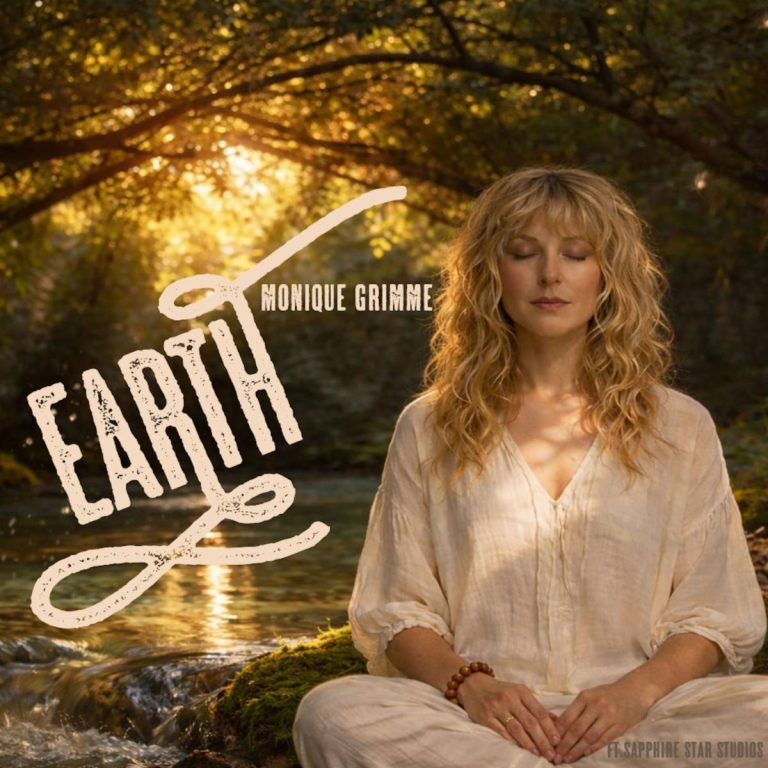
Bongo Boy Records proudly presents the new single “Staring Into Water” by accomplished songwriter, producer, and creative visionary Monique Grimme. Available now on all major streaming platforms, this emotionally resonant pop ballad draws deeply from Grimme’s own life experiences, weaving a narrative of vulnerability, resilience, and profound personal growth.
“Staring Into Water” is rooted in pivotal memories that shaped Grimme’s identity, tracing her journey through moments of challenge and self-doubt toward emergence as a confident, self-assured woman. The lyrics reflect on a transformative life event that instilled enduring strength, while the bridge pays tribute to her late stepfather, Ton Van Der Heyden, whose near-fatal shipwreck in the icy North Sea waters granted him—and by extension, Grimme and her mother—a second chance at life. This shared theme of adversity leading to renewal underscores the song’s message of hope, love, and the bonds that sustain us through hardship.
Vocals and songwriting are by Monique Grimme, who also served as composer, arranger, and producer. The track was mixed and mastered by Sapphire Star Studios and Bongo Boy Records.
Grimme’s creative process incorporated innovative tools including ChatGPT, Suno, Arcanalabs, Glam, Vimeo, and YouTube Shorts, resulting in a heartfelt, contemporary sound that honors authentic storytelling. An official music video and full lyrics are available on Vimeo.
In her own words: “This new single is deeply rooted in my own memories, reflecting on significant events from my past that profoundly shaped who I am today… I hope that by sharing these memories and stories through my music, listeners will find comfort, inspiration, and encouragement in their own journeys.”
Monique Grimme is renowned for her heartfelt compositions and dedication to independent music through Bongo Boy Records and Bongo Boy TV—a syndicated music-video television show featuring global independent artists, airing on terrestrial, cable, Roku, Apple TV, Vimeo, and more. Her work emphasizes emotion, universal connection, and empowerment.
For fans of introspective pop ballads that blend personal narrative with uplifting themes of perseverance.
Listen to “Staring Into Water” now on Spotify and other platforms.
Belfast-based metal crossover outfit Survivalist return with their long-awaited new album, ‘A Place For Those Who Suffer, Alone’, due for release 30th January via Seek & Strike Records. Marking the band’s first full-length release in almost two years, ‘A Place For Those Who Suffer, Alone’ captures Survivalist operating at full force—sharper, heavier, and more deliberate in both sound and intent. It’s an emotive, uncompromising body of work that expands their identity while reinforcing their position as one of Ireland’s most formidable heavy acts.
“Survivalist deliver riffs with purpose, breakdowns with impact, and songs built to translate violently in a live setting.” — Kerrang! Radio
“A band unafraid to push intensity and atmosphere in equal measure — this is modern metal done right.” — New Noise Magazine
Survivalist are a four-piece metal band from Belfast, Ireland, featuring Gavin Sharp (vocals), Nick Butcher (guitars), Lee Shaw (bass), and Rhys Fraser (drums). Shaped by personal struggle, lived experience, and an unfiltered response to the world around them, the band have forged a sound they define as “Groovecore”—a volatile fusion of melody, crushing riffs, groove-driven momentum, and climactic, unrelenting breakdowns, all delivered with raw emotional weight. It’s a style that feels current without chasing trends—confident, grounded, and heavy by design.
Their debut album, ‘VII’ (2021), was widely praised for its intensity, relatable lyricism, and modern-yet-familiar sound, surpassing 100,000 streams and earning critical acclaim across the heavy music press. Highlights included 10/10 from Rock ‘N’ Load Magazine, 8/10 from Powerplay, and 9/10 from Evermetal, with multiple outlets referring to the record as a “masterpiece”.
Since then, Survivalist have gone from strength to strength on the live circuit, sharing stages with Thy Art Is Murder, Chelsea Grin, Polaris, Suffocation, Atreyu, Kublai Khan, Party Cannon, Heriot, and Distant. Their growing profile has also seen them appear on Channel 5 during prime-time television, where they were interviewed by Gaby Roslin and Ortis Deley—a rare crossover moment for a band rooted in extreme music.
‘A Place For Those Who Suffer, Alone’ is a record rooted in isolation, internal conflict, and the pressure of modern existence. Across its runtime, the album explores emotional endurance and psychological fracture, pairing crushing low-end heft with moments of stark melody and tension. The focus track—named after the album itself—‘A Place For Those Who Suffer, Alone’ stands as the project’s defining statement.
To coincide with the album launch, Survivalist will release an official music video for the title track; The video amplifies the track’s intense energy and dark emotional themes, combining striking visuals, cinematic lighting, and visceral performance shots that mirror the song’s groove-driven aggression and climactic breakdowns. Designed to capture both the weight of the music and the personal struggles behind it, the video provides fans with a compelling visual entry point into the world of Survivalist and the album’s thematic core.
Photo Credit: Gareth Doherty
The title track captures Survivalist at their most confrontational and disciplined, leaning into dense, metal-focused momentum while pairing muscular low-end weight with sharply cut rhythmic turns and a chorus built for maximum impact. A calculated tension runs throughout—each section escalating with purpose rather than excess—before collapsing into breakdowns that feel engineered, not ornamental. Interrogating power, ego, and self-appointed authority, this piece frames control as both a personal and systemic weapon. It’s a song that thrives on restraint as much as aggression, allowing space for the groove to breathe before striking with force.
Alongside the title track, the album also features the previously released singles ‘Deathbed’ (featuring Alex Koehler — ex-Chelsea Grin / Ameonna), ‘Radio Bleed’, and ‘Failure Of Being’ (featuring producer Josh Sid Robinson), with an additional guest appearance from Kid Bookie. Together, these tracks distil the album’s core themes into direct, unflinching statements—designed to translate just as heavily in a live setting as they do on record.
These releases have received support from Metal Hammer, Kerrang! Radio, Devolution Magazine, New Noise Magazine, and more, collectively surpassing 100,000 streams. This momentum has led to a new booking partnership with Echelon Artists, helping propel Survivalist into their next phase.
With ‘A Place For Those Who Suffer, Alone’, Survivalist stand poised to deliver their most focused, ambitious, and fully realised work to date—and to bring its weight, groove, and intensity to the stage throughout 2026.
“A masterclass in modern heavy music — intense, emotionally charged, and executed with absolute precision.” — Rock ‘N’ Load Magazine (10/10)
“Survivalist balance brutality and melody with confidence, delivering groove-led metal that feels both current and commanding.” — Powerplay Magazine (8/10)
“Crushing, introspective, and unapologetically heavy — a record that proves Survivalist are a band operating far beyond the underground.” — Evermetal (9/10)
“Groove-driven aggression paired with real emotional weight — Survivalist understand exactly how to make heaviness hit harder.” — Devolution Magazine
QUOTE ABOUT THE ALBUM
“We’ve been working on this album for around a year and a half, starting the writing process in 2024 and properly taking it into the studio midway through last year. A lot of the material was rewritten in 2025 as we refined what we wanted the record to be. Artistically, it was important that the album represented all of our influences as we’re not tied to one genre, and that variety comes through across the tracks. While the album feels cohesive as a full body of work, each song still stands on its own. This record taught us a lot about writing, using studio time effectively, and working together as a four-piece, ultimately helping us lock in our sound. We wrapped everything up around August or September and immediately went back into the studio, with several new tracks already finished for an EP planned for 2026.”
QUOTE ABOUT LEAD TRACK
“We chose the title track ‘A Place For Those Who Suffer, Alone’ as the lead single because it’s the most honest snapshot of who we are right now and what this record represents. The album is heavy, dark, and aggressive, but it’s also meant to be a refuge, a place you can turn to no matter what headspace you’re in, whether you need to vent anger, sit with sadness, or just feel understood. This track captures the anguish, stress, and mental weight behind the entire writing process, while setting the tone for the variety across the record. For the video, we stripped things back to a raw playthrough, focusing on isolation and authenticity, showing us exactly as we are without a storyline or distractions. Between the environment, the sound design, and the intensity of the performance, it felt like the strongest and most direct way to introduce this album.”
Stephen Moore’s Post Death Soundtrack is a unique presence in contemporary heavy music, blending various genres and personal themes. The upcoming release of GRIST on January 6, 2026, continues this exploration with 30 tracks, merging doom, grunge, industrial sounds, and dreamlike lyrics. Influenced by artists like Swans and PJ Harvey, GRIST addresses themes of trauma, awakening, and survival, inspired by Ram Dass’s philosophy. Moore discusses the evolution of the project, the significance of expansive releases in today’s AI-driven music scene, and future projects.
Your musical journey with Post Death Soundtrack spans nearly two decades, evolving from collaborative industrial and psychedelic roots to a solo-driven project. How has this transition influenced the creative process and sonic identity evident in GRIST?
The transition to going solo was initially driven by my realization that I had more time for Post Death Soundtrack than anyone else, and things were lingering. Once I started self-producing, I created “IN ALL MY NIGHTMARES I AM ALONE” and it was revelatory for me. I’ve always done whatever I want artistically because I feel that’s the only way art has a purpose. But this project ended up really exploring what that meant in an intuitive way, a chaotic way. I love saying what I want and making calls as to when to add noise, sirens or uncomfortable sounds.
GRIST is a continuation of that approach. However, where IAMNIIA had a very scrapbook feel, I wanted GRIST to be more consistent, more industrial and very unnerving. In fact, I came up with the album cover months before I had even completed much of the music at all. My goal was to make the album sound how the cover looks. The beats are very heavy and often influenced by gangster rap. The music is a mixture of industrial/noise, metal, gothic rock and electronic music.
“GRIST” serves as the second installment in your new series of 30-song double albums, following IN ALL MY NIGHTMARES I AM ALONE. What motivated this shift toward such expansive, ambitious releases, and how do you approach structuring and sequencing 30 tracks to maintain cohesion and impact?
It was unintentional the first time. I was going through heavy depression and stress, addiction and mourning the loss of an animal. I poured myself into recording and compiling for IAMNIIA, sometimes staying awake for days and recording all night. I believe I initially thought of doing something that was 7 or 8 songs and ended up going and going until it reached 30. Granted, some of the songs are merely interludes to keep things flowing and add intrigue to the themes.
GRIST, funnily enough, I intended for it to be 10-15 tracks. As I got on a creative role and realized these songs were darker and heavier than its predecessor, I continued and decided it would be 30 again. Same thing with this album – I have continued to utilize interludes not as filler but to expand on the manic meaning of the release.
For cohesion and impact, I’m a music obsessive and have pretty much studied track listing and albums my whole life, so I just kind of meditate on it and know where to put each piece for flow. I order it how I’d want to listen.
Credit: Ryan Donnelly
The album draws inspiration from Ram Dass’s concept of life experiences as “grist for the mill of awakening,” encompassing themes of philosophy, mental illness, loss, addiction, and spirituality. Could you elaborate on how these elements manifest across specific tracks, such as the rallying imagery in “OMEN” or the personal reflections in “CUB”?
Ram Dass has always inspired me, and in fact I was able to visit him for 5 days in Hawaii. Grist for the mill is such a brutal, yet beautiful quote. I thought shortening this to GRIST, and showing pieces of my experience these past few years, it’s horrifying but beautiful, too. What I’ve gone through is scary. OMEN is a personal rallying cry. It’s a personal, original mantra and an invitation to fearlessness in the face of being scared or being threatened. CUB is an imaginary hunt or revenge tale dedicated to my deceased black cat Bonzai, and it is one of my ways of bringing his spirit with me. It is also intended as a rallying cry for cats and people too!
“GRIST” incorporates covers from artists like PJ Harvey (“Catherine”), The Beatles (“Helter Skelter”), and The Doors (“The End”). What drew you to these particular songs, and how do they integrate into the album’s overarching narrative of survival, chaos, and awakening?
PJ Harvey is one of my favorite artists – period. “Catherine” has the feeling of deep mourning, and also revenge. It’s so dark lyrically that it is atypical in every way. It’s almost shocking. But you can tell, Polly Jean is hurting, and she wants her get back. That is one of the themes of this album, strange to say. It’s an ‘enough is enough’ mentality, and this is where ‘OH NO!’ and ‘BEAR IS WAKING’ come from. It’s the energy of ‘don’t push me as there’s no more ledge’.
The Beatles are my favorite band alongside Nirvana. I wanted to completely subvert ‘Helter Skelter’ into a vulnerable but menacing version as if it was the end of the world and the bombs were flying.
The Doors ‘The End’ has always been one of my favorite songs, and it’s iconic for how much it embraces chaos. Walking through a Roman wilderness of pain where all the children are insane….that’s a bit like modern life, so reality has caught up with Jim Morrison.
In an era increasingly shaped by artificial intelligence in music production and distribution, how do you envision AI affecting the future of the music industry—particularly for independent, genre-blending artists like yourself who prioritize raw, human-driven expression?
We’re early into the AI stage, so I think more companies will take the Bandcamp route and ban it. To me it’s clear. I have nothing against AI as a tool. Sampling has been used in masterful art for a very long time now. I approached this album with both real drummer samples and electronic samples, noise samples, sound effects etc. But its my voice, my guitar, my expression and my design. The rest is largely impacts and explosions for effect.
I feel that if someone just types a prompt ‘sunny feeling, bright synth, trip hop beat and lyrics about a day at the beach’ and AI pops out a full song, that’s not creating art. That is having some fun. The artist has to be in it.
With streaming platforms favoring shorter attention spans and algorithmic promotion, are you concerned that listeners might overlook or undervalue a 30-track album in such a rapid era, or do you see this format as a deliberate challenge to contemporary consumption habits?
Yes. I figure, in a world where 90,000 releases or so come out weekly, THIS is something unique. And nobody is doing it. And to those who think it might be too long, treat it like a book! Put it down. Pick it up. I’m a big Lord of the Rings fan and each film is 4 hours. Nobody complains. People want them to be longer. Also, releasing double albums helps me build the right audience who are fascinated by this work and want to support it.
The press materials describe GRIST as a “pure offering” to your dedicated supporters—referred to as “baby bees,” “cubs,” “bears,” and “hyenas.” How has the relationship with your audience evolved, and in what ways does this community inform your ongoing work?
I have often lived in quite a bit of isolation and depression, so I write from this perspective. I find it liberating to do so. In doing this, I’ve started to rally energetically in the music in hopes it will spark some inspiration in others who have felt the same way. Others going through mourning can listen to CUB and feel something incredibly deep, possibly cry or stand up in some way. Some people might listen to OMEN or I SWEAR and feel vindicated, feel like their power is back and they won’t accept anything less. The growing community is something I appreciate and find very powerful. I always write from the heart, but I certainly want the community to love it each time.
Your influences range from Swans and Skinny Puppy to Nick Cave, PJ Harvey, and Tom Waits, blending doom, industrial, gothic, and avant-garde elements. How did these diverse touchstones converge to shape the beat-heavy, noise-driven yet emotionally resonant sound of GRIST?
They all contribute, and my influences seem to go together pretty seamlessly. The benefit of having many influences is it’s a gumbo, and you filter all of them into your own unique sound. Bands who only listen to Pantera sound like Pantera. Have a wide palette, and you’ll sound pretty wild.
You are currently finalizing HEL’S MOUTH with your collaborative project HE IS ME alongside Casey Braunger. How does this duo’s dynamic—described as featuring dynamic shifts, sludgy metal, industrial grooves, and ambient pieces—differ from your solo work on Post Death Soundtrack, and what can listeners expect from its release?
It has it’s similarities in mood, but HE IS ME is overall more metal-based and has different atmospheres and tones thanks to the music and production of Casey Braunger. He makes all the music and I do the vocals/lyrics, so there is that difference as well to color the sound.
Looking ahead beyond HEL’S MOUTH, what are your upcoming plans for Post Death Soundtrack, whether in terms of new material, live performances, or further exploration of the double-album series? Do you anticipate any shifts in direction or format?
Well, the 30-song release thing…..it’s intended as a trilogy! Or more haha. We will see. I might just keep doing them. Maybe I’ll do 8 or more. Let’s start with 3 though. I already have the album title for the 3rd one, but will reveal that at a later date. I’m excited to heavily promote GRIST this year and start working on the next album by Summer.