Home Blog Page 46

I Promise I’ll Wait For You by TaniA Kyllikki

0

ECHOES OF A PROMISE

TaniA Kyllikki’s latest single, I Promise I’ll Wait For You, feels like a love letter written across time and distance. From the very first piano note, the song creates a world of quiet devotion, where every breath, pause, and lyric resonates with a sincerity that is both intimate and cinematic. Strings swell and ebb around her voice, giving the impression of vast skies and endless roads, as if each note carries the weight of miles traversed in longing.

TaniA’s five-octave vocal range is on full display here, moving seamlessly from tender vulnerability to soaring, emotive highs. Her voice doesn’t merely sing; it testifies. There is a raw honesty in every phrase, a truth that is both piercing and comforting, reflecting the endurance, faith, and patience required to sustain a love separated by circumstance.

The production, co-crafted with her husband and musical partner Rynellton, complements the emotional arc without ever overshadowing it. Subtle harmonies, gentle percussion, and cinematic flourishes frame the storytelling, allowing the listener to feel the quiet tension of longing, the hope that persists, and the resilience of a heart committed to waiting.

I Promise I’ll Wait For You doesn’t merely stand out for the technical command or the lush soundscape, but the humanity at its core. TaniA draws from lived experience: her survival, her trials, her victories, and transforms them into a song that feels universal. This is a love song, yes, but also a testament to endurance, to holding on when every mile and moment tests your devotion.

In a musical landscape often ruled by fleeting trends and glossy productions, TaniA Kyllikki reminds us that true artistry lies in honesty, vulnerability, and timeless emotional resonance. I Promise I’ll Wait For You is more than a single; it is a sanctuary, a pledge, and a quiet celebration of the enduring power of love..

Conqueror by G-Sinnz

0

CONQUEROR IN MOTION!

There’s no mistaking the intent behind G-Sinnz’s latest release, “Conqueror” doesn’t just play, it moves. It’s an instrumental that walks with purpose, built on a heartbeat of drum & bass velocity and dancehall defiance. Released through Caricom Music, the track feels like a statement of presence, a declaration rendered in rhythm rather than words.

Producer Quimiobb sets the pulse in motion with sharp, syncopated breaks and a low-end that hits like muscle memory. Over that, G-Sinnz, acting as both artist and executive producer, crafts a sense of controlled urgency, a tension between precision and chaos that keeps the body anticipating the next drop.

“Conqueror” doesn’t rely on hooks or lyrics to define its strength. Instead, it channels confidence through motion, through the way the beat occupies space and time. There’s a distinct Caribbean undertone running beneath its metallic edges, a reminder of roots carried forward into a new, hybrid terrain where the rave meets the street.

It’s the kind of track that transforms a room without announcement: one that DJs reach for when they need to reset the pulse. In its wordless insistence, “Conqueror” becomes a portrait of momentum; of someone who enters, shifts the energy, and leaves the air charged.

If movement had a sound, this would indeed be its stride!

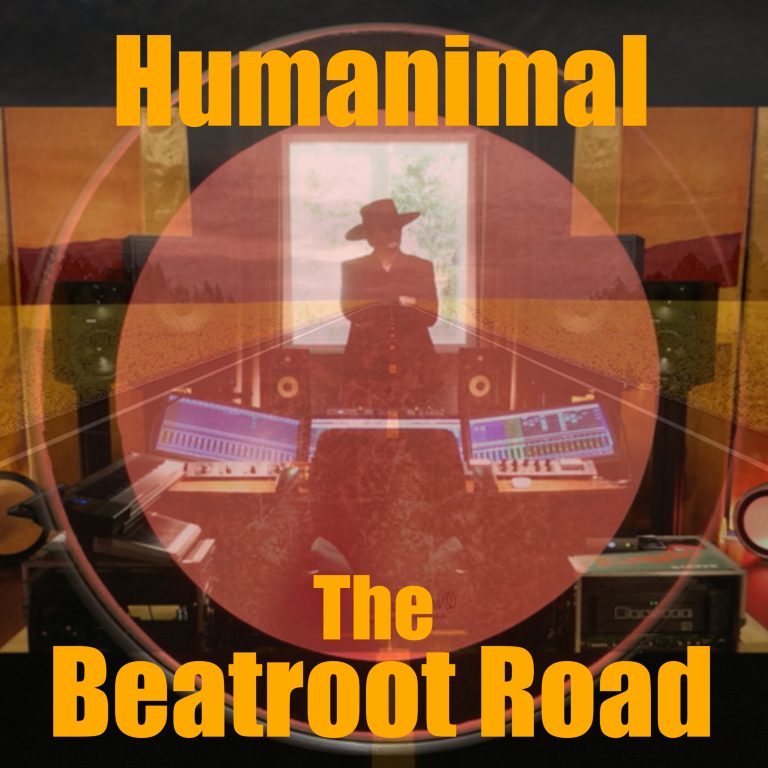
THE BEATROOT ROAD DEFIES AI AGE WITH “HUMANIMAL”

0

The Beatroot Road continue their mission of fearless artistic creativity, which unites artists from around the globe spanning nearly every subgenre, while somehow tying it into a singular, powerful theme on the expansive new album “Humanimal”. Released on October 25th, this release is connecting, meaningful, visceral and exciting. This is truly a genre-defying journey, reminiscent in ways of other bold artists like Massive Attack, Gorillaz, Bjork, Ian Dury & The Blockheads and Horace X create with a lack of fear.

The Big Takeover Magazine describes this collaborative project as “A genre-defying journey that’s as emotionally grounded as it is sonically ambitious. For a project conceived in isolation, The Beatroot Road has emerged as a global collaboration rooted in human connection.”

From the band: “Humanimal” is a collection of 10 heartfelt songs, each taking a sideways look at a different part of being human. Seems like enough people are arguing about who is wrong and why just now, so this album is a time out that doesn’t  take sides – trying to find some sympathy for everyone who feels joy and pain, in songs about human experiences.  It’s an international internet collaboration of “post-genre” music, with artists from Austria, Jamaica, Canada, China,  Kenya, Korea, Jamaica, Moldova, Nigeria, Punjabi, Türkiye, UK, USA, and Venezuela. 

This isn’t ‘world’ music featuring specific cultural traditions though – we’re from a world where most people have grown up with influences from lots of different cultures – it’s for those of us that don’t comfortably fit behind any of the current social media fuelled polarizing picket lines.

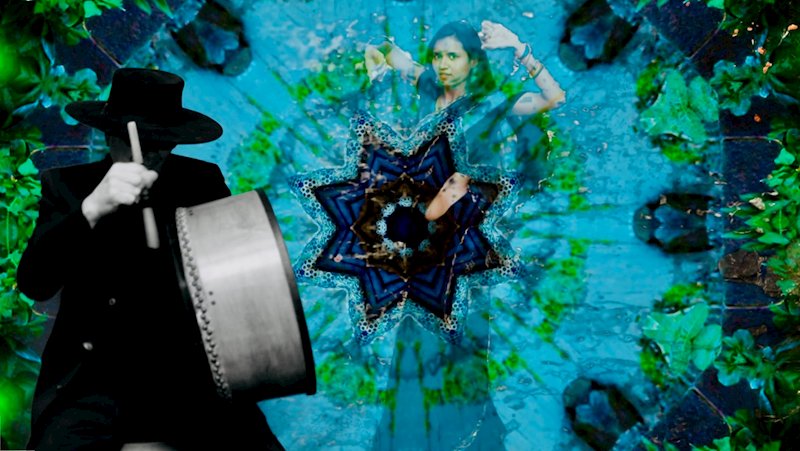
The tracks themselves are experimental in mismatching instruments and genres, and each has levels to the music and lyrics, but all have accessible dance music at the heart if you don’t want to dig deeper than that. Although they’re all different, the works are held together with the same left-field rhythm section of bodhrán, rhythm fiddle, bass and organ.

All of this music is performed by humans on musical instruments and sung (without auto-tune) in 13 different countries, then edited and processed by Mark at Laboratory X Studio near North Vancouver in BC to make the finished work.

The title track “Humanimal” is a potential review that humans might get from an internet AI – all the things we can do that it will never be able to – good, bad and ugly. Seems there is room for improvement. The other songs take indirect views on different human conditions including love, hate, wisdom and culture, with the album ending on “Payday” – a track about the meaning of life. In the middle is a passionate plea to young, creative artists to fight harder against the rising homogenized slop to keep originality alive in music: ‘cos if you don’t there might be no one left for you to dance like this with’….”

In a world where we continue to be fooled by the advance AI while ignoring it’s hype and limitations, here emerges a deeply human work that emphasizes what we have done since the very beginning…telling stories and inspiring. Humanimal dances, fights, claws, motivates and peacefully bows to all to stand up for our creativity, beingness and the joy, pain and struggle of humanity.

Press via IMP Inc.

Black Clouds by Bastien Pons

0

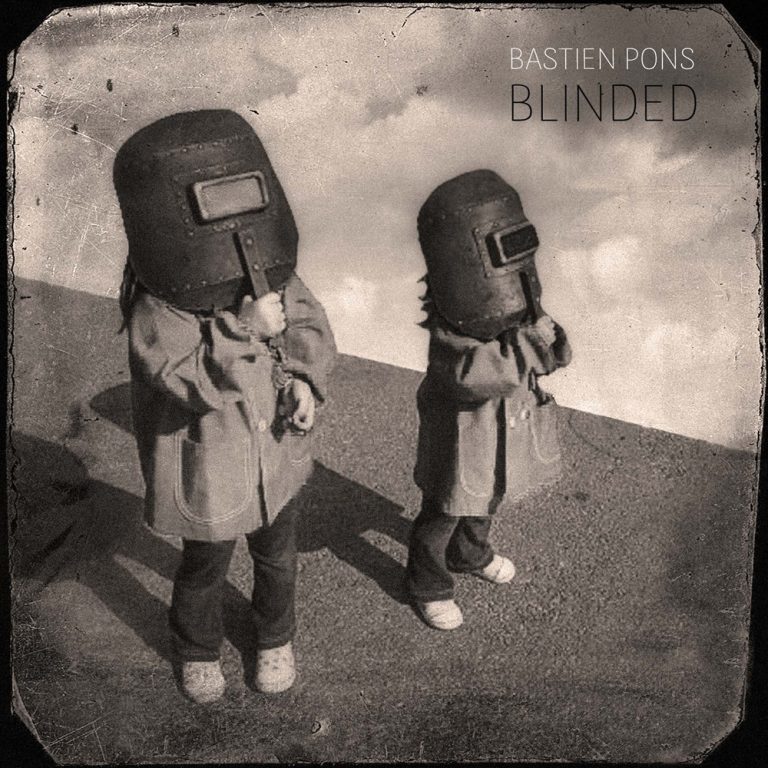
There’s a particular kind of sound that doesn’t ask for your attention so much as it pulls you under. French sound artist Bastien Pons works in that territory, crafting sonic environments that sit somewhere between ambient decay and industrial meditation. Trained in musique concrète under Bernard Fort, Bastien Pons approaches composition the way he approaches his black-and-white photography: texture first, emotion through contrast, and silence as a presence rather than an absence. His debut album, Blinded, is a seven-track exploration of perception and memory, and “Black Clouds” featuring Frank Zozky stands as one of its most compelling entries.

It’s a twisted form of meditation music, it’s an insistent, relentless drone of darkness enveloping your mind as the vocals echo over and over that dark clouds follow you everywhere. Just as with meditation music, it works best if you completely surrender to it and allow it to consume and color your thoughts. And with such impeccable sound design, that becomes easy. The grimy industrial sounds weaving throughout really drive that unease and the sense of helplessness; the dark clouds are overhead, and the machine is inescapable, dread is inevitable. The visuals of the music video are directed by Lydia Fauconnet, and they add a completely different layer of cinematic immersion. Guiding your mind through the vast labyrinth of dread and confusion, the music creates.

“Black Clouds” is art that comforts the disturbed. It’s not for everyone, and that’s exactly the point. If you’re willing to slow down and meet this music where it lives, there’s something genuinely affecting here. Sometimes the most powerful thing art can do is create a room for you to sit with your own thoughts, even when those thoughts are uncomfortable. Bastien Pons has built that room, and it’s worth entering.

Jody by ReeToxa

0

ReeToxA‘s “Jody” is a ballad that shows the band can pull off tender just as well as they do rock. Released October 1st, 2025, from their debut album “Pines Salad,” the track has a history dating back to 2001, when Jason McKee first wrote it.

The song started as a love song for Jody, but it never felt right in that form. When the relationship ended, McKee reworked it into what it is now: a breakup song about love, friendship, and looking back on what was.

The guitar work here is warm and straightforward, setting the mood without trying to steal the show. McKee’s vocals carry the weight of the narrative, and his delivery is relaxed and honest. He’s not pushing for drama or overselling the emotion. It’s just a guy telling you what happened and how he feels about it now.

Kit Riley on bass and Peter Marin on drums keep things grounded. The rhythm section here does exactly what ReeToxA always does well musically: support the song without getting in the way of the story.

What makes “Jody” work is its lack of bitterness. There’s no anger here, no over-the-top heartbreak. It’s just a reflection, the kind that comes when enough time has passed and you can see things for what they were. That’s the maturity of the songwriting we know and love from ReeToxA, and it’s why McKee held onto this one for so long.

Still Sick by Thain

0

“Still Sick” is the upcoming single by Wichita hip-hop artist Thain. It’s set to drop on October 31st, 2025, and it features producer Steven Shields (Audio Paradolia) and local rapper Hippy K, resulting in a tight display of Midwest hip-hop energy.

The collaboration came together naturally through Thain‘s existing relationship with Shields, with whom he plays in the band ‘For the Birds.’ They’d worked on some recording sessions together and decided to revisit Thain’s hip hop background. Hippy K, an artist they’d been watching for a few years, rounded out the lineup.

What’s notable here is the speed of execution – the entire track, instrumental arrangement, and all writing, recording, and mixing, was completed in 3-4 hours at The Echo Garden in Wichita, KS. All three artists were physically present in the studio, which is uncommon in contemporary hip-hop production.

Thain draws influence from Eminem, Kendrick Lamar, and Lil Wayne. That combination with Shields providing live instrumentation gives the track a unique and powerful rawness. Hippy K handles the chorus with ad-libs, and his vocal tone differs enough from Thain’s to create separation in the mix.

Thain balances his work as a hip hop artist with his role as vocalist in ‘For the Birds,’ making this release a purposeful return to where he started while keeping the collaborative mindset he’s built over time. Recent performances include opening for Flo Rida at the Wichita River Festival, with upcoming shows at Cotillion Ballroom booked for January.


Papa Loves Ladyboys by ReeToxa

0

AN UNAPOLOGETIC RHYTHMS OF TRUTH!

There’s something beautifully disarming about ReeToxA’s new single, Papa Loves Ladyboys. It doesn’t whisper or plead for understanding, it dances, grins, and throws open the door to self-acceptance with a wink and a beat you can’t resist. The band takes a story that could easily have turned sentimental: an older man finally embracing his sexuality, and turns it into something electrifyingly alive.

The release feels like a burst of sunlight breaking through clouds. The rhythm is cheeky and full-bodied, built for hips and heartbeats, and the vocals glide effortlessly between mischief and tenderness. There’s a pulse of liberation in every phrase, a sense that this isn’t just a confession set to music, it’s a celebration of truth shaking loose after a lifetime of disguise.

ReeToxA’s strength lies in their refusal to choose between meaning and movement. They understand that joy can be revolutionary, that dancing can sometimes be the purest form of defiance. Papa Loves Ladyboys carries that spirit with charm and clarity, never once turning heavy or ironic. Instead, it radiates warmth, a reminder that self-acceptance doesn’t have to be whispered in shame; it can be sung loud, in color, and in rhythm.

The irresistible hook of the track isn’t the only thing that stands out, but also its generosity. The music opens a space where laughter and love coexist, where listeners, whatever their story, are invited to feel seen. It’s brave, buoyant, and utterly human. With Papa Loves Ladyboys, ReeToxA proves that sometimes the most radical thing you can do is dance toward who you truly are!

Interview with Sheykh Forever

0

With Where is my baby?, The London-based artist Sheykh Forever, the creative project of Iraqi-born writer, producer, and performer Mostafa Al, delivers a striking fusion of nostalgia and futurism. Known for blending disco, heavy rock, and hypnagogic indie pop into infectious, groove-driven soundscapes, Sheykh Forever’s latest single dives into darker, more urgent terrain. Centered around a collaboration with vocalist KER, the track captures both the physical pulse of the dancefloor and the emotional weight of longing and unrest. We spoke with the artist about the creative process behind the single, his analog production approach, and the evolving sonic world of Sheykh Forever.


  1. What inspired Where Is My Baby? and how did the song first begin to take shape?

KER and I worked on maybe 50 songs or so in the studio – Where is my baby? is one of them. We were both dealing with immense loss at the time and putting into music all the terribly strong feelings we’d bottled up over the pandemic. There were all these provocative, powerful statements we desperately needed to get off our chests.

  1. The new single feels darker and more urgent than your previous tracks, like Sleeping Dogs and Run for Cover. What led you in that direction sonically and emotionally?

I think those songs are as dark and urgent as one another. In Run for Cover, a war criminal taunts their victim as they would a troublesome lover, and in Sleeping Dogs a conscript refuses to carry out said war crimes, overwhelmed by the stench of bullshit emanating from their particular empire. I feel a lot of darkness and urgency, and that has never changed.

  1. You collaborated again with KER on this track. How did that partnership influence the sound and emotion of the final version?

KER has this astounding ability to sound both on-key and off-key at the same time. There’s a quality to her voice that is haunting but also very musical. We’ve always wanted our work to follow that convention – haunting, but musical.

  1. There’s a striking contrast between the driving rhythm and the song’s sense of melancholy. Was that balance intentional?

It’s just one way of trying to make something genuinely new. You can combine things that might not initially seem to go together – heartbreak and beauty, for example. There is heartbreak in beauty, and vice versa.

  1. The production feels both raw and refined, you’re known for working with analog equipment. What draws you to that hands-on process in an age dominated by digital production?

It’s all about control, I think. Everything we see on screens is designed to hold our attention hostage and manipulate our behaviour in some way. When you turn knobs, you are telling a machine, “I need you to do this particular thing,” and it is unlikely to then turn around and give you twenty other time-consuming suggestions or sell your personal data to someone. It also sounds better, to my ears. Analog equipment was designed over dozens of years, agonised over by some of the most sensitive and gifted engineers of all time. I don’t get the sense that anyone designing plugins these days cares nearly that much about what comes out of the speakers. Except Kush Audio, maybe.

  1. Where is my baby? seems to ask a question that goes beyond the literal, What does that title mean to you personally?

I don’t really know. We sang something that came to mind, something we both felt in the moment. But I do see a lot of people right now mourning the loss of their children at the hands of ‘democratic’ military powers, so we could start there.

  1. Your music often blurs boundaries between disco, heavy rock, and indie pop. How do you approach genre when creating new material?

I don’t really think about genre at all. I make music that I would listen to myself, songs I wish other people had written but were maybe too scared to. I don’t curate music by style or mood. What you hear is what you get.

  1. Each Sheykh Forever release feels like its own sonic world. How do you know when a track truly belongs in the Sheykh Forever universe?

I know a song fits into the universe because I’ve managed to finish it, and it sounds good to listen to. Any sonic idea can become a song if you shape it enough. I really believe that. It could be the sound of an airplane or a baby’s wail.

  1. There’s a lot of emotional urgency in this track, almost a feeling of running from or toward something. What atmosphere were you hoping listeners would experience?

Some semblance of both the claustrophobia and elation I felt putting it together. I like the idea of something feeling both familiar and strange – something that repels and attracts at the same time.

  1. You’ve described Sheykh Forever as existing “somewhere between yesteryear and the distant future.” How does Where is my baby? Embody that idea?

I don’t know that it does. I’d like the music to sound dated and timeless at once. I hope I’ve done that here.

  1. You mentioned working toward a full-length album. How does this single fit into that larger project, and what can listeners expect from what’s coming next?

All I want to do right now is platform, promote, and eulogise the plight of the people Frantz Fanon famously called ‘the wretched of the earth’. The way we treat these subjects speaks so much about where we are as a species. I feel so sorry for where we are, inundated with the greatest tools ever conceived by mankind, and yet so bereft of imagination, and I want my next project to be the exact opposite of that.

  1. Finally, what continues to drive your curiosity and experimentation as an artist?

The vapid, tasteless, pitch-perfect vibey slop I hear on the radio, on reels, in films, and TV makes me want to grab a bludgeon and just wreck it all to pieces. Everything I do is, I hope, some variation of that bludgeoning process. There’s a war, of sorts. I know a lot about war.



Saint by Carl Liungman

0

BETWEEN THE LIVING AND THE LOST

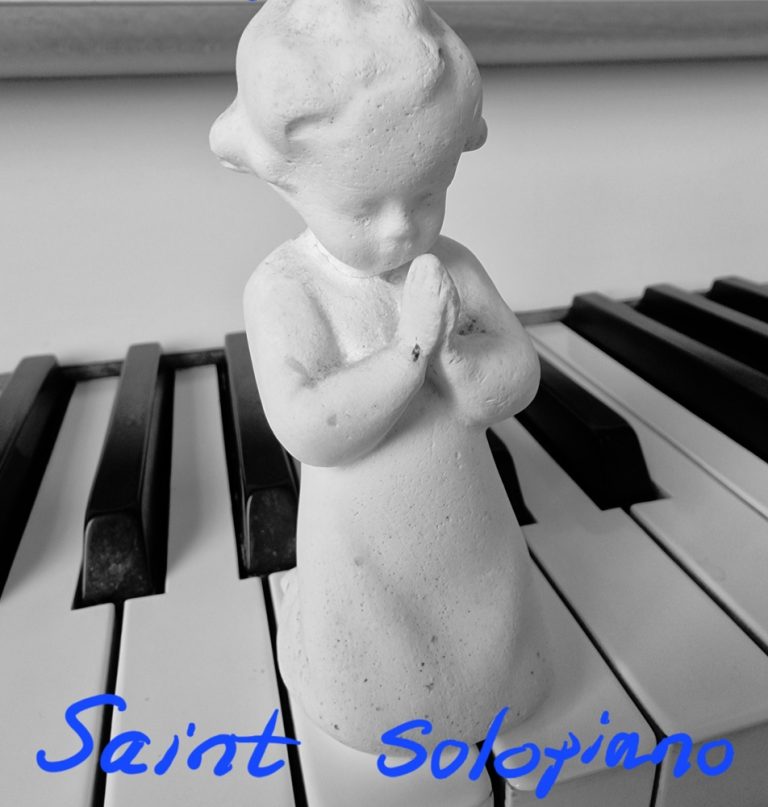
There’s a rare tenderness that emerges when music dares to linger at the threshold between presence and absence. In Saint, Swedish composer and pianist Carl Liungman captures that delicate in-between, a space where memory exhales and silence becomes its own language.

Written in honor of his recently departed parents, the piece moves with a quiet emotional clarity. It belongs to the borderlands of neoclassical and jazz: partly improvised, wholly sincere. Each phrase feels like a conversation half-remembered, its pauses carrying as much weight as its notes. The music never gently captures the listener, unfolding like the slow turning of light across a room once familiar.

Liungman’s performance recalls the inward grace of Nils Frahm and the meditative spontaneity of Keith Jarrett, yet his touch remains unmistakably his own: patient, almost ceremonial. His use of silence feels intentional, never empty. The piano breathes between chords, allowing grief to soften into gentleness, and memory to pulse beneath the surface.

What begins as elegy grows into something more like reconciliation. The melody does not rush toward closure; it accepts impermanence, finding beauty in transience. There are moments when the harmony seems to hover between sorrow and solace, refusing to choose,  and that hesitation is its truth.

Saint has ceased to be merely a tribute. It becomes a quiet act of faith, that love continues to echo, even after its source has gone still. Liungman does not mourn through his piano; he listens to it, remembering, and in that listening, he finds a beautiful bridge between the living and the lost..

Eddy Mann’s ‘It’s Time, Lord’ Finds Faith in the Fray

0

In an era where chaos has become the cultural soundtrack, Philadelphia singer-songwriter Eddy Mann offers something refreshingly countercultural with his latest single, “It’s Time, Lord.” Released October 6, 2025, the song doesn’t rage against the world’s confusion — it prays through it. Drawing inspiration from Psalm 7, Mann delivers a modern hymn that bridges the gap between worship music and social reflection, between lament and hope.

At first listen, “It’s Time, Lord” feels like a quiet acoustic meditation — but lean in closer, and you’ll hear a fully realized production built around the heartbeat of Mann’s ukulele. It’s the instrument that defines the song’s character: tender, vulnerable, honest. Surrounding it are layers of subtle percussion, bass, and ambient flourishes that give the track a sense of movement, as if faith itself were slowly breathing life back into a weary soul. The mix is warm and organic, textured enough to draw you in without ever losing the intimacy that makes Mann’s music so affecting.

“It’s time, Lord, it’s time / It’s time to an end to the violence,” Mann sings — not as a slogan, but as a plea. There’s no anger in his delivery, no finger-pointing. It’s the sound of a man exhausted by the noise and looking heavenward for clarity. That line — repeated like a prayer — grounds the entire song. It’s a spiritual protest, a reminder that faith, when lived honestly, is an act of resistance against apathy.

What sets Mann apart from so many of his contemporaries in Christian music is his refusal to polish the rough edges out of his conviction. His voice carries traces of weariness and wonder, the tension between belief and doubt that defines a life of faith. “It’s Time, Lord” isn’t a worship anthem meant to fill arenas; it’s a psalm for the back porch, the hospital room, the drive home after another day of headlines you’d rather not read. In that sense, Mann belongs to the same lineage as Rich Mullins, Andrew Peterson, and even Bruce Cockburn — songwriters who remind us that the sacred often sounds most truthful when it’s unadorned.

The lyrics move through cycles of prayer — “Hear our humble prayer,” “Shield our weary hearts,” “Oh Lord, most high” — each refrain deepening the sense of surrender. The repetition feels ancient, liturgical even, grounding the listener in the rhythm of petition and trust. By the time the final chorus fades, you’re left with a sense of quiet urgency — not the kind that demands action, but the kind that calls for reflection, compassion, and renewed faith.

In a culture that treats noise as proof of relevance, Eddy Mann’s “It’s Time, Lord” reminds us that there’s power in stillness. It’s not escapism; it’s engagement of the deepest kind — the kind that starts in the soul and ripples outward. Mann’s message is clear: peace begins when we stop shouting long enough to pray. And maybe, just maybe, that’s exactly what time it is.


–Kenny Marks