




We began our journey into the captivating world of K-pop a week ago. Since then, we’ve learned all about the K-pop roots and early artists. Now, without further ado, let’s pick up from where we left off and get to know the four generations.
You can read the first article Here.
First Generation
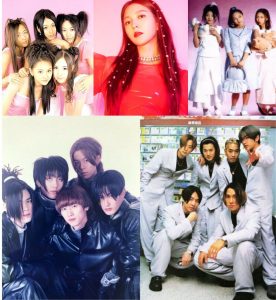
Seo Taiji and Boys invented the unique formula with ingredients like blending genres, stellar performance, and dope choreography. From there, the first generation started in the 90’s till the 00’s, particularly around the years (1996–2004). The most well-known bands and solo artists were as follows:
Boy Groups: H.O.T, Shinhwa, g.o.d, Sechs Kies, Turbo, and more.
Girl Groups: S.E.S, Baby Vox, Fin.K.L, Diva, Chakra, Cleo, and more.
Solo artists: BOA, Lee Hyori, Yoo Seung-jun, and more.
Each of these incredible groups and talents, and more, had a significant impact on the K-pop industry and helped to shape the current image of the genre. Although back then they didn’t have the Internet, the fandoms had their own ways of following their idols’ groups, and their culture was more lively, as they would go buy the albums once they were released and line up to buy concert tickets. If we look at it now, we’ll find it hard to do compared to what the technology offers, but it shows how dedicated the fans were and how the K-pop artists were worth the trouble.
Second Generation
Sadly, many of the first generation groups were disbanded in the early 00’s. However, new groups shined with the boy group, TVXQ, and their debut that brought a new generation of K-pop groups. The years of each generation aren’t specified, but the Second Generation was in the era from 2003 to 2012. At this time, the internet and social media were out there, and they helped the pervasion of K-pop, not just in Korea, but also Japan and Southeast Asia. This generation was rich in talent, and there were many groups that had their own distinct styles and gained huge popularity. Here are some of these groups:
Boy Groups: Bigbang, Super Junior, SHINee, SS501, T-max, 2PM, Supernova, BEAST, Infinite, and more.
Girl Groups: Wonder Girls, Girls’ Generation, Brown Eyed Girls, KARA, Miss A, 4Minute, 2NE1, and more.
Solo Artists: Se7en (Choi Dong-wook), Byul, Gummy, IU, Suzy, and more.
Many of these names were reasons for spreading the “Hallyu” (The Korean Wave) in more than one aspect, as they were in the music industry and TV series industry, as actors or in the shows’ OST. Like: SS501 and T-Max, who were part of the OST of the Korean TV series “Boys Over Flowers,” Kim Joon of T-Max and Kim Hyun-Joong of SS501, were both in the cast. Also, Suzy and IU acted and sang together in the series “Dream High.” They all helped introduce Korean culture all over the globe, as the TV series with its catchy theme was aired almost everywhere, and YouTube and social media platforms were getting more active.

PSY
If the Korean wave hadn’t reached everywhere before, Gangnam Style by Psy was a game changer. It made K-pop invade the world, thanks to its addictive beat, Psy charismatic performance, and of course, the famous, crazy dance. It was the first music video to reach a billion views. This was a legendary event in K-pop history, and till this very day, people still listen to Gangnam Style and dance to it without even knowing what the lyrics say. Anyone who is a K-pop fan or doesn’t even know what K-pop is, has started to learn its choreography and make their own fan videos. After breaking the world with the single success, Psy released a female version of “Gangnam Style”, called “Oppa Is Just My Style,” featuring 4munite member, Hyuna.
Third Generation
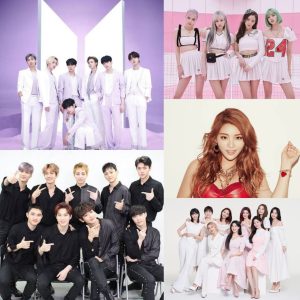
Because, as previously stated, the generations’ years are not precise, people have some contradictory perspectives about the third generation. It began in 2012; some believe it ended in 2018 or 2019, while others say it is still ongoing. Everyone can agree on one thing: K-pop has improved over the years, and its popularity has skyrocketed. This era made it difficult not to be a K-pop fan or to be a member of one of the groups’ fandoms. The following are the most major impacts on this generation:
Boy Groups: EXO, BTS, Seventeen, MONSTA X, NCT, GOT7, and more.
Girl Groups: TWICE, BLACKPINK, Red Velvet, AOA, Gfriend, and more.
Solo Artists: Ailee, Kim Se Jeong, and more.
K-pop is now mainstream in the US, and the K-pop groups are collaborating with western artists, such as Selena Gomez, Halsey, Lady Gaga, Ellie Goulding, Dua Lipa, and most recently, the British band, Coldplay. They’re not only controlling Gen Z’s minds and hearts, but also, taking over the billboard charts. The sound has been improved to fit today’s taste, the style is charming, the dance routines are getting more creative and entertaining, the merch is everywhere, and some groups, like BTS, aim to deliver significant messages through their music. The social media influence is getting bigger and bigger, and the idol groups are using it to bond with their fans.
Fourth Generation
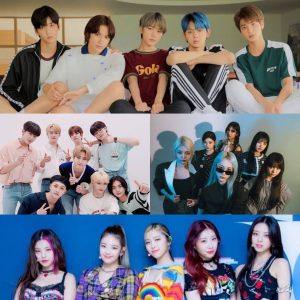
The opinions that say the third generation is still going strong and, at the top, believe that the fourth generation is yet to come. But others like to categorize idol groups that debuted between 2018 and 2019 as the fourth generation. It’s hard to say much about them as the generation is still rising, but we can say that the idols are following in the footsteps of past generations, and the existing groups are experiencing success and popularity, which makes the generation’s future seem promising. Some of the most well-known groups are:
Boy Groups: Tomorrow X Tomorrow (TXT), Stray Kids, The Boyz, Treasure, Ateez, and more.
Girl Groups: Everglow, Itzy, (g)i-dle, Iz*One, and more.
Now that we’ve taken a tour through K-pop history, you know much, but you don’t know it all yet. The story doesn’t end here. The K-pop industry is growing strong, and they still have a lot to offer. Next article, we’re going to explore the K-pop realm more and tell you about the characteristics of K-pop that make it stand out.