Home Blog Page 16

After Midnight by DJ Cards

0

Michael Cardamone, the Philadelphia attorney and martial artist making music as DJ Cards, has kept a quick pace since I covered his last single, “Forward,” a throwback to early-2010s peak-time trance built around momentum and moving past doubt. “After Midnight,” out June 26th, stays in that same trance-adjacent EDM lane, with atmospheric pads, driving rhythms, and a cinematic sense of scale, but aims at a different part of the night than its predecessor did.

Where “Forward” was built for the head-down, high-energy stretch of a set, “After Midnight” surprisingly works as something more transitional. It functions as a winding-down moment after midnight, a stretch of calm carved out in the middle of a party, but it works just as well as a night-drive song heading toward one, before anything’s actually started. The dynamics here sit in that in-between space rather than the height of the action; it isn’t the drop everyone’s waiting for or the comedown after it; it’s the corridor connecting the two. That’s a harder feeling to land than straightforward euphoria, since it has to hold attention without asking for the room’s full energy, and the track manages it by keeping its builds patient rather than urgent.

That patience fits the title. Cardamone isn’t chasing a peak-time moment here so much as scoring the hours around one, and the track’s melodic sensibility, less a hands-in-the-air hook than a steady, cinematic pulse, backs that up. It’s a smaller emotional target than “Forward” was aiming for, but a well-chosen one, and it says something about Cardamone’s range a year into making this music that he’s already moving between registers rather than repeating the same trick.

“After Midnight” doesn’t need to be the loudest thing in the set to do its job. It’s built for the moments on either side of the peak, the drive there or the quiet stretch inside it, and that specificity is what makes it work.

Kesä saapuu vihdoin Helsinkiin by Petri Selin

0

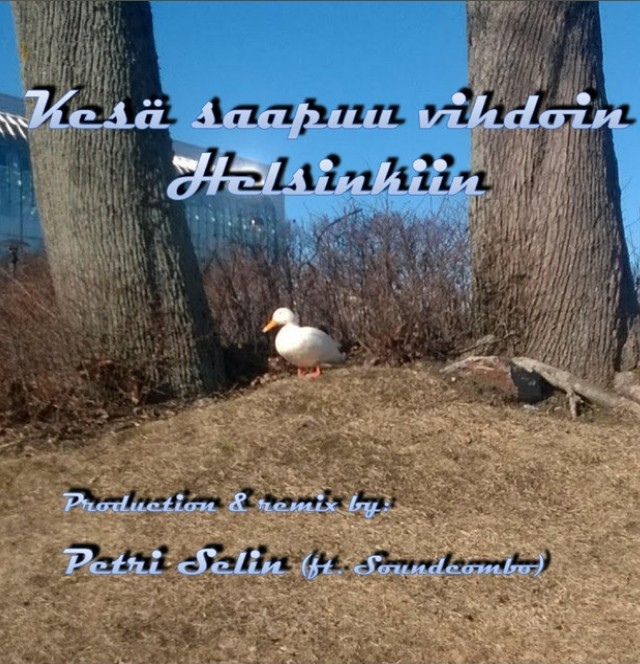
Before “Verstas,” the tribute to his late father I covered a few weeks back, Petri Selin‘s catalog started here. “Kesä saapuu vihdoin Helsinkiin” “Summer Finally Arrives in Helsinki,” came out in October 2018 as his debut single, and it’s the same self-contained approach he’s kept ever since: written, performed, and produced entirely on his own from a home studio in Helsinki, no label involved, everything learned from scratch through trial and error with distribution platforms like DistroKid.

Where “Verstas” was built around a specific person and a specific memory, this one works more like a mood piece, tied to Helsinki’s position near the Arctic Circle and the way its seasons carry more weight there than they do further south. Selin has described the song as coming out of the same practice that eventually produced “Verstas,” collecting real observations and turns of phrase over time and waiting until they cohere into something worth recording. Written entirely in Finnish, the track is, by his account also his most internationally heard release, picking up listeners well outside Finland despite the language barrier, which is a claim worth taking as his own account of the song’s reach rather than a verified chart fact, though it tracks with how much instrumental melody and mood tends to carry a song regardless of what language is being sung.

Eight years and one more single is a slow pace by most standards, but it fits an artist who’s said outright that he’s more interested in getting a song right than getting one out. What connects this debut to “Verstas” isn’t really genre, since this one leans more folk-pop and lo-fi guitar, where the newer single sits in a more direct tribute mode; it’s the patience behind both. Selin isn’t writing to a release calendar. He’s writing when something specific finally has enough weight behind it to become a song, and “Kesä saapuu vihdoin Helsinkiin” reads as the first real example of that instinct paying off.

Nearly a decade on, it holds up less as a historical curiosity and more as the clear starting point for an artist who’s been working the exact same way ever since.

Selling you a lie by Luz Uzal

0

Lucía Molina’s project, released under the name Luz Uzal, has moved fast since debuting with “38,” a Radio Click Digital-praised reinvention of Latin soul, and “alma,” a stripped-back, visceral single I covered back in February, built around the line “Mi madre pierde las cosas.” “Selling You a Lie,” out June 30th, is a cover, reworking a Franklin Gotham indie original into something considerably bigger, trading that project’s rawer folk-jazz textures for a full orchestral arrangement, chamber strings, brass, woodwinds, all built on the same acoustic-guitar foundation that’s anchored her earlier work.

The signature Latin Disney-princess sound I described in my review of “alma” continues here, and she’s really embracing that sound as her own territory; honestly, no one else on the scene can even compete here. I can draw some comparisons to RAYE, but she’s very jazzy, while CRUZA has a very obvious Latin flavor with a classical-music basis in the arrangements and a cinematic flair that’s much more straightforward with the drama. The vocals, as always, are breathtaking and are the centerpiece of the song.

What’s different this time is scale. Where “alma” worked through restraint, letting a handful of guitar layers and Molina’s voice carry all the emotional weight, “Selling You a Lie” goes the opposite direction, opening hushed before swelling into a full string-and-brass arrangement by the back half. It’s a bigger swing than anything she’s put out before, and the fact that it’s a cover rather than original material makes the choice to go this theatrical feel a little more like a statement piece than a natural next step, an artist testing how far this aesthetic can stretch before it snaps.

It doesn’t snap. The dynamic build from whispered verse to full belt gives the arrangement somewhere to go, and Molina’s voice holds the center of it the same way it did on the two singles before this one, just with a much bigger room to fill. “Selling You a Lie” won’t replace “alma” as the clearest introduction to what this project does best, but as a showcase of range, it’s the most ambitious thing she’s released yet.

Harmonic Surrender by Hidden Sector

0

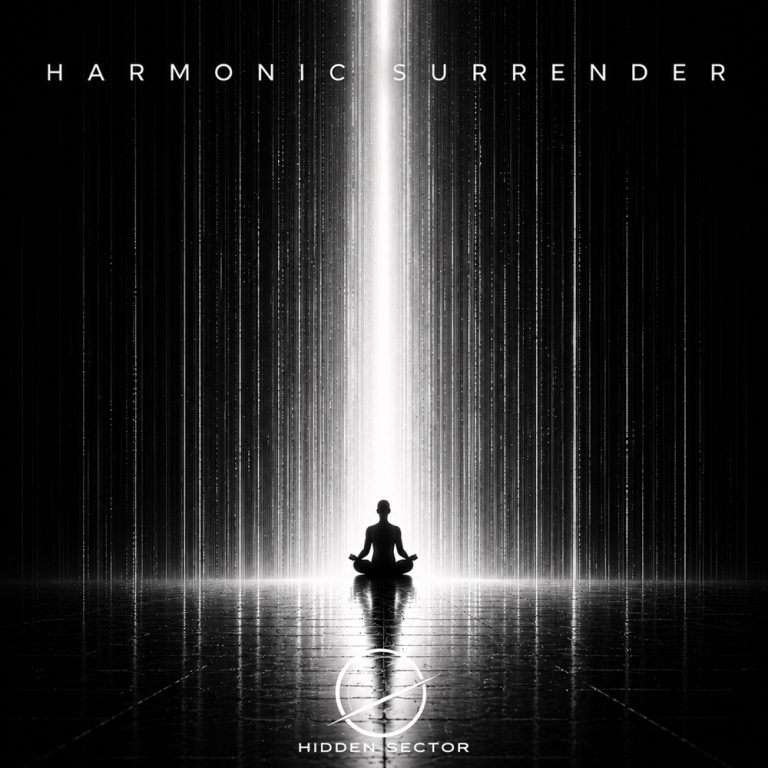
Hidden Sector is the solo project of Tony Samuel, a British artist based out of Dubai, working in the space between electro, Detroit techno, and more experimental electronica. “Harmonic Surrender,” out March 29th, draws on the machine precision of Kraftwerk and the deep textural weight of Carl Craig-style Detroit techno without borrowing either artist’s structure directly. There’s no drop here and no real build toward one. The track opens slowly and stays there, layering harmony and texture rather than pushing toward a peak.

As expected with minimalistic downtempo electronic music, you won’t be walking away from this with a new catchy hook stuck in your head all day, but if this is up your alley, this is a perfect representation of that genre. The production quality is superb and instantly creates this cerebral atmosphere. I think it can make you think better or focus better, so it works incredibly well as an ambient piece. Actively listening to it, however, can be even more rewarding, as it pulls you into an introspective space if you choose to let go, or “surrender,” to it.

That tension between passive and active listening is really the whole idea behind the track, and it’s reflected in the title itself. Samuel isn’t chasing the kind of immediate payoff a lot of electronic music is built around; the piece leans instead on small, ongoing shifts in timing and weight to keep it moving without ever tipping into anything resembling a hook. It’s a patient approach, and one that asks a bit of patience back from the listener, but the trade-off feels intentional rather than a case of the track simply not having anywhere else to go.

“Harmonic Surrender” isn’t built for a playlist that needs momentum. It’s built for the kind of listening session where sitting with something slow and textured is the point. For curators working in cinematic or leftfield electronic spaces, that restraint is exactly the draw, and Hidden Sector commits to it fully enough that the track earns the mood it’s going for.

phan thiet by Kiey

0

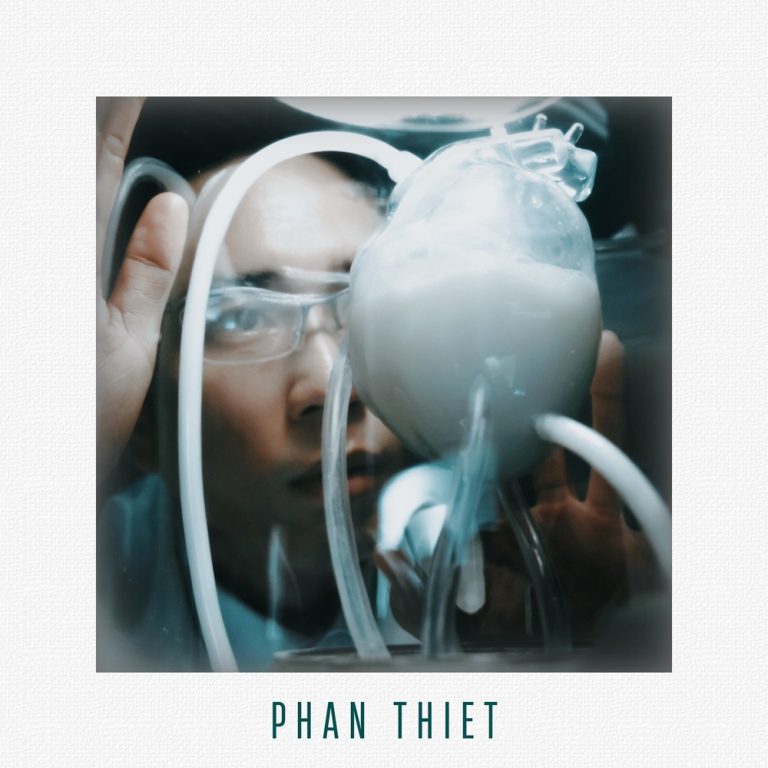
Kiey, born Vưu Tuấn Kiệt, has spent two albums building an identity separate from his family’s business legacy as heirs to Biti’s, first with 2019’s Night To Myself and then 2022’s Sunday Sanctuary. “phan thiet,” out July 1st, is the lead single off his third record, METROMIRAGE, due in September, and it’s a departure in one small but telling way: where his past work has favored English titles, this one carries a simple Vietnamese name, taken directly from the coastal town where the song was written during a Lunar New Year road trip back to Ho Chi Minh City.

This is one of the few examples where I can define a song as a very Gen Z interpretation of old-school R&B, at least in the musical execution and the textures used in the sound design. The way the drums sound plays a huge part in this, sitting soft and slightly hazy rather than crisp, closer to the muted, lo-fi drum programming that’s become a signature of newer dream-pop and bedroom-R&B production than to anything a 90s or 2000s R&B record would have used. It’s a good example of how a genre’s emotional core- the warmth, the longing, the slow-burn intimacy- can survive a complete overhaul of its actual sonic palette. Nothing here sounds vintage, but the feeling underneath it does.

That feeling lines up with the song’s subject matter, which follows a young man drifting through memories of a dreamlike coastal trip with a woman he loves, before waking into the reality that she’s gone and only the memory remains. Kiey has said the goal was to translate the specific sensation of the ocean and sea breeze into sound, and the track’s soft, drifting textures do genuinely evoke that, even before knowing the backstory. The accompanying music video takes the loss theme somewhere darker and more literal, following a scientist attempting to rebuild his lost love as a humanoid robot, only for the revival to come back hollow and emotionless, but the song on its own stays in a gentler, more wistful register.

After nearly two months finishing the master, by Kiey’s account, his longest studio process yet, “phan thiet” plays like an artist taking his time to get a specific mood exactly right, and it shows.

Sunlight as Resistance: Elvira Kalnik’s ‘Summer Time’ Makes Joy the Main Event

0

There’s an old assumption that seriousness wears darker colors than joy. That the heavy message always arrives in a minor key while happiness is somehow lightweight, disposable, a postcard instead of a painting. Elvira Kalnik’s “Summer Time” politely dismantles that assumption one shimmering synthesizer at a time.

What first appears to be a straightforward electronic summer anthem gradually reveals itself as something more ambitious: a declaration that emotional freedom is an act of rebellion.

Dance music has always carried two heartbeats. One belongs to the club—the communal pulse where strangers become temporary family beneath lights that erase social boundaries. The other belongs to the individual searching for release, using rhythm as therapy long before therapy became fashionable. “Summer Time” lives comfortably at the intersection of both.

Kalnik understands that groove isn’t simply something you hear; it’s something you inhabit.

The production leans into bright electronic textures that feel sunlit rather than synthetic. The beat isn’t interested in overwhelming the listener. Instead, it creates momentum, the kind that invites movement without demanding spectacle. Every layer serves the central emotional objective: opening space.

That’s an increasingly rare instinct.

So much contemporary dance-pop arrives determined to prove its own magnitude. Bigger drops. Louder choruses. More processing. More compression. More everything. Kalnik chooses something almost radical by comparison—breath. Air. Dynamics. The arrangement expands naturally, allowing listeners to discover the song instead of being bludgeoned by it.

Vocally, she approaches the material with refreshing restraint. There is no attempt to dominate the production through sheer technical display. Her voice becomes part of the architecture, carrying warmth and invitation rather than theatrical excess. That decision mirrors the song’s broader philosophy. This isn’t music about performance; it’s music about participation.

The lyrics embrace imagery that many artists would hesitate to touch.

Rainbow bubbles.

Unicorns.

Beach fires.

Dancing until sunrise.

In lesser hands, those images might collapse under their own sweetness. Kalnik commits fully, and sincerity transforms what could have been novelty into emotional symbolism. These aren’t children’s illustrations. They’re emblems of imagination surviving adulthood.

That distinction matters.

Because “Summer Time” is ultimately less interested in the season than in the psychological landscape it represents. Summer becomes shorthand for openness, spontaneity, and permission—the permission to exist outside the constant surveillance of modern life, where every emotion is evaluated and every action documented.

“Don’t be afraid being silly,” she sings.

It may be the most subversive line in the entire song.

We live inside cultures that monetize insecurity and reward perpetual self-consciousness. To abandon that—even temporarily—is an act of liberation. Kalnik frames joy not as naïveté but as courage.

There is also an intriguing continuity within her larger artistic journey. Listeners familiar with “Water Knows” will recognize a recurring concern with emotional release. Where that earlier work sought healing through reflection and surrender, “Summer Time” discovers similar freedom through celebration. Different emotional vocabulary. Same spiritual destination.

That’s the mark of an artist rather than simply a performer.

Elvira Kalnik has built her career across music, fashion, filmmaking, and visual art, and “Summer Time” reflects that multidisciplinary sensibility. The song feels cinematic without becoming grandiose, visual without sacrificing musicality, philosophical without losing its accessibility.

Perhaps that’s its greatest accomplishment.

It reminds us that joy isn’t the absence of complexity. Joy is what remains after we’ve decided complexity doesn’t deserve the final word.

For five luminous minutes, “Summer Time” makes that argument with a beat, a melody, and an open heart. And sometimes that’s exactly enough.

–Tate Gregory

 

The Holiday Inside the Heart: Gary Pratt’s “4th of July”

0

Country music has always had a peculiar relationship with American mythology. It borrows its symbols freely—small towns, highways, church pews, rivers, flags—and then quietly reshapes them into something far more personal. Gary Pratt’s “4th of July” performs exactly that kind of transformation. The title promises one national story, but the record delivers another entirely. It suggests that the country’s most celebrated holiday isn’t a date on the calendar at all. It’s a feeling that can happen any night, in any room, between any two people willing to surrender to it.

The song begins in February, a month that traditionally carries none of July’s promise. Winter is still lingering, routine has settled in, and the world outside seems ordinary. Yet the lyric immediately dismisses geography and season. The weather becomes irrelevant because the emotional temperature has already changed. By the chorus, Pratt has replaced civic celebration with private revelation. Fireworks no longer belong to the sky. They’ve been relocated indoors, becoming symbols of intimacy rather than spectacle.

That reversal is the song’s quiet triumph.

American popular music has often treated holidays as communal experiences, moments when individuals dissolve into crowds. Pratt moves in the opposite direction. The parade never arrives. There is no audience. There are only two people discovering that the most memorable celebrations often happen beyond public view. It’s a reminder that the mythology of America has always existed alongside the mythology of romance, each borrowing images from the other until the distinction begins to disappear.

Vocally, Pratt understands restraint. His performance refuses melodrama, choosing instead the confidence of someone who recognizes that conviction rarely requires volume. He doesn’t announce emotion; he inhabits it. The effect is persuasive because it never strains for significance. The lyric is allowed to find its own weight.

Kate Szallar’s contribution becomes essential rather than decorative. Her voice enters not as contrast but as completion, giving the song the conversational quality that romantic duets frequently seek but rarely achieve. Together they create the impression of shared memory rather than staged performance. The listener isn’t observing two singers; they’re overhearing two lives intersecting.

The production, guided by Adam Ernst, reflects similar discipline. Ernst, whose work includes recordings by Bailey Zimmerman, Mickey Guyton, and Chase Matthew, also performs every instrument on the track. That singular vision gives the arrangement remarkable cohesion. Nothing competes for attention. The guitars shimmer without insisting upon themselves, the rhythm moves with quiet certainty, and every musical choice reinforces the central metaphor rather than distracting from it.

Perhaps what lingers most is the song’s refusal to separate joy from everyday existence. The celebration requires no stadium, no fireworks display, no public declaration. It asks only that ordinary moments be recognized for their extraordinary potential. That idea has always been woven into the fabric of American songwriting, from front-porch ballads to modern country radio, and Pratt adds another thread to that tradition.

“4th of July” ultimately suggests that the grandest symbols endure because they remain open to reinterpretation. A national holiday becomes a love song. A fireworks display becomes a heartbeat. A familiar image becomes new again.

That is how songs survive. They don’t preserve symbols; they reinvent them. Gary Pratt’s latest single understands that, and in doing so, it quietly turns a well-worn piece of Americana into something unexpectedly intimate.

–Marcus Grey

Pam Ross Looks Inward on the Powerful “Who’s Gonna Save You?” (out on July 10th)

0

The strongest songwriters have a way of making intensely personal moments feel universal. That’s a gift Pam Ross has refined over the course of her career, and it’s on full display in her latest single, “Who’s Gonna Save You?” Rather than offering another anthem about overcoming adversity, Ross explores something more complicated: the realization that sometimes the hardest battles are the ones we wage against ourselves.

It’s a bold subject, and Ross approaches it with honesty instead of melodrama.

Built around a sturdy roots-rock arrangement, the song opens with a familiar frustration: trying again, falling short, and wondering whether starting over will make any difference. The lyrics gradually reveal a deeper emotional landscape where disappointment gives way to self-doubt and destructive thinking. Ross never sensationalizes those emotions. She simply acknowledges them, allowing listeners to recognize pieces of themselves in the story.

The chorus delivers the song’s defining moment:

“Daddy saved you from the monster under your bed / Mamma dried your tears when they were shed… God might save you from someone else, but who’s gonna save you from yourself?”

It’s an effective lyrical turn because it traces a person’s journey from childhood security to adult accountability. Parents can protect us when we’re young, and faith can provide strength and guidance, but eventually everyone reaches moments where personal choices become the deciding factor. Ross captures that transition with remarkable clarity.

Vocally, she knows exactly what the song requires. There’s no need for vocal acrobatics or dramatic flourishes. Instead, she delivers each line with calm conviction, letting the emotion come through naturally. It’s the kind of performance that earns trust because it sounds lived-in rather than performed.

The musicians surrounding Ross deserve recognition for supporting the story without overshadowing it. Her acoustic guitar provides the song’s foundation while Yvan Petit’s electric guitar adds tasteful accents that bring energy without excess. FJ Ventre’s bass locks comfortably with George Hindenach’s steady percussion, creating a groove that carries the listener through the song’s emotional shifts. Ross’s keyboards and organ add warmth and subtle texture, giving the arrangement additional depth.

Production by Ross and Ventre, along with Marc Frigo’s mixing and mastering, reflects confidence in the material. Nothing feels forced or overproduced. The recording allows every instrument—and every lyric—to occupy its own space, making the emotional impact even stronger.

One of Ross’s greatest strengths has always been her willingness to write from experience while leaving room for listeners to interpret her songs through their own lives. “Who’s Gonna Save You?” continues that tradition. Whether someone hears it as a reflection on depression, addiction, self-sabotage, or simply life’s inevitable moments of doubt, the song remains open enough to invite personal connection.

That openness may be its greatest achievement.

In an era where many songs are designed for instant gratification, Pam Ross has created one that lingers. “Who’s Gonna Save You?” asks difficult questions without pretending to have easy answers, and that honesty gives it lasting power. It’s another impressive chapter in Ross’s growing catalog—one that confirms her ability to write songs that don’t simply entertain, but resonate long after the final chord fades.

–Benny Torrez

A CONTEMPORARY DIALOGUE WITH SUFI HERITAGE

0

For centuries, Sufi poetry has travelled not only through manuscripts but through voices, gatherings, and musical performance. From the qasidas of medieval mystics to contemporary devotional poetry, this literary tradition has continually found new musical expression without losing its spiritual essence. With “Bejamalen (With Beauty),” Afaq Art Production contributes a new chapter to that ongoing dialogue, presenting a newly written qasida inspired by the classical Sufi tradition through an expansive orchestral sound that bridges both heritage as well as contemporary artistry.

Written and composed by Sheikh Abd Al-Ghani Al-Umari Al-Hasani and performed by Ziad Kamal, Bejamalen unfolds as a meditation on divine beauty, love, witnessing, and spiritual knowledge. Rather than telling a linear story, the poem moves through shifting mystical states, inviting listeners into an experience of contemplation. Opening with the evocative verse, “With beauty that appeared, we lost ourselves,” the text immediately presents beauty as a catalyst for spiritual transformation rather than simple aesthetic admiration; and as the qasida progresses through lines such as “We became intoxicated through witnessing and contemplation” and “Love binds what lies between us in a bond no destiny can undo,” it draws upon familiar Sufi imagery and devotional symbolism, demonstrating how the classical qasida tradition continues to inspire new poetic expression. The work ultimately concludes with praise of the Prophet Muhammad, described as the source of spiritual knowledge, wisdom, and guidance.

The orchestral arrangement by Maestro George Kolta is central to the work’s identity. The arrangement expands its emotional landscape by weaving together Arabic maqam traditions with cinematic orchestral writing. Eastern instruments and Western symphonic textures coexist naturally, creating a musical language that feels both refined and immersive while allowing poetry to remain at the heart of the listening experience.

Ziad Kamal delivers the qasida with notable restraint and conviction. His performance favours expressive clarity over vocal display. It allows the devotional depth of the lyrics to emerge organically. That measured interpretation proves particularly effective as the composition gradually builds toward its closing verses, preserving the contemplative spirit that defines the work from beginning to end.

“Bejamalen” by Afaq Art Production demonstrates that engaging with heritage is not simply an act of preservation, but one of creative continuation. By pairing a newly written Sufi qasida with thoughtful orchestration and an expressive performance, the release becomes a contemporary dialogue with Sufi heritage, one that honours centuries of poetic tradition while also inviting it to resonate with modern audiences.

A SOULFUL EMBRACE OF GROWTH AND HEALING!

0

Setting boundaries is rarely about shutting people out; it’s about making room for growth. Keesha Blair captures that sentiment on “Access Declined,” a reflective R&B/Soul release that transforms emotional clarity into a graceful meditation on healing, self-worth, and the subtle courage to move forward without resentment.

Built upon smooth contemporary R&B textures and understated melodies, the production embraces simplicity, allowing the song’s message to remain at the forefront. Rather than relying on dramatic musical shifts, Blair creates an intimate atmosphere where every element serves the story. The gentle instrumentation complements the reflective nature of the lyrics, providing a soundscape that feels both soothing and emotionally engaging.

Blair’s vocal performance is delivered with warmth and quiet conviction. Her voice carries a conversational quality that makes every line feel genuine. The artist smoothly allows sincerity to guide the performance, reinforcing the song’s message with understated confidence.

“Access Declined” offers a refreshing perspective on empowerment. Blair presents them as an expression of self-respect and emotional maturity. The poignant declaration, “That door is now a memory, your access is declined,” establishes the emotional foundation of the song, while lines such as “Peace in your world, peace in mine” and “May love always meet you right where your heart finds rest” reveal a remarkable level of grace. Even the closing affirmation, “Your access is still declined, new security Divine,” reinforces the idea that protecting your peace is not about holding onto anger, but about honoring your own well-being.

What’s quite memorable is the fact that the artist doesn’t seek validation or retaliation; instead, she embraces acceptance, demonstrating that growth often comes from choosing clarity over conflict. It’s an approach that feels both deeply personal and universally relatable, offering listeners reassurance that self-worth doesn’t require anyone else’s approval.

With “Access Declined,” Keesha Blair successfully crafts a thoughtful and emotionally resonant reflection on healing, resilience, and the importance of protecting one’s peace, affirming that some of life’s most powerful decisions are made quietly, and with unwavering confidence..