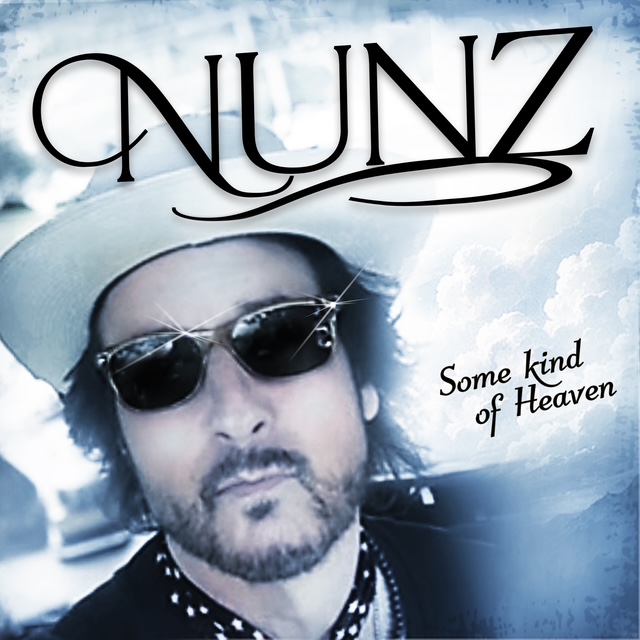
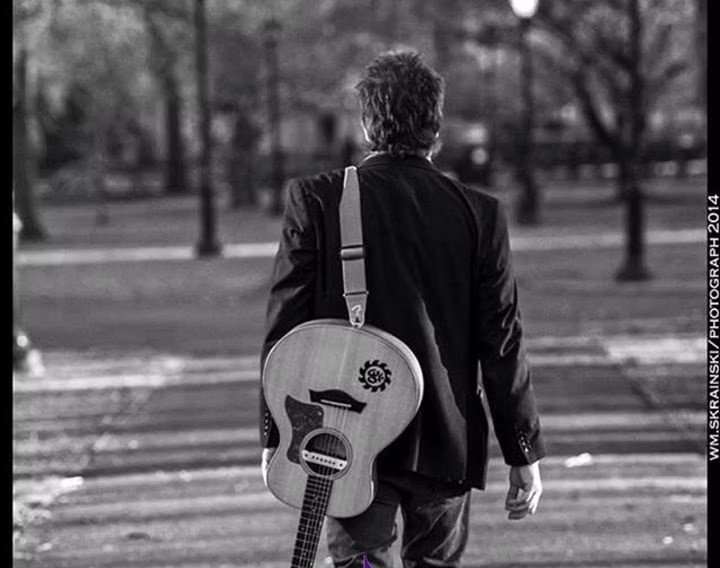
Sal “Nunz” Annunziato has been a fixture of the Connecticut rock scene since the 1980s, having cut his teeth alongside Bobby Mitchell in the acclaimed duo Hot Tin Roof before going on to lend his talents to a string of regional acts, including Red Hill Rockers, Start Me Up, and Black Kites. “Some Kind of Heaven” is his third album of original material, recorded at Horizon Studios and produced by Vic Steffens, with a deep roster of Connecticut musicians backing him, including drummers Bobby T Torello and Joey Diamondz, bassist Scott Spray, a trio of guitarists in Ryan Newman, Marc Amendola, and Chris Bickley, and additional vocals from Christine Ohlman and Thee Stout. The album explores love, loss, and self-discovery wrapped in driving rock and roll and ethereal instrumentation, and it’s the kind of record that sounds like it was made by someone who’s spent decades learning exactly how to put on a show. Nunz is bringing that same energy to the stage this Porchfest in Branford on May 30th, performing solo.
The title track is the defining song of the album; it beautifully captures that merge of bluesy longing and goosebump-inducing grandiosity of arena rock ballads. Now that I think about it, the way the song builds up is kind of a gradient, moving from that bluesy influence with delicate dynamics to a huge wall of sound towards the end. It sounds like an alternative version of a Guns N’ Roses ballad or something of that era.
This album doesn’t just do big ballads, it immediately goes into “I’m Famous,” a country-rock song that satirizes the need for fame and attention from strangers and intersects with rock n roll so often it’s basically inseparable. For every artist true to the muse, so to speak, there are dozens of people cosplaying the role of an artist to get attention, and this song takes a stab at this in a humorous fashion.
“Can’t Stop Rock n Roll” is just what it sounds like, from the title – it’s a love letter to rock n roll with a singalong shout chorus and tasty guitar licks that compliment the drum fills constantly. It feels like a local band’s live performance, like you just walked into a club and these guys are having the time of their lives carrying on the torch, and it feels good to know it’s still going strong.
“Darling Blue” slows us down and takes us on a melancholic journey guided by those string sections’ luscious textures and ambient half-time drums that create a dramatic stage for Nunz to deliver what I think are his best vocals on the album. There is a lot of nuance in the vocal performance here, and the backup vocals elevate it to the next level of emotionality.
“Screw ‘Em Up” is the shortest song on the album, and it makes sense, as it’s a fast and snappy jam with a lot of energy. A lot of the song’s runtime is dedicated to the guitar parts. Showing the lead guitarist some love, this song has some of the tastiest playing on the album – it’s really difficult to narrow down since there’s a lot of great guitar playing on the album.
From the shortest song on the album to the longest one, Nunz takes us on an epic adventure in “Front Street” with a very interesting 70s-inspired dramatic chord progression in a long and drawn-out intro that feels like it could be on a Beatles song, but with a much more bluesy and country vibe with those organs and some chicken-picking guitar lines. Just to put into perspective how much of a slow-burning adventure this song is, the drums fully kick in around the 5-minute mark. There is compromise in rock n roll, and Nunz isn’t breaking that tradition to cater to the modern expectations of short songs.
“I’m OK” is a ballad about accepting the hardships we go through for what they are. Maybe I’m not ok right now, but I will be. Because life is made of infinite cycles. Reminiscing and appreciating what we once had is good, but there’s a thin line between that and dwelling on the past, and that is the central theme this song is about.
“Everyone’s Dead” is my personal favorite song on the album because of how rhythmically dynamic it is and because of how harmonically interesting it is. It’s interesting because it contrasts the song’s lyrics and title. The harmony is mostly really bright and lush in some areas, while in other areas (the areas where the rhythmic variation is highlighted), it’s quite straightforward. The constant back and forth makes it a really catchy song, and the best song on the album, in my opinion.
“Thinking of You” is what I would describe as a road trip song. The way the rhythm section’s momentum is carried through the entire song is exactly that vibe when you’re driving out on the road, and the sun is beating down on you. It’s very calibrated in the way it flows and moves from verse to chorus to bridge in a very satisfying way and crescendos into an anthemic chorus with tasteful guitar accompaniment.
“Superstitious” is a very bluesy song. I’m pretty sure the entire song is just structured like a blues song, but in a much rockier fashion – think SRV or Hendrix. Probably more SRV since there is a bit of a country influence as well. Definitely one of the most enjoyable songs on the album because I think the band excels in a setting where the harmony is simpler. I think the band and the instrumental portion of the song outshine the vocals here.
“Last Big Fall” is exactly what it sounds like: it’s a huge crescendo moment to close out the album before they call the curtains. It’s the kind of song that, in a live setting, has a prolonged intro and a dragged-out encore – just boundless energy straight from the rock n roll source, the kind of closer that feels less like an ending and more like the band daring you to ask for one more song.
Across twelve tracks, “Some Kind of Heaven” plays exactly what the press materials promise: a Sal Nunz live show captured on tape, manic energy and all. The musicianship behind him is deep and clearly well-rehearsed, and Nunz himself sounds like an artist who’s been performing long enough to know precisely how to hold a room. For a third album from a decades-long Connecticut scene veteran, this one earns its title.