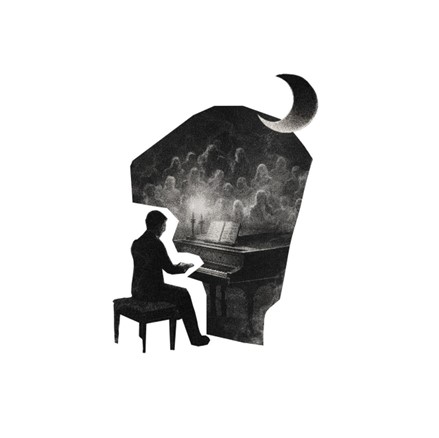


Matthew Thomas Palmer’s latest release is an intimate display of a songwriter’s raw delivery, done beautifully. A stranger’s story, leaving a lasting impression on an artist’s mind, gave us this single, titled ‘Let Him Down Gently, Let Him Down Easy’.
A folk singer and pianist based in York, Matthew Thomas Palmer sits in front of a piano and microphone, and magic seems to come out rather effortlessly, and ‘Let Him Down Gently, Let Him Down Easy’ is a prime example of this magic. Recorded in the historic and quaint town of Thirsk, ‘Let Him Down Gently, Let Him Down Easy’ has a distinct wintery feel to it, with its lilting piano and festive chords, revolving around melancholic but resilient words.
Composed of just Palmer’s voice and his piano delivery, this piece of folk music is largely freeform and musically liberated from the confines of tempo and time signature, allowing Palmer to wander with his melodic ideas as he sees fitting to the different chapters he is recounting from the story he heard on a chance encounter on a train journey.
Remaining hopeful throughout the song, Matthew Palmer’s voice showcases stellar emotional and technical ranges that go beautifully alongside his dynamic and engaging piano delivery, and except for the titular chorus calls, ‘Let Him Down Gently, Let Him Down Easy’ is a freeing listen that flows rather gently and effortlessly.
Simple roots and world music with tangible melodies and exceptional production can never grow old, and King Paul’s latest single,’ Jim Brown’, is a great testament for that.
A reggae and world music artist hailing from Kingston, Jamaica, King Paul certainly has the heritage to push this kind of music forward. ’Jim Brown’ is a delightful blend of reggae, world music, and contemporary pop that is as eclectic as it is honest, direct, and easy to enjoy.
Defined by its stellar flow and the emotional weight to its chord sequence, ‘Jim Brown’ features a ton of color and a production so crisp and fresh it suffices on its own to name this single one of 2026’s first half’s better releases. Poetic, with a vocal delivery synonymous with reggae, endlessly soulful, King Paul’s messages are those of love, respect, and acceptance, and his music is shamelessly rooted in his cultural heritage. The electronic drum groove pushes the arrangement forward alongside the tasteful guitar samples that populate the rich-yet-straightforward mix, all together resulting in a sound that’s uncluttered and direct, easy to move to, easy to lose yourself in.
King Paul’s ‘Jim Brown’ will definitely make its way to my list for the best releases this year. A standout melody to the chords, a gorgeous vocal delivery and lyrics part, and a fantastic, punchy mix that puts everything where it belongs.
Knox Avery is releasing “I’m Built 4 This” on February 13th. Knox Avery is an AI-created artist. So technically, the people behind Knox Avery are releasing it. As far as I understand, the vocals are AI, but the lyrics are written by humans, and the music is produced by humans. The song is a faith-based testimony about resilience, recovery, and purpose, aimed at listeners dealing with hardship, addiction, and setbacks. It’s inspired by Scripture and real-life experience, pushing perseverance through God’s strength rather than self-reliance. The project’s executive producer says the song is about reminding people that survival isn’t accidental, that even the struggle has purpose, and that God equips us for what we’re called to walk through. The single speaks to everyday victories and comebacks, whether finishing recovery, rebuilding after loss, or holding onto faith when the path feels uncertain.
The irony of AI singing about overcoming addiction and holding on to their faith, and in general, a deeply human topic like this, is inescapable. Because AI was in fact not built for this. However, humans did end up using it for this purpose, which is sparking considerable controversy at the moment. There are elements of humanity here besides the subject matter, which are the lyrics that are rooted in scripture and the production of the instrumental elements. The lyrics reflect the truth of holding onto faith to navigate the treacherous waters of hardship that everyone endures, and they are the best part of the song.
Knox Avery represents what the project calls “an innovative fusion of technology and testimony,” existing at the intersection of innovation and faith. It’s uplifting and motivational without being preachy, designed to resonate across faith, inspirational, and mainstream audiences. Whether this approach works for you depends entirely on where you stand on AI in music.
Bongo Boy Records is proud to announce the release of “White Hydrangeas”, the powerful new contemporary folk single from acclaimed singer-songwriter and producer Monique Grimme.
Inspired by the resilient white hydrangeas blooming year after year in her own garden, the song serves as a moving metaphor for the quiet strength, humility, and perseverance found in everyday people and across generations. Grimme reflects on how these steadfast flowers mirror the unsung heroes in our communities — those who endure hardship with grace, offer shelter to others, and remain constant even in difficult times. The song expands this imagery into a broader meditation on American ideals, collective memory, unity, and the importance of remembering our shared humanity in an increasingly chaotic world.
“White Hydrangeas” is a heartfelt and contemplative folk piece that blends emotional depth with subtle surrealism. It speaks to the feeling of being muted or invisible in modern life, while gently calling listeners back to their roots, values, and the quiet power of community.
“White Hydrangeas” was written, composed, arranged, and produced by Monique Grimme. The track was mixed and mastered by Sapphire Star Studios and Bongo Boy Records.
Credits:
Vocals & Songwriting: Monique Grimme
Composer & Arranger: Monique Grimme
Producer: Monique Grimme
Mixed & Mastered: Sapphire Star Studios & Bongo Boy Records
An official music video for “White Hydrangeas” is scheduled to follow shortly.
In Monique’s own words: “The hydrangea’s quiet strength mirrored the qualities I most admire in people: enduring adversity with grace, offering support to others, and persisting without complaint. Their constancy is a living tribute to the values of humility, generosity, and perseverance that should be cherished and remembered.”
Stream “White Hydrangeas” now on Spotify and all major platforms.
For fans of thoughtful, emotionally resonant folk music with rich storytelling and meaningful themes.
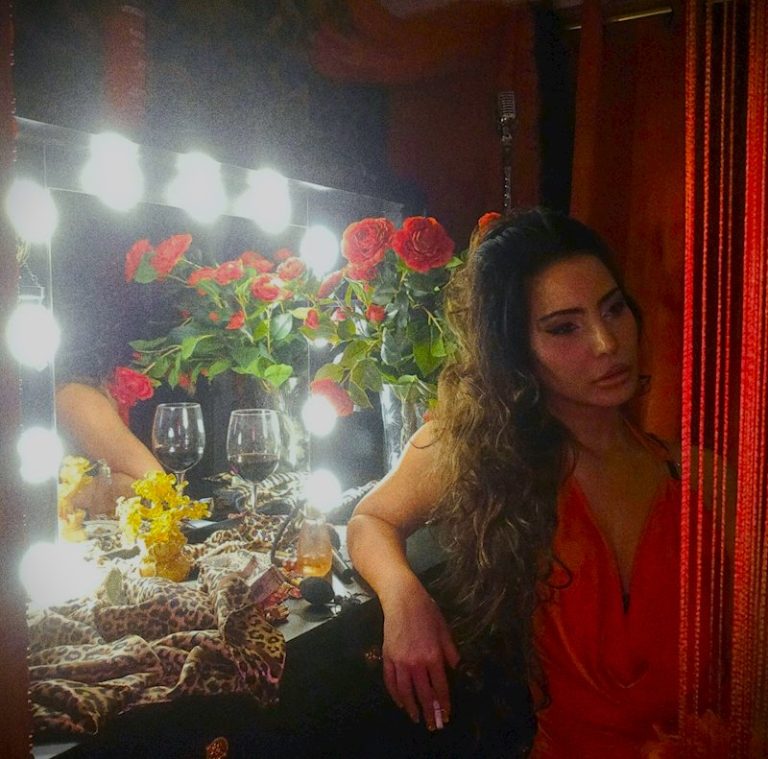
Marina Lang‘s “Rose Garden” came out back in November, and the German-Indian artist just dropped a music video for it featuring Seth Edeen, a vertical-video star with a solid Gen Z and Millennial following. Lang splits her time between acting, filmmaking, and music, having lived in five countries and worked across Indian television before landing in LA. The song tackles emotional disconnect in relationships where the romance exists on paper, but the connection doesn’t actually land. One person is fully present, the other’s trying but can’t get there, and the nu-disco groove intentionally contrasts with that quiet loneliness.
In my opinion, it’s super easy to make a bad song under the umbrella of Nu-Funk, and people do it and just place funk-adjacent textures next to each other and hope for the best. But I’m glad to report this is not the case here. The funky energy of this song is tangible, and the production on each element, from the drums to the vibe-keys is immaculate. Not just the sound selection and the micro timings that give the song its infectious groove, but the quieter moments also have a great atmosphere.
Lang’s been running digital billboard campaigns and pushing influencer content across TikTok and Instagram to support the release. She’s approaching this like someone who understands both sides of the creative process, the cinematic storytelling, and the actual mechanics of getting music heard. The track works because it doesn’t pick a lane between genre credibility and mainstream appeal; it just exists comfortably in both spaces without overthinking it.
There is an undeniable strength to Chris Oledude’s ‘White Lie: Carolyn’s Story’. A blazing and manic anthem from the aware mind of socially active musical veteran Chris Oledude, ‘White Lie..’ is a listen that challenges the norms, and comes on top with a strong message and an even stronger presentation.
Based in New York, Chris Oledude, formerly Chris Owens, is a Puerto Rican artist with a lifelong dedication to speaking exactly what is on his mind, and for ‘White Lie: Carolyn’s Story’, what he has in mind is the unspeakable social injustice faced by black communities in the United States, and the collective inability to address those issues. Oledude chooses to tackle this with a rhythmically dense, danceable anthem with a litany of tolling bells, battering drums, and synth horns.
Adding up, and taking into account the song’s near 6-minutes runtime, we end up with a rather intense and challenging listen that is amazingly executed. Simple in composition, but complex in intent and delivery, the song features the fantastic lead vocals of Wendy A. Ward, and Lindsey Wilson, together delivering the main vocal motif that defines the majority of the song’s calculated mayhem.
With his mission of blending pop, funk, and RnB, with modern electronic hastiness, Chris Oledude’s ‘White Lie..’ is right on point with its massive synth bass, ominous bells, and doom-calling vocals. A deliciously full meal.
Alf Jetzer, a Swiss multi-instrumentalist and composer, has developed a unique style called “world music with spirit” over four decades. His music blends meditation, progressive rock, jazz, classical, and global elements into immersive compositions. Jetzer describes his process as “musical painting,” layering sounds from various instruments to create a deep sense of presence. His latest album, UNFOLDING, reflects this artistic journey, combining two years of intensive work and forty years of experience. In the following discussion, he shares insights on his evolution, the album’s details, and his future intentions.
Over your forty-year musical journey, beginning with the clarinet at age eight and expanding to a diverse array of instruments, how has the integration of global and meditative influences shaped your evolution as a composer who prioritizes a high recognition value in each piece?
My musical career has been going on much longer. 40 years is the time span I’m focusing entirely on recording, establishing it it as a standalone art. Years before that, I started learning, playing and using instruments in bands and orchestra.
In my younger years, external influences played an important role, as my own experience was not yet established.
Over time, the focus shifted more and more inwardly. I began to reshape/adapt the skills I had acquired externally so that they ultimately became part of myself. It’s similar to learning a language.
Learning the language is the first step. The next step is to use the language according to your own predisposition.
So, every person has their own way of expressing themselves linguistically. This is the recognition value = you recognize the person immediately, purely by the way they speak. This includes not only how they put words together, but also the sound of their voice.
This can be applied one-to-one to (instrumental) music. Meditation greatly supports and deepens such processes.
It helps to express the essential even more and leave out the superfluous. In other words, it gives each note more significance and power (the energy behind the tone).
I subordinate everything to this aspect—it should be an listening experience from the very first note (giving you goosebumps).
I have learned how to proceed to ensure this quality. It takes a lot of time and patience. An open listener will immediately feel this in my music. A listener who is not fixated on one (his favoured) genre and ignores everything else. My compositions touch on different genres. That is why they are accessible to a “broad spectrum” of listeners.
You describe your compositional process as “musical painting,” using instruments like colors to realize mental images. In what ways has this philosophy guided your self-contained approach to recording and production throughout your career?
It’s more the other way around: this approach was the origin and has determined the course of my recording career.
One of my preferred method of recording is: by not playing through an entire piece (an entire take) in one breath, but dividing everything into smaller sections, I am able to bring a high level of energy to each section (only recording it when I am in the “best” condition). This way, I manage to avoid any “slumps” = everything remains energetically in the upper range. This also applies to pauses = they are not “empty space,” but are also filled with energy. Pauses are important as well for making the following notes more expressive (the contrast between silence and sound). I use each instrument, its sound, and the phrases played like colors, which I combine into an “overall picture” after a dedicated process. Like a painting that gradually emerges. This requires a lot of time and patience. AI will never be able to achieve such results. There is no need to be concerned about the AI trend. AI-generated songs have no lasting effect. A piece with substance and depth, created by a real musician, lingers long after listening, whereas AI-generated music leaves nothing behind = it fizzles out immediately = it cannot create inner images because it lacks substance and depth.
“UNFOLDING” is positioned as a high point in your oeuvre, incorporating two years of dedicated effort and forty years of accumulated experience. What specific challenges did you encounter in balancing its multi-genre elements—such as progressive rock, jazz, and world music—to achieve the album’s hypnotic and atypical arrangements?
There was a point in my musical life when I was no longer so concerned with reproducing genres “authentically,” but instead it became more important to me to manifest the spirit of each genre. Over the years (including the external genre influences of earlier years),
everything musical in me has merged into a single “language” with which I can reproduce the various genres impressionistically without having to declare them genre-authentic. It was and is more important for me to bring the immersive aspect into my creations, using the approach described above. So, for me, it’s not about genre authenticity, but about artist authenticity (which ultimately manifests itself in high recognizability).
Given that each composition typically requires nearly two months of creation, how did the extended timeline for “UNFOLDING” allow you to infuse greater “soul” and vitality into the work, particularly through atmospheric instruments like singing bowls and the Armenian duduk?
The fact is that it takes time for an idea to mature and become so internalized that it becomes a kind of temporary purpose in your life. The initial idea thus becomes part of myself. Once this status has been achieved, spirit can be manifested with almost any instrument. Then only “techical” questions come to the fore: for example, should the instrument be able to play short or long notes? Should it have this or that sound character? Should it be percussive? Of course, you have to spend several years working with the instruments themselves beforehand so that they do what you expect them to do (that they can manifest the musician’s own expression). This is only possible if you become one with the instruments.
But what is also important is that you cannot compose an entire song without interruption. You need to take breaks of 2 or 3 days in order to hear objectively again.
And further: between each composition of UNFOLDING, I took a break of 2 weeks or more. The next piece was then created with a new consciousness = each piece embodies a new “mini-epoch.” As a result, it radiates something different from what came before.
Your commitment to composing as a standalone art form, eschewing external pressures like commercial deals, has resulted in a unique, long-matured body of work. How does “UNFOLDING” exemplify this patience, and what insights from decades of meditation have informed its thematic depth of stillness and presence?
UNFOLDING is the culmination of a long journey, the destination of which I could only recognize toward the end.
I have made many recordings, but in retrospect, they were more like stopovers and preparations for the finale which is “UNFOLDING”. Although I also created these earlier pieces with great dedication.
It is a journey in which one strives to become better and clearer in one’s expression. Each tune is like a rung on a ladder. You need all the rungs to get to the top. Each tune has opened a new door for me to greater clarity. Meditation is the “glue” that holds it all together, bringing in subtlety and immersiveness. UNFOLDING is the manifested sum of the experience of everything (growth of my personality and my music).
As you transition from a primarily introspective creative phase to sharing your music more broadly, what strategies are you considering for presenting “UNFOLDING” to audiences, such as through live adaptations or multimedia collaborations?
I can’t plan too far ahead. I’m someone who lives very much in the moment. I think promoting my creation will take place as the next step because at this time I don’t think that I can surpass “UNFOLDING” with another album. I am someone who cannot be satisfied with simply repeating something similar. The new must always surpass the previous.
Multimedia collaborations and other things may be a meaningful goal . However, there will be no live adaptations on my part. Recording has matured into an independent form of expression for me. The creations cannot be “outsourced” without loss.
Inches From Sin have been awarded the Silver Medal in Trip Hop by Global Music Awards for their song “Pickle,” the opening track from their critically praised album WE NEED LOVE, released via Bongo Boy Records.
The silver award recognizes the duo’s fearless creativity and genre-blending artistry within the trip-hop landscape.
Written and performed by Inches From Sin, “Pickle” was penned by songwriting partners Robert Brewer and Karen Holloway Brewer. The song draws from deeply relatable life experiences—those tense, uncertain moments when circumstances feel precarious.
Lyrically, it reflects emotional vulnerability and self-reflection, captured in lines such as, “You got yourself in a sticky situation, some call it a pickle,” and “Nobody knows the crosses I bear, I keep my little dirty secrets to myself.”
Serving as the album’s opener, “Pickle” immediately establishes the tone of WE NEED LOVE and has received enthusiastic praise from critics and fans alike.
Music journalist Dave Franklin (Dancing About Architecture) writes:
“Musically, the album is both fearless, sonically and lyrically. Opener ‘Pickle’ sets the tone perfectly, laying down skittering, clubland-infused beats that serve as the platform for smooth vocal harmonies, intriguing rap verses, and even flashes of world music—sitar solos soar, grooves err on the exotic, and a swirl of psychedelic textures emanates from this opening salvo.”
Additional acclaim came from The Ark of Music, noting:
“Opening track ‘Pickle’ tops its themes of Eastern psychedelia with a hypnotically odd chorus, all laid over a hip hop beat spreading optimistic vibes throughout.”
Trip-hop, the genre at the heart of “Pickle,” is defined by its psychedelic fusion of hip-hop and electronica, characterized by atmospheric textures, slow tempos, and experimental spirit. Emerging from the Bristol sound of the late 1980s and early 1990s, the style incorporates influences from jazz, soul, funk, dub, rap, and cinematic sampling—an artistic lineage Inches From Sin proudly expand upon with WE NEED LOVE.
An official music video for “Pickle” was released on September 30, 2025, honoring family members—Karen Holloway Brewer’s mother, and Robert Brewer’s two daughters and sister—each born in the month of September. The video made its national television debut on Bongo Boy TV in 2025 and is scheduled to broadcast again in March 2026 across 72+ terrestrial TV channels in the United States.
The music video was directed by Linda Miller, with videography by Tom Hoppins and assistant videography by Christian Lopez. Featured actors include Robert Brewer, Karen Holloway Brewer, Hannah Brand, Kaiya Brand, Stephanie Bechtold, Vance Stroman, and Sharp Demarko.
“Pickle” was engineered and produced by Robert Brewer and Semaj Wright, and mastered by Semaj Wright.
Filming took place at Community Arts of Elmira, New York, where Lynne Rusinko is the Director. This beautifully restored building is a historic center for creative expression, listed on the National Register of Historic Places and the National Park Service Network to Freedom Underground Railroad.
Inches From Sin extend special thanks to Bongo Boy Records, Bongo Boy TV, Monique Grimme, music video director Linda Miller, and the entire cast and crew for helping make the music video both a meaningful tribute and a resounding success.
There’s a suspended quality to Music from a Cloud by Mohawk Castle, as if the track exists in a narrow band of air where emotion and intention quietly overlap. The release feels less constructed than received: an art-rock and electronic blend that drifts forward with calm resolve rather than urgency. Nothing here pushes; everything listens first.
Led by Erik David Hidde’s solitary, all-encompassing process, the track carries a kind of disciplined intimacy. Synths glow softly instead of flashing, beats pulse without insisting on dominance, and the arrangement unfolds with an almost devotional patience. It’s music that trusts restraint, allowing space to do the heavy lifting. That sense of openness becomes the track’s defining feature.
Spiritually, Music from a Cloud moves inward. Its themes of redemption and peace are not framed as declarations but as a quiet orientation, like tuning a signal until it finally comes into focus. The influence of electronic introspection is clear, yet the song leans brighter than brooding, choosing uplift without triumphalism. There’s an emotional steadiness here that feels intentional, grounded, and sincere.
What stands out most is how the track rewards attentiveness. With each replay, layers seem to rearrange themselves: a melodic line surfaces, a lyric suddenly holds weight, a subtle production choice clicks into place. It’s a slow-burn experience that values depth over immediacy, asking the listener to meet it halfway.
As the opening chapter of what’s to come, Music from a Cloud sets a thoughtful tone. Mohawk Castle doesn’t announce a new era loudly; he simply tunes into it, and invites us to listen carefully, between frequencies..
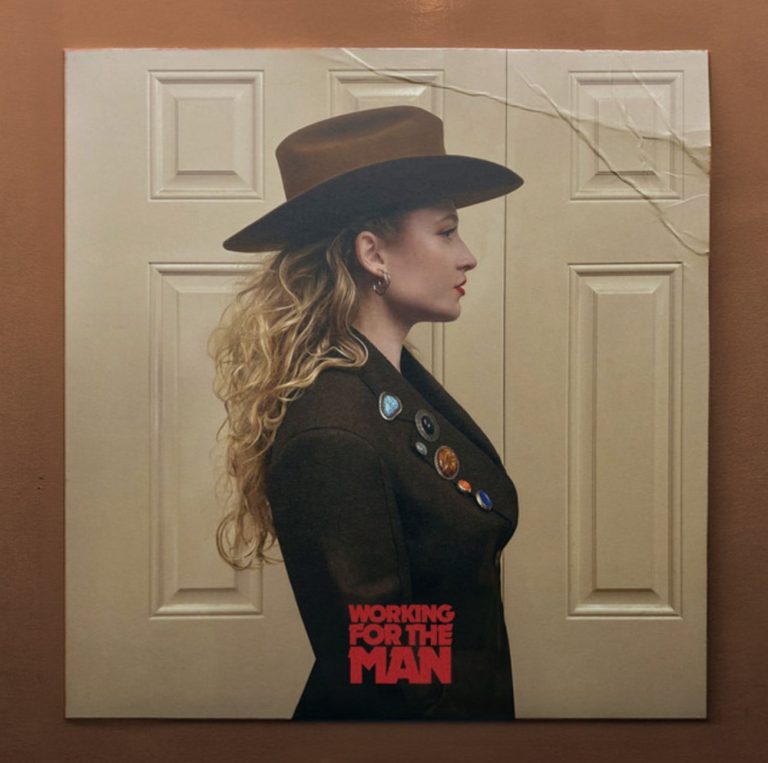
Autumn Story doesn’t introduce itself with spectacle. Instead, Ms. Jesso lets the track ease into focus, carrying the kind of assurance that doesn’t need to be framed as ambition. Rooted in Stockholm yet unconcerned with geography, the song unfolds with a measured calm: rhythms settling into place, harmonies drifting rather than asserting themselves. From the opening moments, it feels less like a statement and more like a state of mind already in motion.
Ms. Jesso’s vocal performance is central to that effect. She navigates between melody and near-speech with ease, shaping each line as if it’s part of a longer inner dialogue. There’s elasticity in her delivery: moments of softness give way to sharper edges, then relax again. Nothing feels rushed or overstated. The confidence here isn’t performative; it’s embedded in control, in knowing when to hold back as much as when to lean in.
The instrumental palette reinforces this sense of composure. The beat maintains a steady, almost meditative momentum, while keys and guitar lines hover with subtle complexity, adding emotional shading without clutter. The arrangement leaves space where it matters most, allowing the song’s atmosphere to linger and evolve rather than resolve neatly. It’s a sound that trusts restraint as much as impact.
Lyrically, Autumn Story reflects on progress, doubt, and self-belief without turning them into slogans. The writing feels observational, even reflective; growth presented not as a breakthrough moment but as an accumulation of lived experience. Empowerment surfaces quietly, carried by repetition, cadence, and the calm insistence of someone who no longer needs permission to move forward.
Autumn Story lands as a considered step in Ms. Jesso’s artistic path. It doesn’t chase immediacy or dramatize change; it inhabits it. In doing so, Ms. Jesso offers a piece that resonates through poise rather than pressure; a reminder that some of the most compelling confidence arrives without warning, already fully formed..