EXPANSIVE EMOTIONAL DEPTH AND CLASSICAL MOTIFS REVIVED!
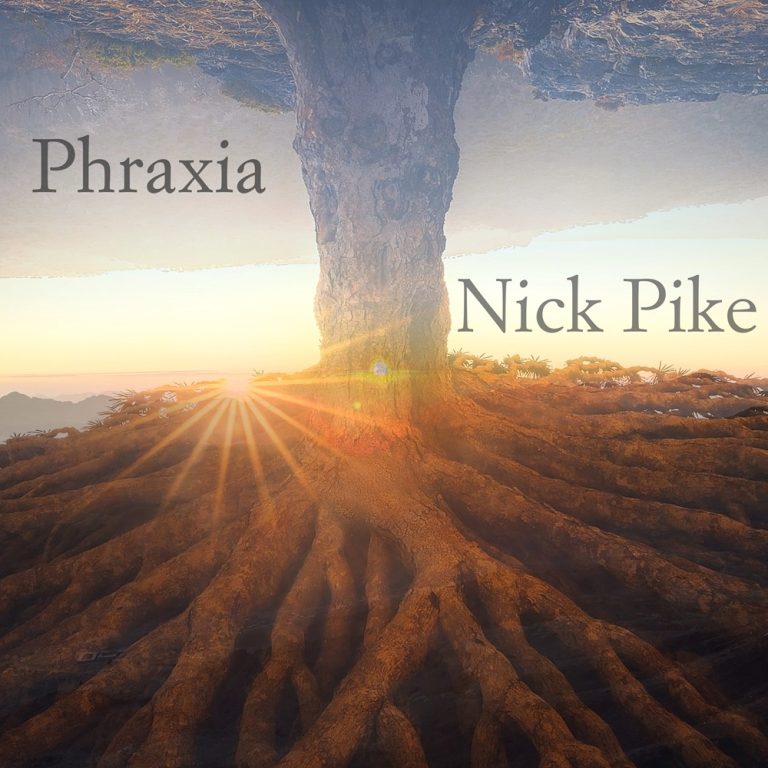
Nick Pike’s Phraxia, his third studio album, marks a striking evolution in his creative voice, a record that merges sensitivity, experimentation, and technical control into a body of work that feels deeply personal yet universally resonant. With prior releases, Norastoria and Evergreen, Pike explored textural lyricism and meditative serenity. Phraxia, however, stretches further, both inward and outward, pushing into emotional territories with confident subtlety, while drawing from the traditions of classical music and reshaping them with quiet inventiveness.
Phraxia is a conversation between piano and space. Pike allows melodies to breathe: never cluttering them with ornamentation, yet enriching them with atmospheric layers that feel more like memories than accompaniment. His restrained use of synthesizers and electronics doesn’t distract from the acoustic piano; instead, it expands its reach, giving the pieces depth without density.
The album opens with Whispertide, a shimmering tide-like piece that establishes the record’s contemplative tone. There’s a beautiful contradiction in its design: calm at first glance, yet quietly surging underneath with harmonic tensions and ambient flourishes. The track feels like a dream that takes its time forming.
Abaluna follows a similar ethos but leans even further into introspection. It’s the kind of track that invites stillness, rewarding attentive listening with delicate shifts in tone and texture. Pike’s jazz instincts are apparent in his phrasing: melodic arcs feel intuitive, never rigid, allowing the piece to meander in a way that feels emotionally truthful.
Then comes Für Beethoven, arguably the conceptual anchor of the album. More than a simple reinterpretation of Für Elise, Pike treats Beethoven’s iconic theme as raw material for exploration. He disassembles and recontextualizes it, casting it in a new harmonic light. The result is poignant, not because it plays on nostalgia, but because it reveals unexplored layers of emotional possibility in a melody we thought we fully knew. It’s less an homage than a reawakening.
One of the album’s quiet triumphs is how it integrates digital and acoustic textures with such grace. Tracks like Vangise and Deepward Glow build on droning electronic undercurrents, but never lose their human touch. The production stays close, almost tactile; you feel as though you’re in the same room as the piano, even as the soundscape opens into vastness.
What sets Phraxia apart from many of its contemporaries is its refusal to be either ornamental or overly cerebral. Where some modern classical works risk collapsing under their own conceptual weight, Pike remains grounded in emotional clarity. His compositions don’t seek to impress through complexity; they express through nuance. And in doing so, they resonate more deeply.
Though rooted in the neoclassical tradition, Pike doesn’t imitate. His voice is distinct, with echoes of Einaudi’s melodic simplicity, Arnalds’ textural elegance, and Richter’s emotional pacing, but filtered through a sensibility that’s unmistakably his. There’s a visual quality to his writing: tracks unfold like scenes, layered with detail and shaded in quiet intensity.
By the time you reach closing pieces like Aroha, you’ve travelled through a landscape of inner states: moments of solitude, memory, and quiet hope. These aren’t dramatic emotional peaks, but rather the kinds of feelings that live just beneath the surface. Pike invites us to dwell there, and to listen with more than just our ears.
In Phraxia, Nick Pike offers a masterclass in understated expressiveness. It’s an album that doesn’t just revisit classical motifs, it renews them, revealing the emotional depth they still hold when placed in thoughtful, contemporary hands. This isn’t background music, it’s companion music. And like any good companion, it doesn’t fill the silence, it helps you hear it better..